
Water-utility engineers want to detect emerging Spectrum-X congestion before analytics jobs fail. What should they apply?
Select an answer to reveal the explanation.
Short Explanation
Waiting for job aborts is like waiting for the reservoir to empty before checking the gauges. Use NetQ congestion detection early so water-utility AI jobs get warning while there is still time to act.
Full Explanation
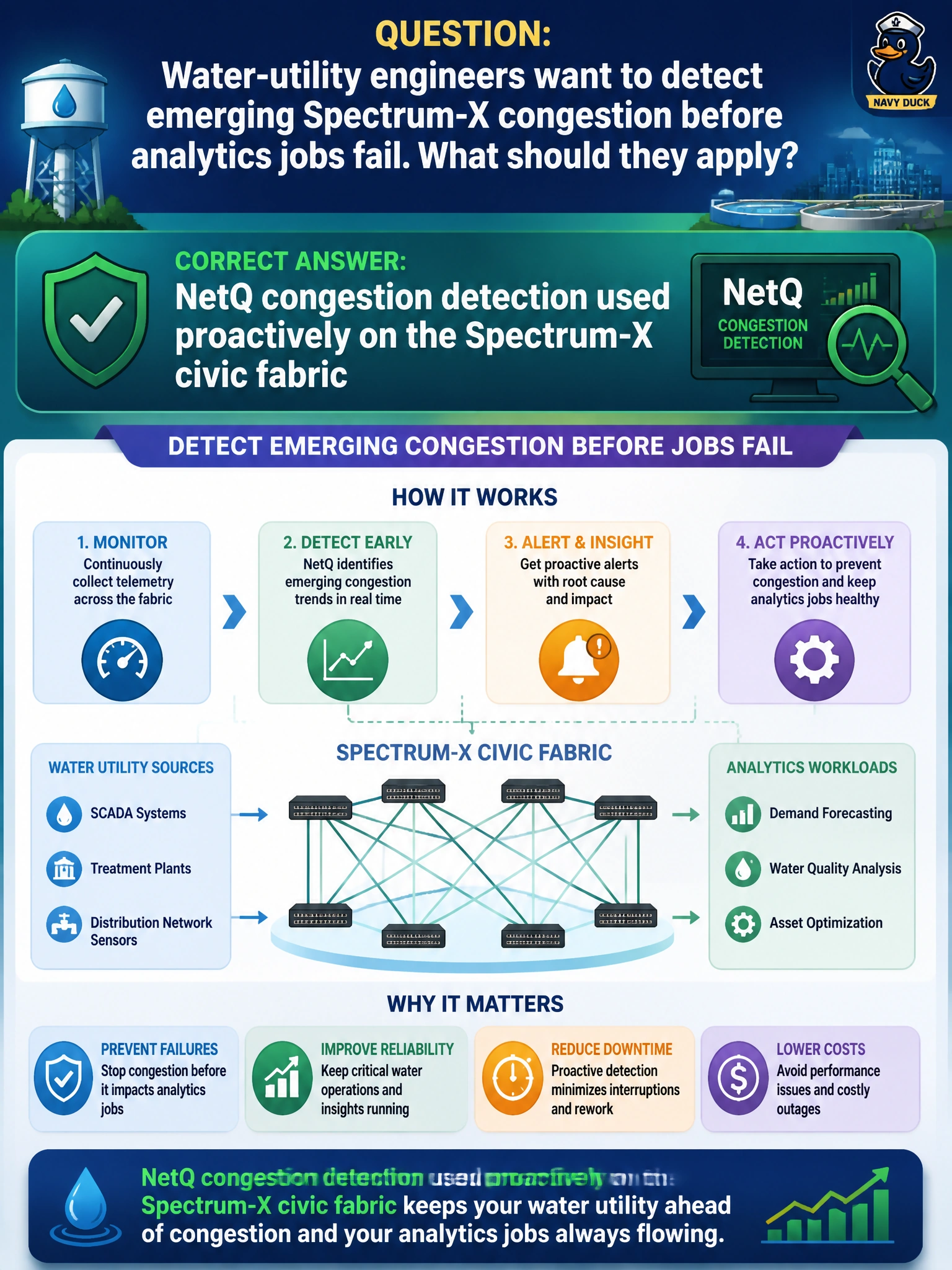
Water-utility engineers who want to detect emerging Spectrum-X congestion before analytics jobs fail should apply NetQ congestion detection used proactively on the Spectrum-X civic fabric. Proactive NetQ congestion views and alerts expose rising queues and ECN activity while batch and streaming analytics still have headroom, which is exactly what a utility needs when civic AI jobs feed SCADA-adjacent analytics and cannot wait for abort tickets. Spectrum-X utilization dashboards reviewed in weekly capacity planning meetings fail by concept: weekly dashboard reviews are retrospective and lag real Spectrum-X hot spots that can form and clear within a single analytics run. Threshold alerts that fire only after sustained 80 percent utilization fail because waiting for a high, sustained threshold is already late for jobs that fail at lower, bursty congestion levels—proactive detection means catching the rise, not just the saturation point. Buffer occupancy counters polled hourly for post-incident troubleshooting records fail because they capture after-the-fact records rather than proactive detection and do not build a trend or alert path; counters without retention and detection logic are not congestion early warning. Exam caveat: NetQ congestion detection on Spectrum-X is the Ethernet AI fabric tool for early warning. Weekly capacity-planning dashboard reviews and post-incident troubleshooting records are governance artifacts, not live detectors; polling counters hourly for post-incident records undermines forensics and trending. Operational check: enable NetQ congestion detection on the water-utility Spectrum-X leafs, set thresholds below hard failure, confirm alerts fire on a controlled or observed rise, and verify on-call utility network staff receive the signal before analytics jobs abort.