
Emergency management needs lower inference latency on Intel head nodes that currently favor aggressive power saving. What trade-off should they apply?
Select an answer to reveal the explanation.
Short Explanation
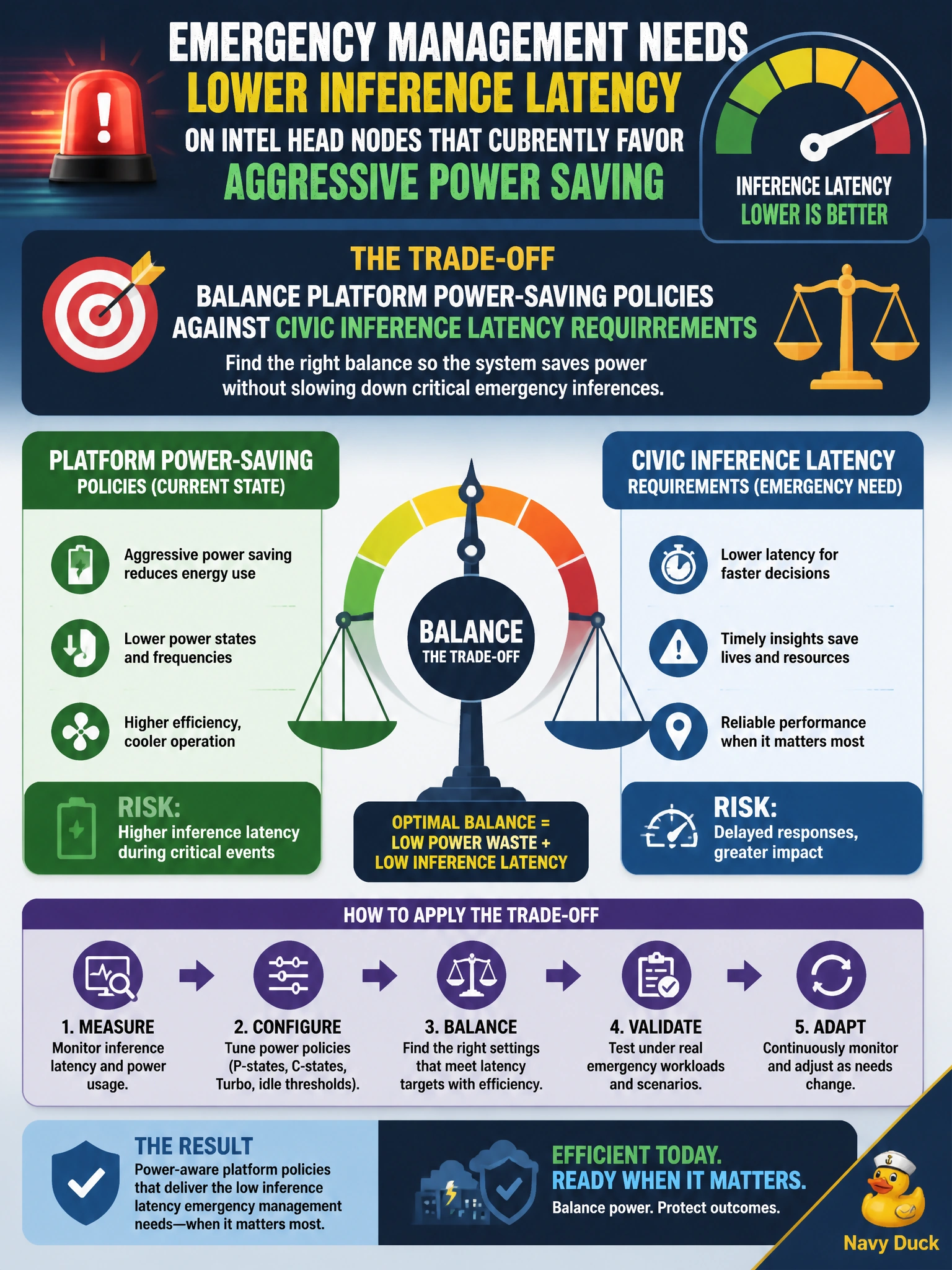
Deep power naps are great until 911 inference needs to wake up now—balance savings against latency. Emergency management should tune Intel power policies to the civic SLO.
Full Explanation
Emergency management needing lower inference latency on Intel head nodes that currently favor aggressive power saving must balance platform power-saving policies against civic inference latency requirements. Domain 5 expects that supported power and performance trade-offs serve operational SLOs during incidents rather than maximizing sleep states blindly. Deep C-states that look efficient on a quiet night can add wake latency when emergency inference must respond immediately. Enabling the deepest C-states regardless of latency SLOs can add wake latency that emergency inference cannot afford. Power-limiting GPUs to minimum to save electricity during incidents directly opposes the need for responsive civic inference when events spike. Turning off monitoring so latency alerts disappear hides the SLO breach instead of tuning the platform. Exam caveat: the right balance may keep moderate power saving for idle hours while using a low-latency profile during declared emergency operations—document both modes and how operators switch. Operational check: measure Intel head-node inference latency under the current deep power-save policy, apply a supported lower-latency platform profile, and confirm emergency SLOs while tracking power draw.