
A water-utility AI rack suspects a card fault before opening an RMA. What confirmation step is required?
Select an answer to reveal the explanation.
Short Explanation
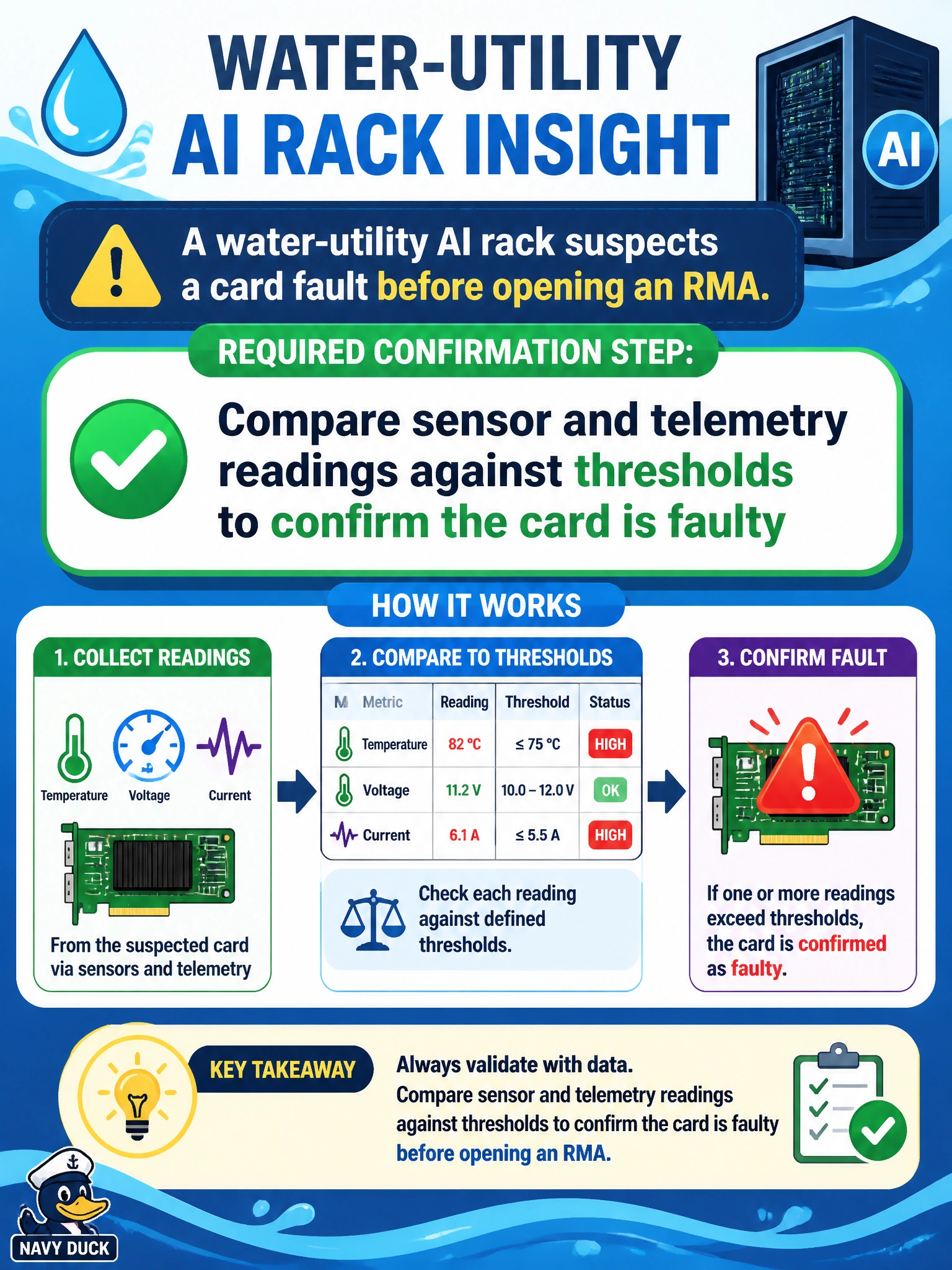
Don’t ship a maybe—check the gauges against the redline first. Before you open the RMA, compare the card’s sensor and telemetry readings with the thresholds to confirm the fault and give your vendor useful evidence.
Full Explanation
Before opening an RMA for a suspected card fault in a water-utility AI rack, compare its sensor and telemetry readings with defined thresholds. This Domain 5 identification discipline reduces false returns and keeps municipal warranty and spare logistics honest: a threshold comparison turns suspicion into a documented breach that vendors and auditors can accept. Shipping the card immediately with no telemetry leaves the vendor without evidence, often results in a no-fault-found return, and leaves the civic rack without a proven fix. An RMA based solely on a single user complaint ticket skips measurable confirmation and may remove healthy capacity from the water-utility AI pool. Reviewing event logs after rebooting an unrelated storage controller examines the wrong subsystem and cannot establish that the suspected AI card crossed failure criteria. Exam caveat: use vendor or site acceptance baselines for thresholds; a single noisy sample without a trend may call for a controlled reproduction under load before the RMA ships. Practical check: pull GPU or adapter sensor data for the rack, compare it with documented thresholds, attach the failing telemetry window to the RMA packet, and package the FRU only after confirmation.