
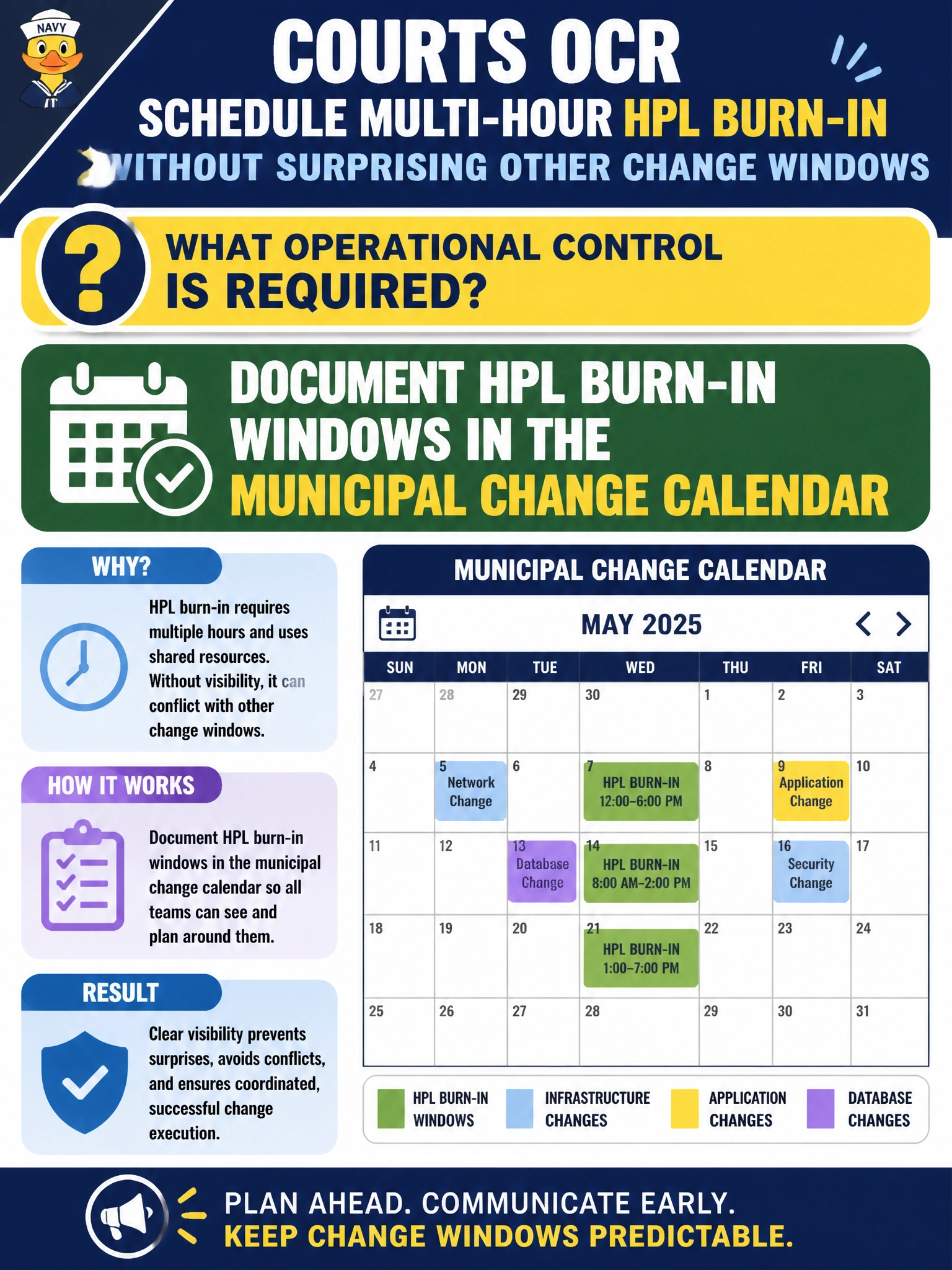
Courts OCR must schedule multi-hour HPL burn-in without surprising other change windows. What operational control is required?
Select an answer to reveal the explanation.
Short Explanation
Put the courts OCR HPL burn-in on the change calendar—surprise multi-hour Linpack parties make enemies in municipal IT.
Full Explanation
Courts OCR must document HPL burn-in windows in the municipal change calendar so multi-hour Linpack load is coordinated with capacity, cooling, and overlapping maintenance rather than sprung as a surprise. Domain 4 burn-in is an operational control: it draws power, heat, and sometimes shared fabric or storage attention, and other civic changes need visibility. Launching burn-in ad hoc with no calendar entry creates collisions with patch windows, facilities work, or competing validation and leaves no approved window for accountability. Hiding burn-in behind unrelated ticket titles obscures impact from change boards and on-call staff who must interpret alarms during the run. Only announcing burn-in after it has already finished denies peers a chance to protect SLOs or avoid conflicting work and breaks municipal change practice. Exam caveat: calendar visibility does not replace technical pass criteria—you still need HPL success metrics—but undocumented burn-in is an operational failure even if scores look fine. Operational check: file a courts OCR change with start/end times, affected GPU nodes, expected power/thermal impact, and abort contacts; run HPL only inside that window; and attach results back to the same calendared change record.