
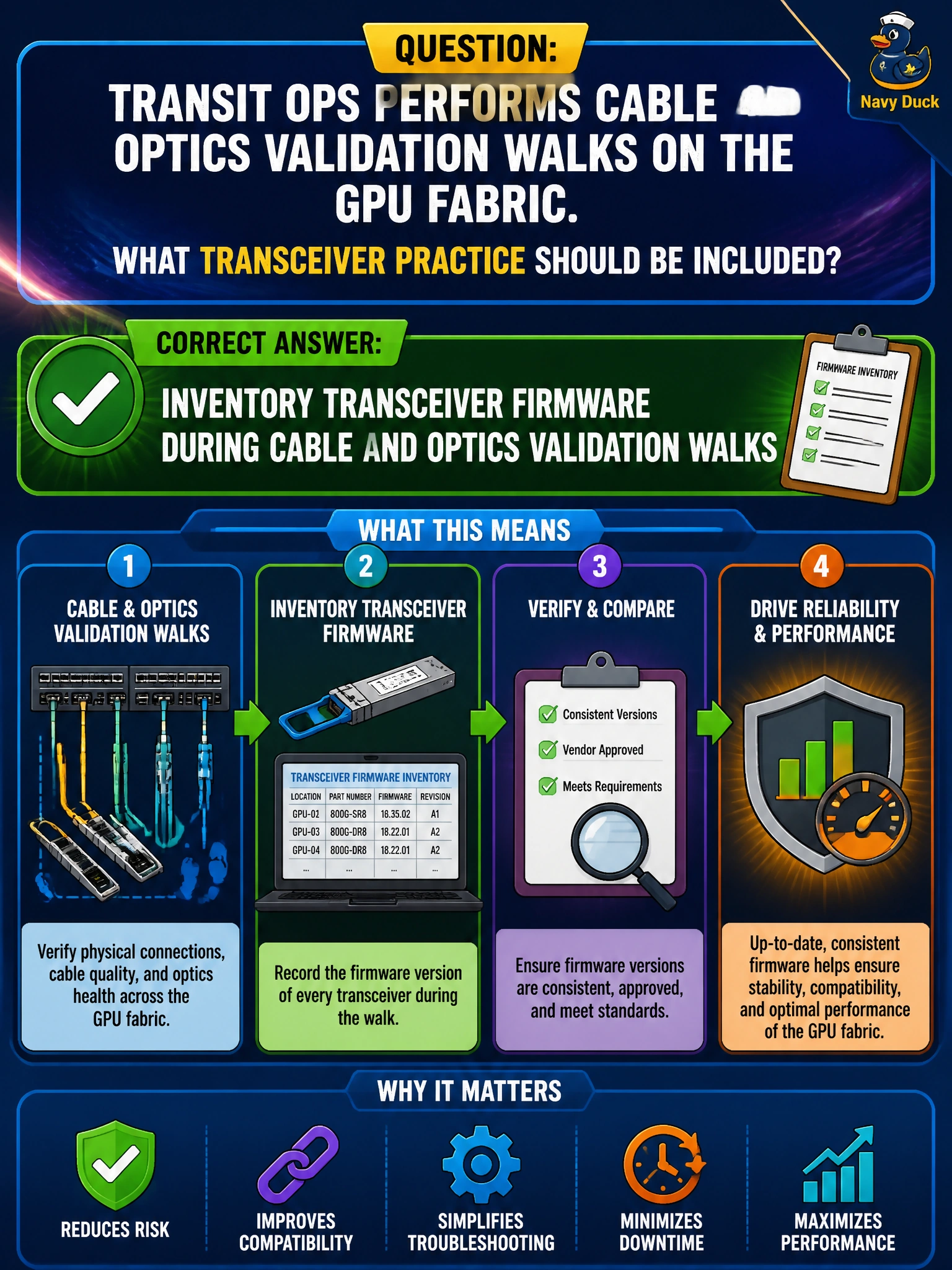
Transit ops performs cable and optics validation walks on the GPU fabric. What transceiver practice should be included?
Select an answer to reveal the explanation.
Short Explanation
On the transit optics walk, grab transceiver firmware too—chassis serials and 'optic present' checkboxes don't finish Domain 4 physical-layer verification.
Full Explanation
Transit ops cable and optics validation walks on the GPU fabric should capture transceiver firmware alongside cabling checks so physical-layer readiness is complete. Inventorying transceiver firmware during those walks records module currency in the same window as connector, mapping, and signal verification. Inventorying only switch chassis serials and skipping module firmware documents the switch asset but not the pluggables that often cause link instability under collective load. Deferring all transceiver checks until after production training starts moves discovery into live rider workloads and burns expensive GPU time on avoidable flaps. Recording optic presence without capturing firmware where supported stops at “something is inserted” and misses version skew across the transit row. Domain 4 skill 4.8 expects transceiver FW confirmation as part of fabric readiness, not as a later forensic afterthought. Caveat: include “N/A—not readable” explicitly when a module cannot report FW so the walk still shows intentional coverage rather than silent omission. Operational check: on the transit optics walk sheet, record each module’s firmware (or N/A), flag below-standard entries for update/replace, remediate, and file the inventory with the cable validation package.