
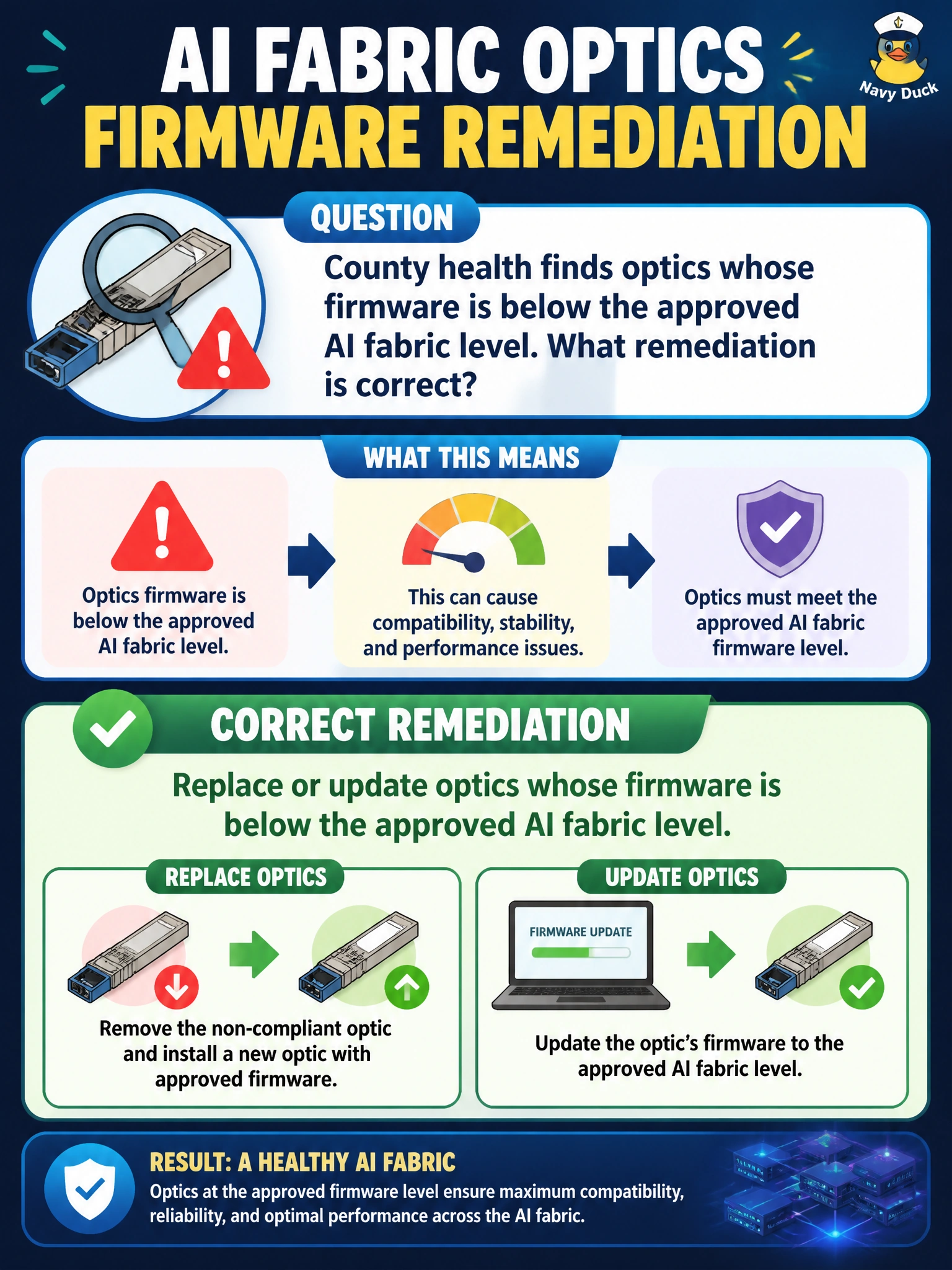
County health finds optics whose firmware is below the approved AI fabric level. What remediation is correct?
Select an answer to reveal the explanation.
Short Explanation
Below-approved optic firmware? County health replaces or updates those modules—don't rewrite the fabric standard to match the stragglers.
Full Explanation
County health finds optics whose firmware is below the approved AI fabric level; remediation is to replace or update those modules so they meet the standard before the fabric is trusted. Remediating out-of-date transceiver firmware restores physical-layer compliance and reduces flap or interoperability risk on the county health AI interconnects. Keeping the outdated optics and lowering the fabric standard retroactively bends policy to match defective inventory and weakens every future acceptance gate. Marking the optics as compliant without remediation falsifies acceptance and leaves known-bad modules in the path. Disabling link monitoring on ports using those optics hides symptoms instead of fixing the modules and removes early warning for the next failure. Domain 4 expects corrective action when transceiver FW fails confirmation during fabric validation. Caveat: prefer vendor-supported FW update paths when available and field-proven; replace when modules are unupdatable, EOL, or unsupported on the approved matrix. Operational check: identify below-approved county health optics, update or swap them, re-read firmware, restore monitoring if it was touched for triage, validate link stability, and document clearance in the fabric validation log.