
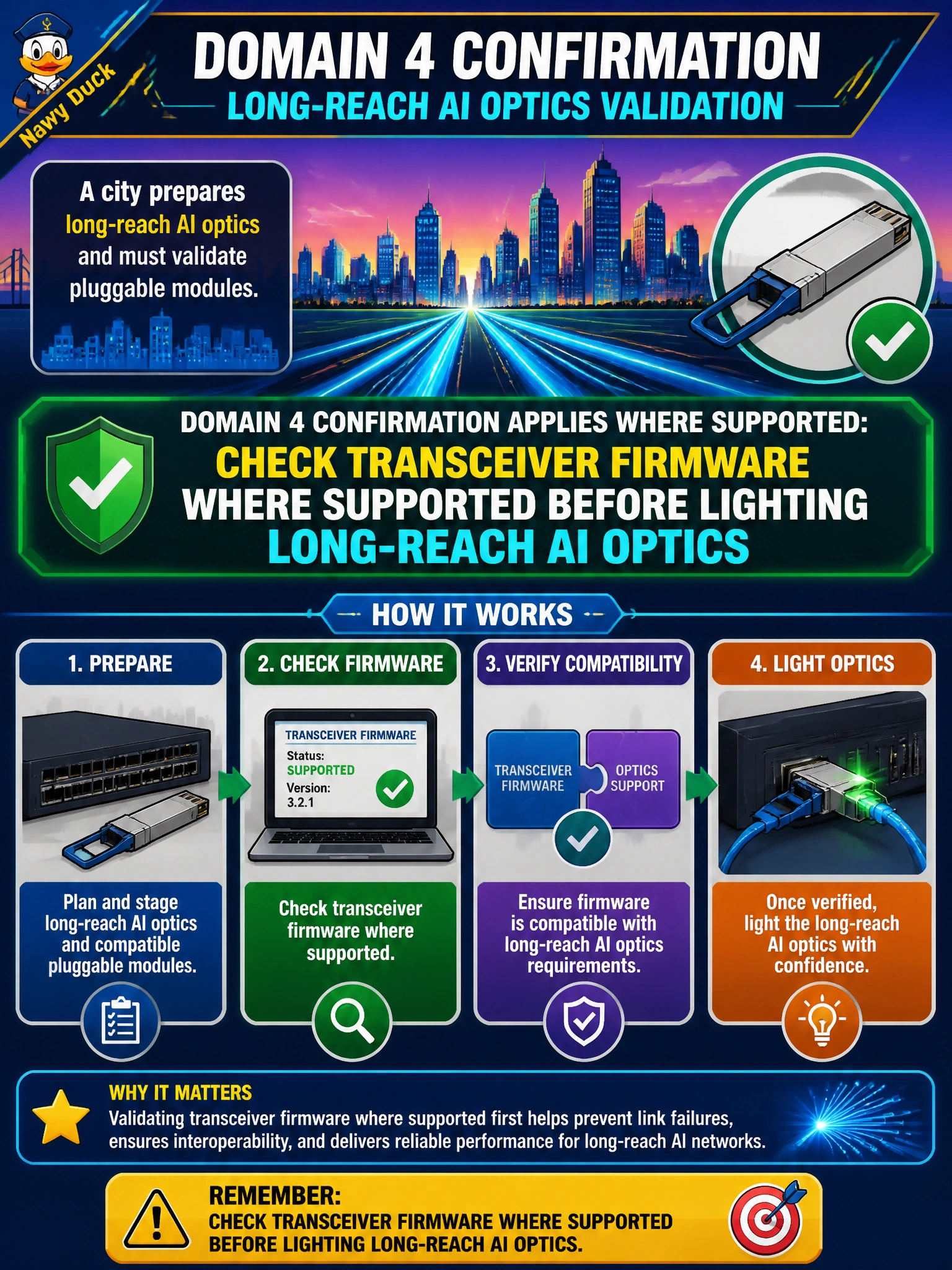
A city prepares long-reach AI optics and must validate pluggable modules. What Domain 4 confirmation applies where supported?
Select an answer to reveal the explanation.
Short Explanation
Before you light those long-reach city AI optics, check transceiver firmware where the platform supports it—color coding isn't a firmware audit.
Full Explanation
When a city prepares long-reach AI optics, Domain 4 skill 4.8 requires validating pluggable modules—including transceiver firmware where the platform supports reading it—before lighting those links. Checking transceiver firmware where supported before lighting long-reach AI optics reduces unstable link risk from outdated or unsupported module images that pass casual visual inspection. Skipping transceiver firmware checks because optics are disposable ignores that disposable still means production-impacting until replaced and can flap city long-reach paths. Confirming only cable color coding and ignoring module firmware validates labeling habits, not module software currency. Lighting the optics without checking supported firmware levels brings unknown FW into the city’s long-reach AI fabric and complicates later root cause. Exam writers often treat optics as set-and-forget FRUs; the correct stance is firmware confirmation as part of fabric validation when the platform can report it. Caveat: not every optic reports FW equally—follow platform capability and record N/A when unreadable—but where supported, FW checks are in scope before light-up. Operational check: inventory transceiver firmware on city long-reach ports, compare to the approved optic FW list, update or replace outliers, then light and validate the links with signal-quality evidence.