
Library AI rack validation finishes cable signal checks. What documentation practice is required?
Select an answer to reveal the explanation.
Short Explanation
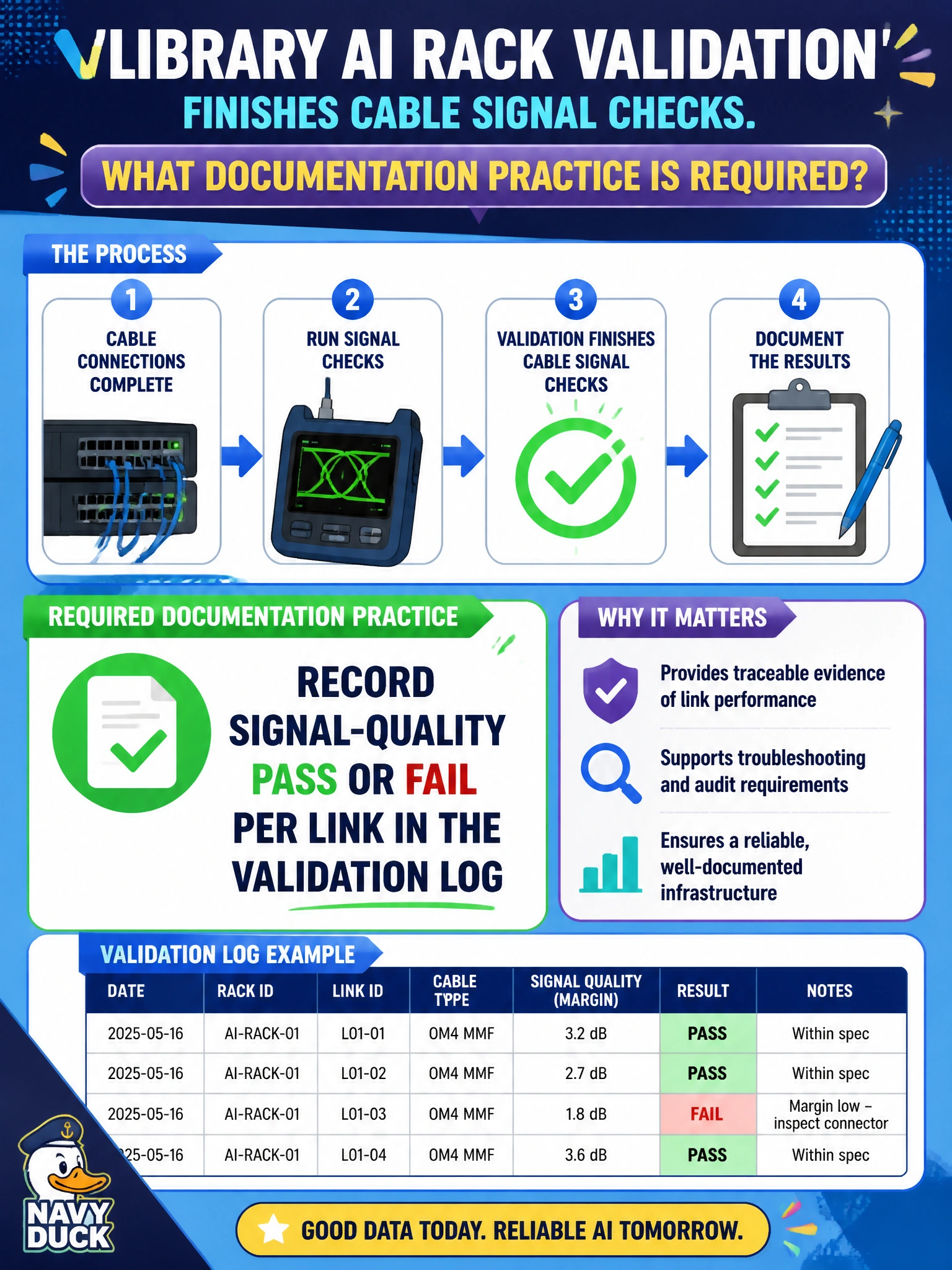
You need a validation log with a signal-quality pass or fail for each link, so you can trace results later. Keep that per-link record rather than relying on memory or a building-wide summary.
Full Explanation
Library AI rack validation is not complete when technicians merely remember that cables looked fine; Domain 4 requires an auditable record that survives shift changes and audits. Recording signal-quality pass or fail per link in the validation log creates evidence for acceptance, later regression comparison after moves, and municipal change control. Keeping results only in undocumented technician memory fails audit, staffing handoffs, and any later dispute about what was tested on the library consortium fabric. Recording a single yes/no for the whole building without per-link detail hides which interconnect failed and blocks targeted remediation when one rail is bad. Deleting signal metrics immediately after the walk to save disk space destroys the artifact acceptance reviewers and future troubleshooting need. On the NCP-AII exam, verification discipline includes retained per-link outcomes, not hallway recollection or coarse building-level checkboxes. Caveat: aggregation dashboards are fine for status views if the underlying per-link pass/fail and metric snapshots remain stored with the rack package. Operational check: for each library fabric link, write the metric summary and pass/fail into the validation log, retain it with the rack acceptance package, and refuse final sign-off until every required link has a recorded result.