
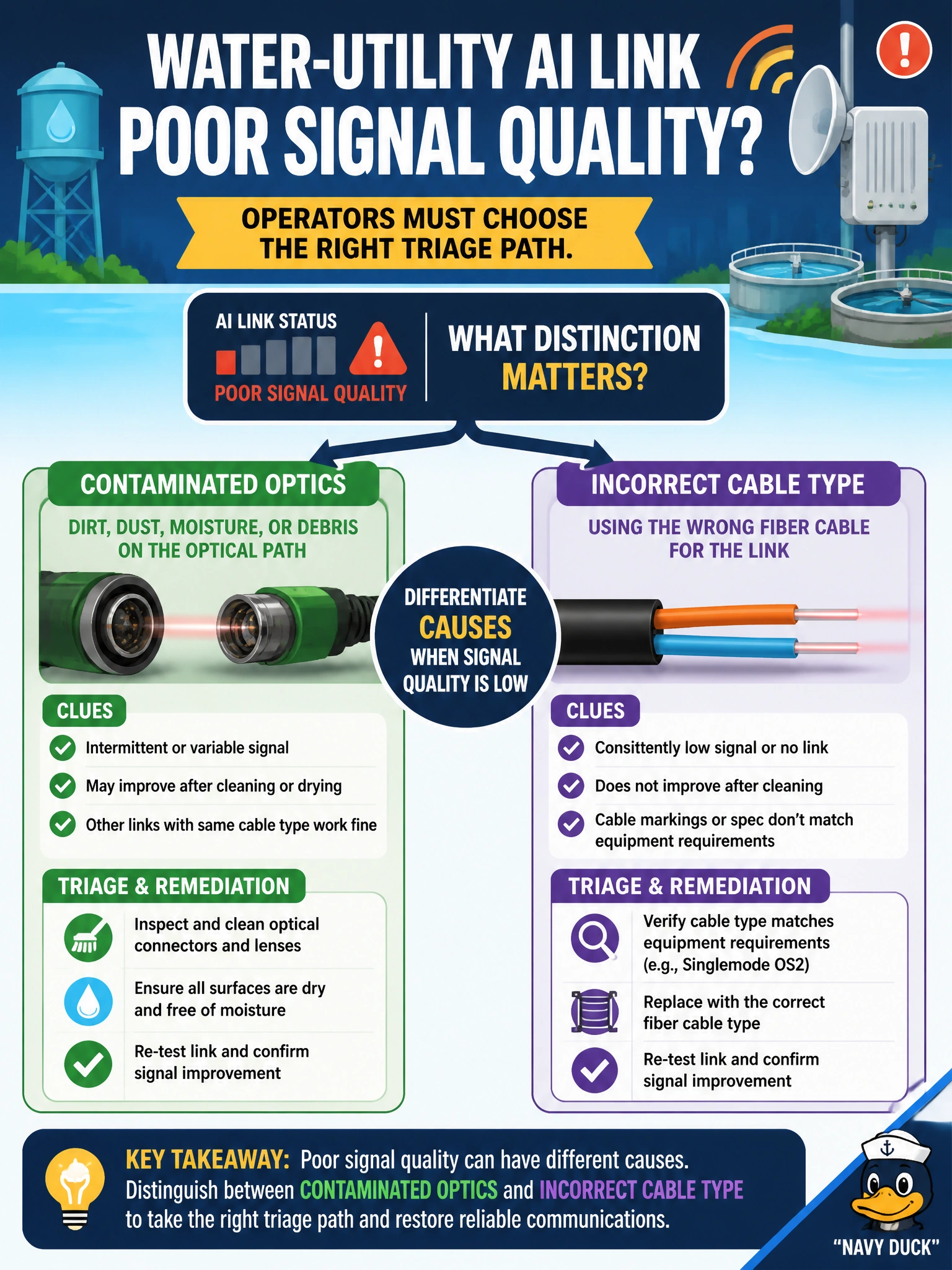
A water-utility AI link shows poor signal quality. Operators must choose the right triage path. What distinction matters?
Select an answer to reveal the explanation.
Short Explanation
Low signal on a water-utility link isn't one hammer—figure out dirty optics versus the wrong cable type before you start swapping whole switches.
Full Explanation
When a water-utility AI link shows poor signal quality, Domain 4 triage starts by differentiating physical causes so remediation matches the fault. Distinguishing contaminated optics versus an incorrect cable type (wrong DAC/AOC reach class, wrong optic, dirty ferrule) prevents swapping the wrong FRU and leaving the digital-twin fabric degraded. Treating every low reading as a software license problem only misattributes Layer-1 symptoms to entitlement and delays cleaning, reseating, or media replacement. Always replacing the entire leaf switch first is a costly blunt instrument that ignores port, optic, and cable as higher-probability, cheaper fault domains for a single bad reading. Disabling all monitoring until the next fiscal year removes evidence and accepts ongoing risk to utility AI services that depend on stable east-west paths. On the NCP-AII exam, signal-quality triage is a diagnosis skill: match the corrective action to contamination, media type, or port faults rather than applying one hammer. Caveat: multiple causes can coexist (dirty optic on wrong media), and switch FRU remains valid after known-good media still fails—but the first move is cause differentiation, not mass replacement. Operational check: on the failing water-utility link, inspect and clean optics, confirm cable/optic type against the design BOM, reseat, re-measure signal quality against thresholds, and escalate to switch FRU only if the path still fails with known-good media.