
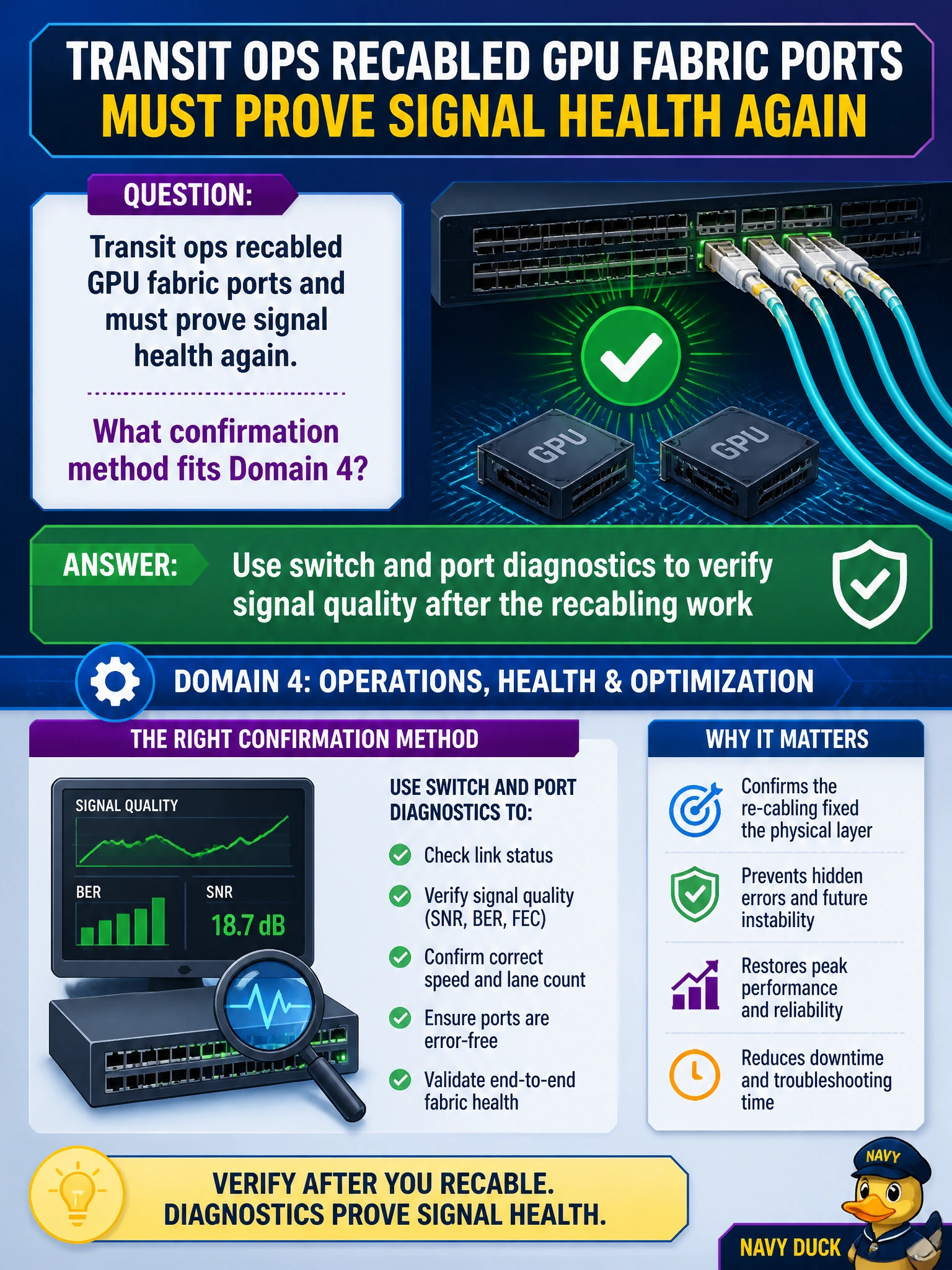
Transit ops recabled GPU fabric ports and must prove signal health again. What confirmation method fits Domain 4?
Select an answer to reveal the explanation.
Short Explanation
After you move cables on the transit fabric, run switch/port diagnostics and prove the signal quality—don't trust tray photos or rider tickets as your only yardstick.
Full Explanation
After transit ops recables GPU fabric ports, Domain 4 expects measured confirmation that signal health returned—not assumptions from the physical work order alone. Using switch and port diagnostics to verify signal quality after the recabling work ties the change ticket to objective post-change evidence on the affected links. Assuming recabling always restores perfect signal without measurement skips the verification half of change control and can leave marginal connectors or bent fibers in the rider-facing fabric. Validating only by photographing the cable tray documents appearance, not optical or electrical quality. Relying exclusively on end-user latency tickets from riders makes 311 NLP or scheduling workloads the monitoring system for Layer-1 faults. On the exam, post-maintenance cable work is incomplete until diagnostics re-prove signal quality; distractors substitute photos, tickets, or faith for metrics. Caveat: photography and labeling checks still help confirm endpoints, but they complement—never replace—signal diagnostics after recabling. Operational check: after transit fabric recabling, run switch/port signal-quality diagnostics on every touched port, compare to baseline thresholds, and attach the results to the change record before closing the ticket.