
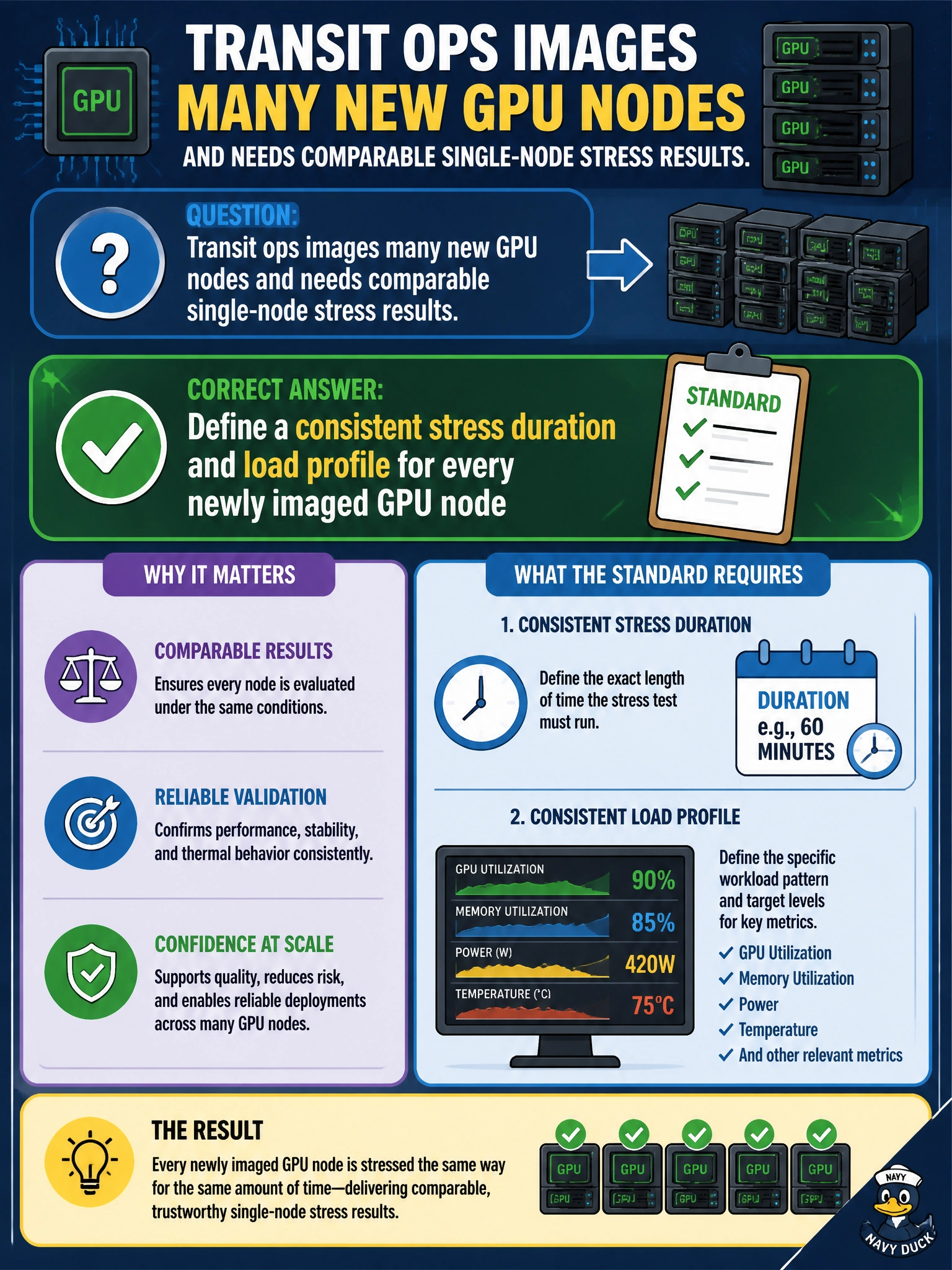
Transit ops images many new GPU nodes and needs comparable single-node stress results. What should the standard require?
Select an answer to reveal the explanation.
Short Explanation
Same stopwatch, same load—standardize single-node stress so every new transit GPU node is judged fairly. Ad-hoc five-minute guesses aren't a procedure.
Full Explanation
Transit ops imaging many new GPU nodes needs comparable single-node stress results, so the standard must define a consistent stress duration and load profile for every newly imaged GPU node. Consistency makes pass/fail meaningful across technicians, racks, and imaging waves, and it gives municipal change control an auditable recipe instead of tribal guesses.
Letting each technician invent duration and load ad hoc fails by concept because unequal recipes produce incomparable results and allow weak nodes to “pass” short or light runs while stricter techs fail healthy peers. Running stress for one second only to save power fails because such a trivial duration cannot exercise sustained thermal, power-delivery, memory-error, or XID behavior that Domain 4 stress is meant to expose. Stressing only CPU cores and never exercising GPUs fails because the acceptance target is GPU-node readiness for AI workloads; CPU-only stress does not validate accelerators that transit inference and training depend on.
Exam caveat: Domain 4 single-node stress questions emphasize standardized procedures so acceptance is auditable and comparable—not heroic one-off runs or power-saving shortcuts that skip real GPU load.
Operational check: publish the transit stress SOP (tooling, duration, load profile, pass criteria including ECC/XID/thermal thresholds), configure automation or checklists to enforce it on newly imaged nodes, reject results that deviate from the documented profile, and archive duration/load metadata with each node’s acceptance package.