
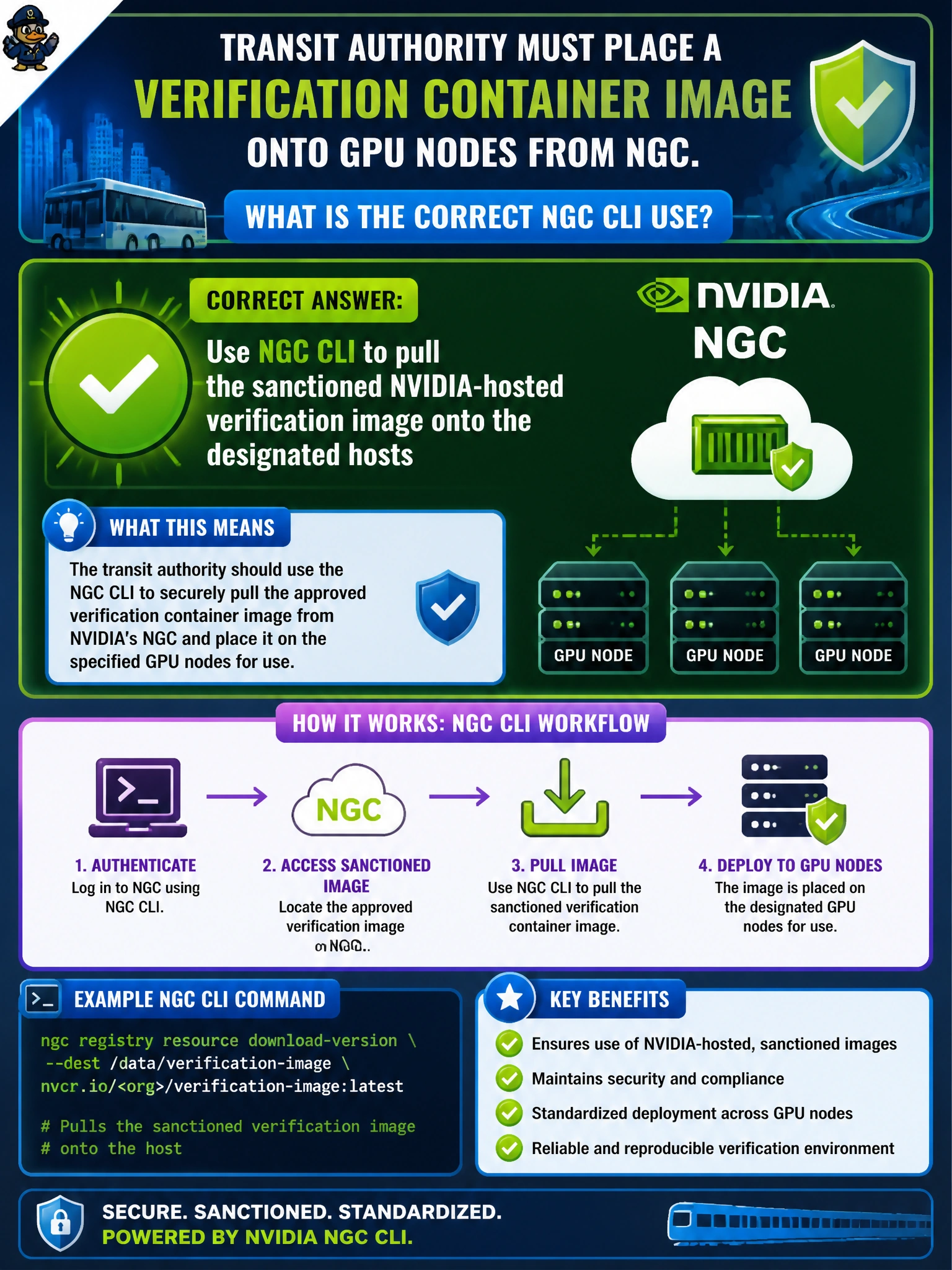
Transit authority must place a verification container image onto GPU nodes from NGC. What is the correct NGC CLI use?
Select an answer to reveal the explanation.
Short Explanation
NGC CLI is the forklift: pull the sanctioned verification image onto the right hosts. Screenshots and random forks are not a supply chain.
Full Explanation
Transit authority placing a verification container image onto GPU nodes from NGC should use NGC CLI to pull the sanctioned NVIDIA-hosted verification image onto the designated hosts. That is the controlled supply-chain path: authenticated CLI, known NGC artifact, auditable retrieval onto approved staging or node locations used for Domain 3 verification.
Emailing a screenshot of the NGC website to the GPU nodes fails by concept because screenshots transfer no image layers and create no runnable artifact on the hosts. Compiling a verification image from random GitHub forks without registry controls fails because it abandons NGC’s sanctioned provenance and municipal change control. Disabling image pulls and recreating containers from memory dumps fails as an unsupported, non-reproducible, and unsafe substitute for registry pulls.
Exam caveat: Domain 3 NGC CLI use is about retrieving NVIDIA-hosted artifacts under credentials. Questions often contrast proper CLI pulls with informal or uncontrolled transfer methods.
Operational check: authenticate NGC CLI, pull the specified verification image to designated transit hosts (or the site registry/cache path), verify image presence with docker/podman/ngc listing as appropriate, then run the verification container with GPU access enabled.