
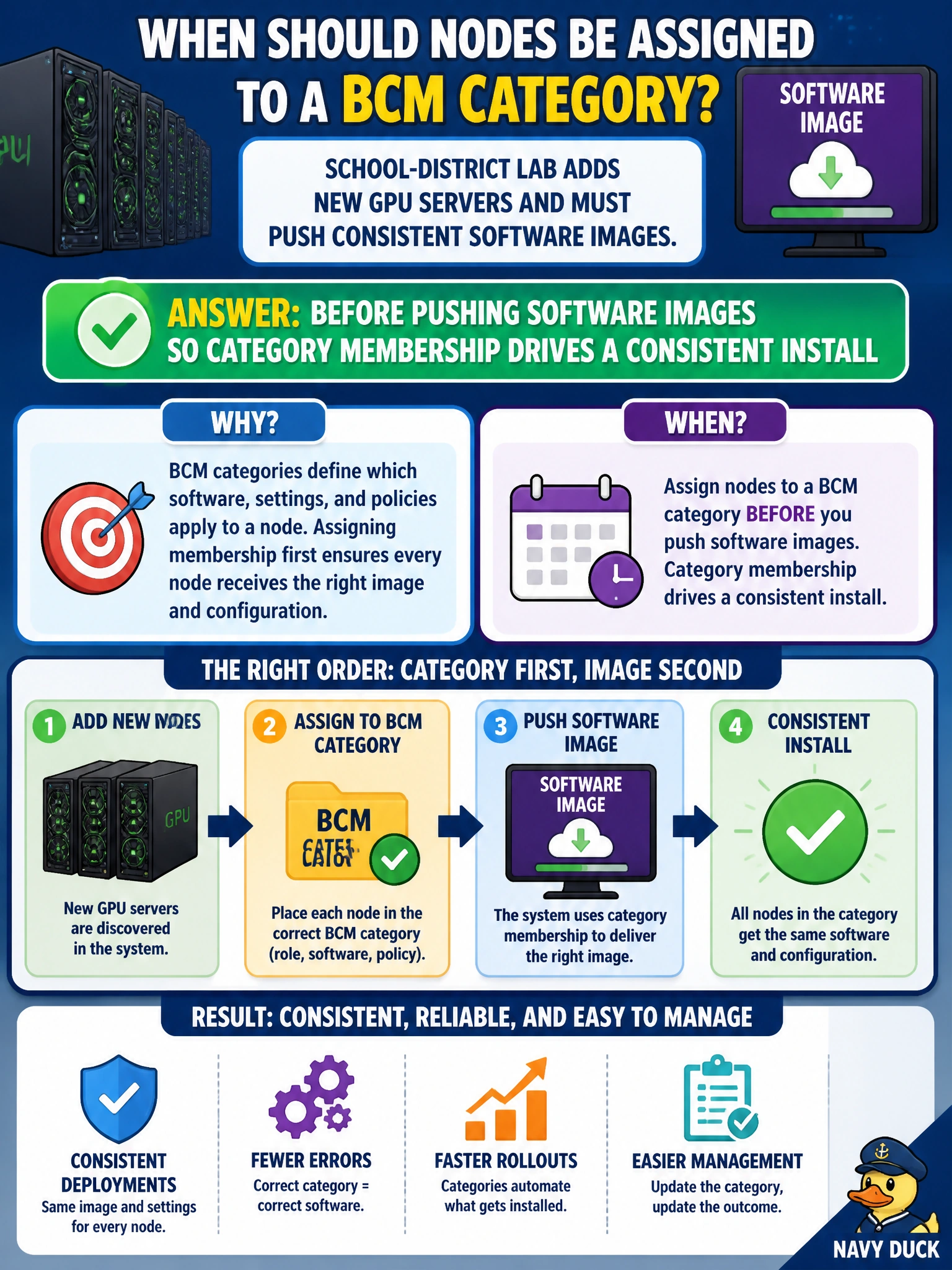
A school-district lab adds new GPU servers and must push consistent software images. When should nodes be assigned to a BCM category?
Select an answer to reveal the explanation.
Short Explanation
Park new lab nodes in the right BCM category before you shove images—like assigning lockers before issuing laptops. Categories after failure is backwards.
Full Explanation
When a school-district lab adds GPU servers, nodes should be assigned to a BCM category before pushing software images so membership drives a consistent install. Category membership selects the image, packages, and settings BCM applies; assigning first prevents pushes that have no policy target or that land inconsistent software across new classroom servers. Sequencing category membership ahead of image distribution is how the lab keeps every new GPU on the same supported baseline and how operators avoid half-imaged racks that later fail driver or toolkit steps differently per node.
Waiting until every image push fails for lack of category membership is reactive failure-driven process, not design—the failures themselves prove the sequencing was wrong. Treating categories as optional decoration ignores how BCM applies software at scale on municipal education clusters. Deleting all existing categories so nothing matches removes the very mapping that makes consistent imaging possible and breaks already-managed nodes that still depend on those categories.
Exam caveat: category assignment precedes image push—answers that delay until failure, call categories optional, or delete categories are wrong on sequencing and purpose.
Operational check: create or select the lab GPU category, assign new servers, then push the software image and verify each node received the category’s expected profile before classroom use.