
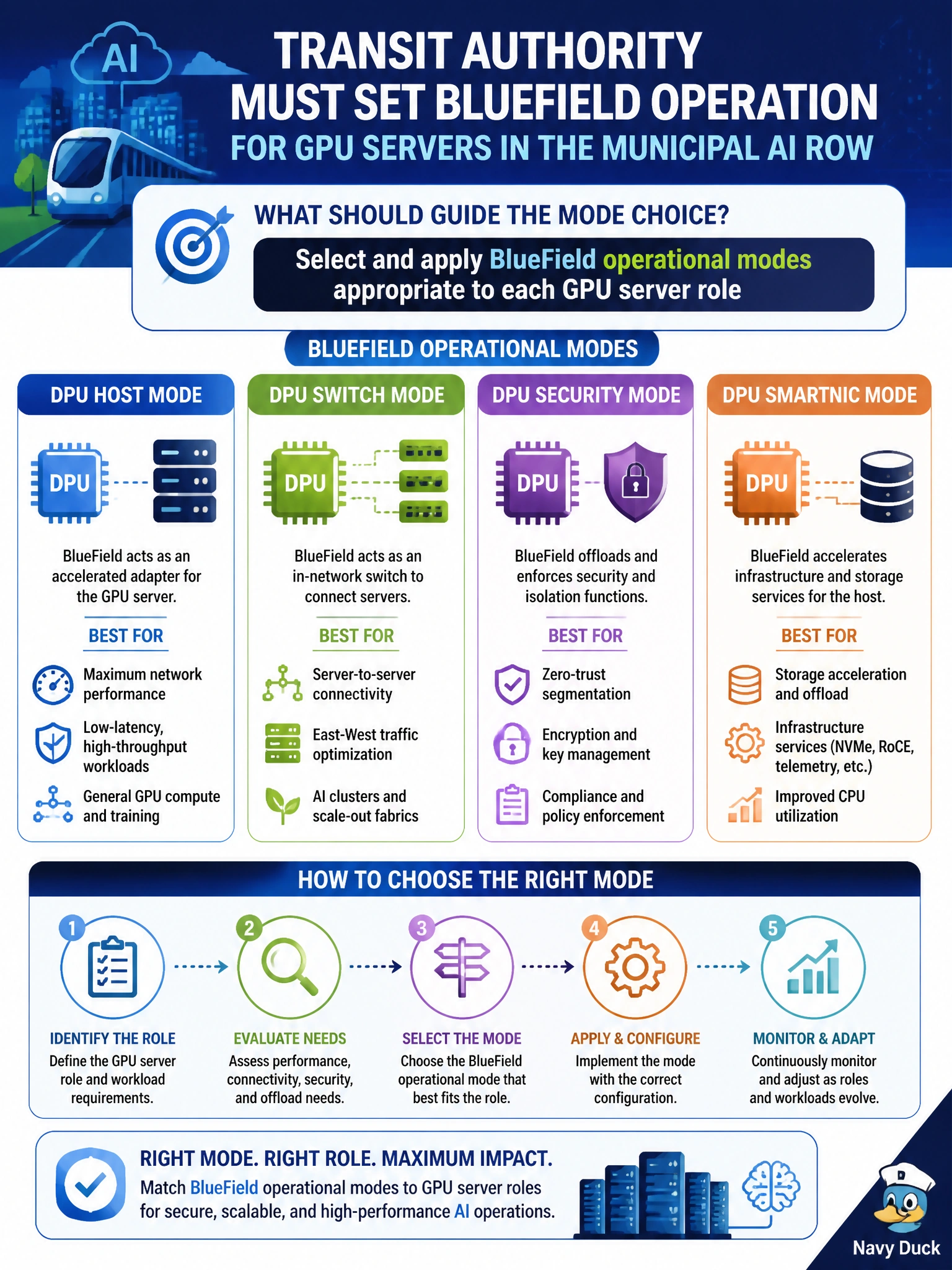
Transit authority must set BlueField operation for GPU servers in the municipal AI row. What should guide the mode choice?
Select an answer to reveal the explanation.
Short Explanation
You’ll get predictable operation when you select and apply BlueField modes that fit each GPU server’s role. Choosing modes at random on every reboot isn’t a reliable operations plan.
Full Explanation
The transit authority should select and apply BlueField operational modes appropriate to each GPU server role. Mode choice is a deliberate platform decision, not a random reboot lottery; selecting the right mode keeps networking behavior predictable for transit AI traffic. Picking modes at random on each reboot fails because unstable selection undermines automation, supportability, and tenant expectations. Forcing every DPU into an unsupported, undocumented mode fails because that is not a sound operations strategy and can jeopardize vendor support and municipal change control. Ignoring mode settings because host GPUs make DPU mode irrelevant fails because GPU compute does not remove the need for correct DPU networking configuration on BlueField-equipped servers. Exam caveat: “appropriate to each GPU server role” calls for a documented role-to-mode mapping; applying one mode everywhere can be wrong when roles differ across the transit AI row. Practical check: assign a mode to each server role, apply and persist the configuration, reboot or reload as required by the platform guide, then verify the mode and state with BlueField management tools before releasing the node to transit workloads.