
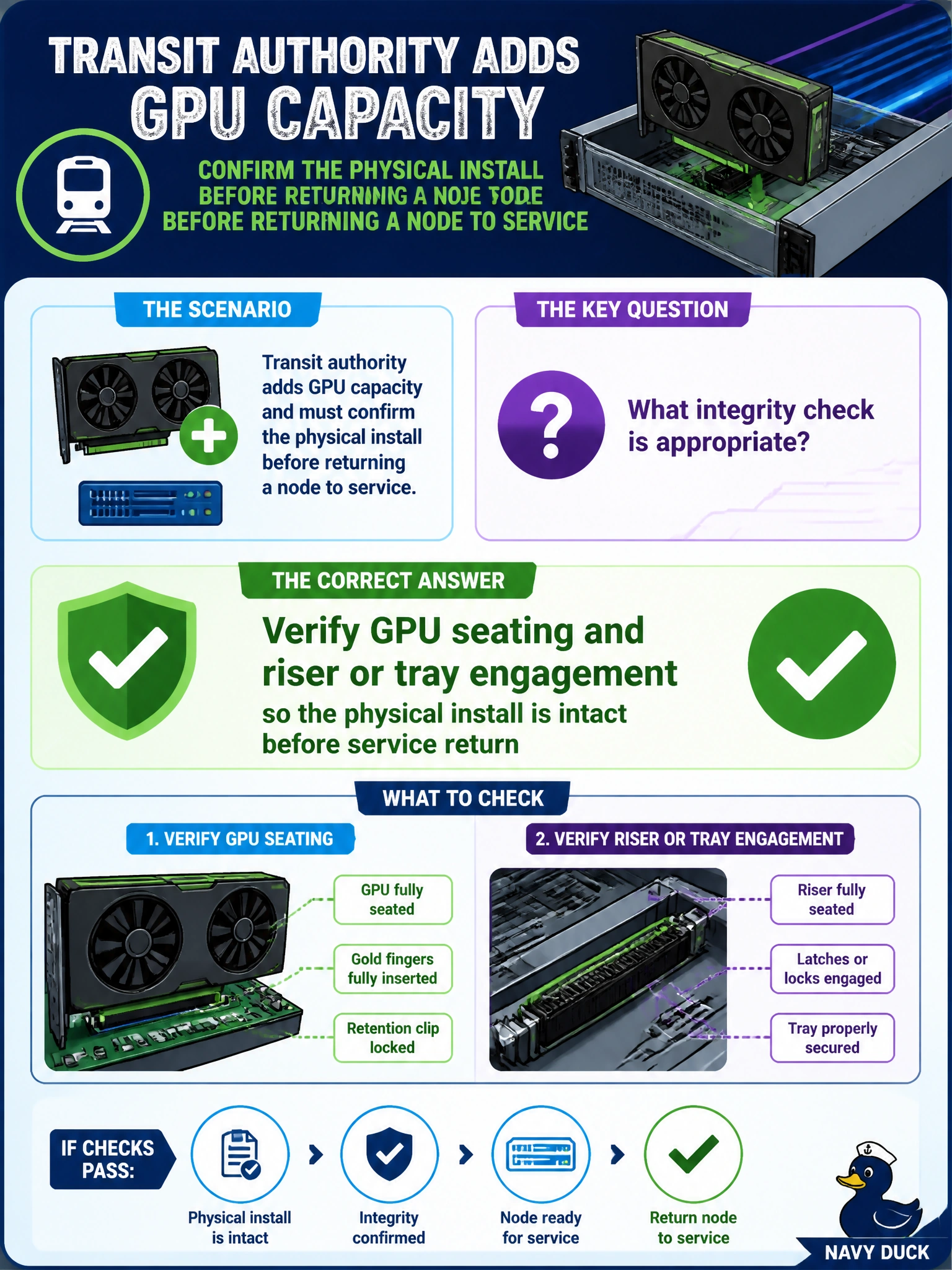
Transit authority adds GPU capacity and must confirm the physical install before returning a node to service. What integrity check is appropriate?
Select an answer to reveal the explanation.
Short Explanation
After a capacity add, give the GPUs a seating and tray-engagement check—like confirming coupler lock before a train rolls. Packing-foam removal is not integrity proof.
Full Explanation
When a transit authority adds GPU capacity and must confirm the physical install before returning a node to service, the appropriate integrity check is to verify GPU seating and riser or tray engagement so the physical install is intact. Capacity adds change mechanical state: boards and trays must be fully engaged or the node returns to service with intermittent PCIe or power contacts that appear as mysterious training failures later. A deliberate seating and engagement check is the service-return gate that matches how multi-GPU chassis actually hold accelerators.
Assuming capacity is fine if packing foam was removed only proves unboxing, not seating. Only updating the wiki title to include more GPUs changes documentation cosmetics without inspecting hardware. Shaking the chassis vigorously as the sole seating test is uncontrolled mechanical abuse and is not a substitute for inspecting connector and tray engagement.
Exam caveat: service return after GPU capacity add requires verifying seating and riser/tray engagement—foam removal, wiki edits, or chassis shaking are not integrity checks. Operational check: before returning the transit node to service, inspect each added GPU for full connector seating and riser/tray lock engagement, correct any partial inserts, run SMI/PCIe validation, and then clear the node for production scheduling.