
A courts OCR farm accepts new GPU servers into municipal inventory. How should nvidia-smi support asset tracking at install?
Select an answer to reveal the explanation.
Short Explanation
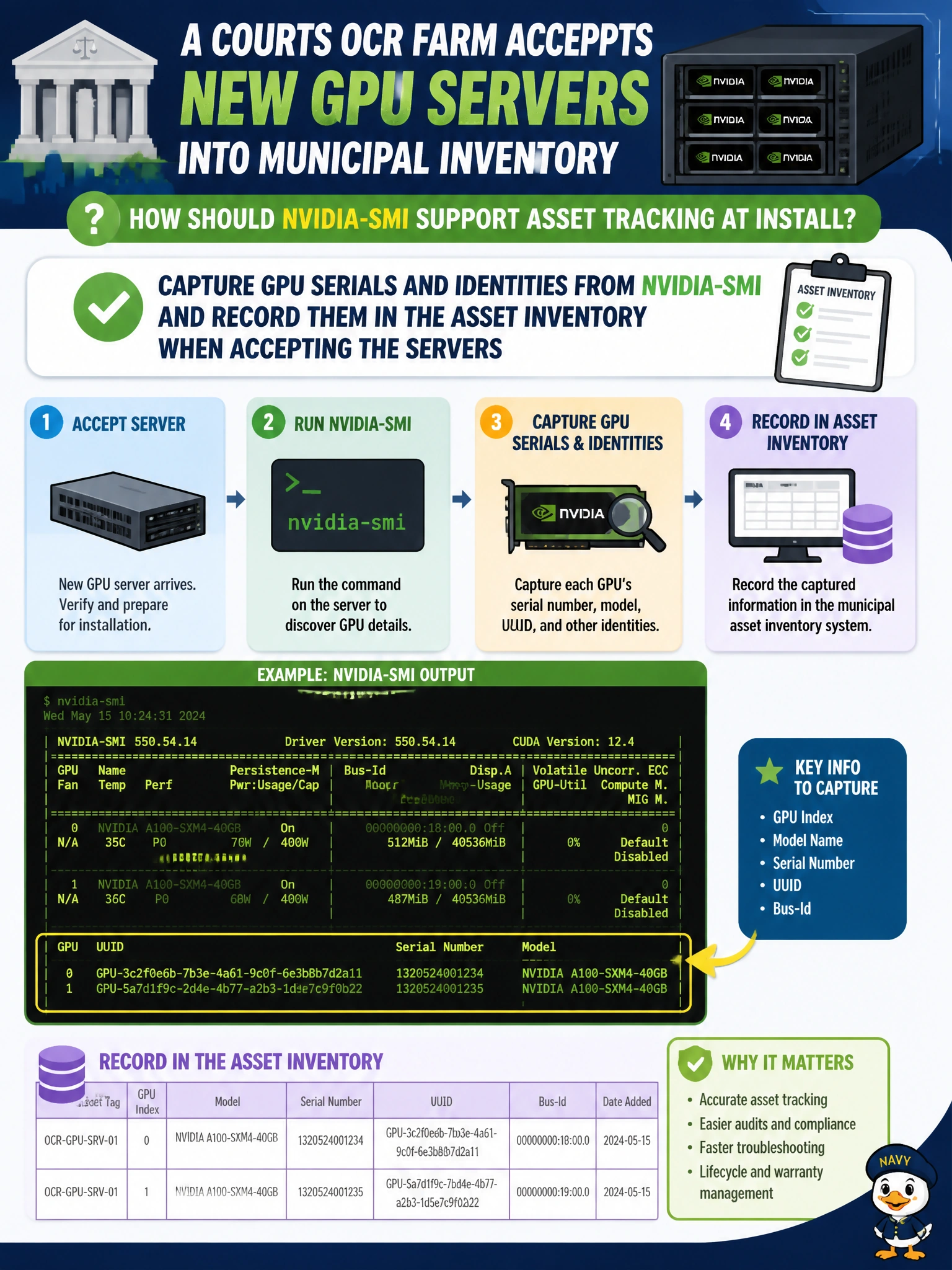
SMI can spit out serials that belong in the courts’ asset book—same idea as tagging scanners when they arrive. Grab identities at install so inventory matches iron, not wishful PO poetry.
Full Explanation
When a courts OCR farm accepts new GPU servers into municipal inventory, nvidia-smi should support asset tracking by capturing GPU serials and identities and recording them in the asset inventory at acceptance. Serials and board identities from SMI bind physical accelerators to property records used for warranty, audit, and chain-of-custody in a courts environment. Doing that capture at install acceptance prevents orphan GPUs that exist in racks but not in the municipal asset book.
Inventing serial numbers that match purchase-order poetry fabricates inventory and breaks warranty and audit integrity. Tracking only chair counts in the clerk’s office inventories furniture, not accelerators. Skipping serial capture because OCR models will rediscover hardware later confuses runtime device enumeration with asset management and leaves gaps when boards move or fail.
Exam caveat: GPU asset acceptance requires capturing real nvidia-smi serials and identities into inventory—fabricated numbers, furniture counts, or “the model will find it later” are not asset controls. Operational check: at courts OCR server acceptance, run nvidia-smi identity/serial queries, write results into the municipal asset system keyed to hostname and rack location, and block acceptance if serials are missing, duplicated unexpectedly, or mismatch receiving documents.