
Transit operations wants every new HGX host checked the same way during municipal install. How should nvidia-smi fit the workflow?
Select an answer to reveal the explanation.
Short Explanation
Playbooks beat memory—drop nvidia-smi into the install steps so every transit HGX host gets the same flashlight check before handoff. Shipping-label selfies and shift folklore are not validation.
Full Explanation
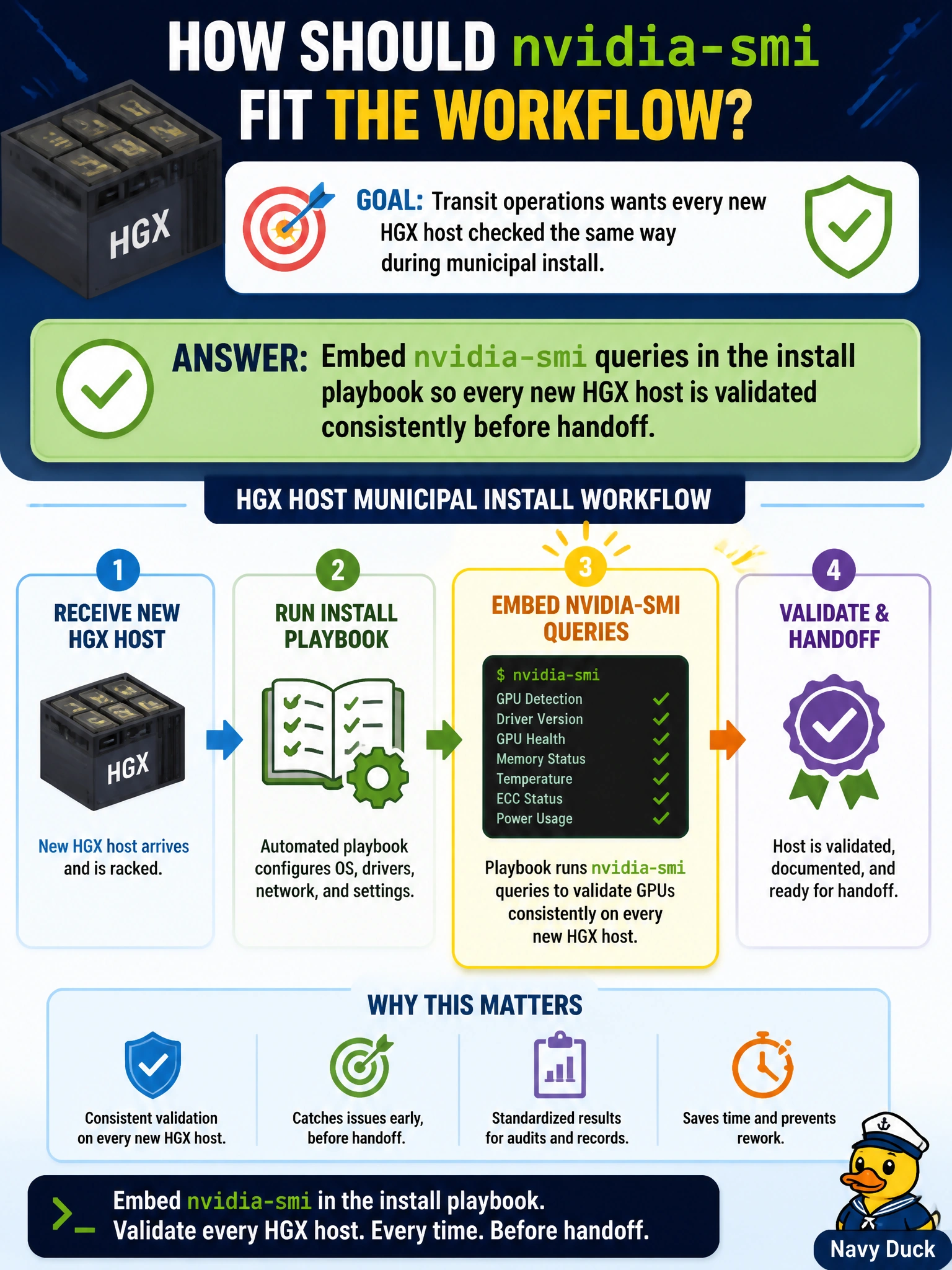
Transit operations that want every new HGX host checked the same way during municipal install should embed nvidia-smi queries in the install playbook so validation is consistent before handoff. Playbook-driven SMI turns GPU inventory and driver checks into a repeatable step rather than tribal knowledge: every host gets the same queries, expected results, and failure handling before it is released to operations. Consistency matters in civic environments where shift changes and contractor crews otherwise invent ad-hoc checks.
Running SMI only after the first rider-facing model fails in production postpones detection until citizen-impacting breakage. Replacing SMI with a screenshot of the shipping label documents logistics, not live GPU enumeration under the installed stack. Allowing each technician to invent a different GPU check per shift destroys comparability and leaves gaps where some hosts never see a real nvidia-smi gate.
Exam caveat: nvidia-smi belongs in the install playbook as a standardized pre-handoff gate for HGX hosts—not as a post-incident afterthought or a technician’s personal ritual. Operational check: add explicit nvidia-smi steps and pass/fail criteria to the transit install playbook, require captured output in the handoff package, and refuse host acceptance when queries are skipped or results diverge from the municipal HGX standard.