
A housing-authority analytics cluster measures rack draw above designed PDU headroom during AI bring-up. What is the correct response?
Select an answer to reveal the explanation.
Short Explanation
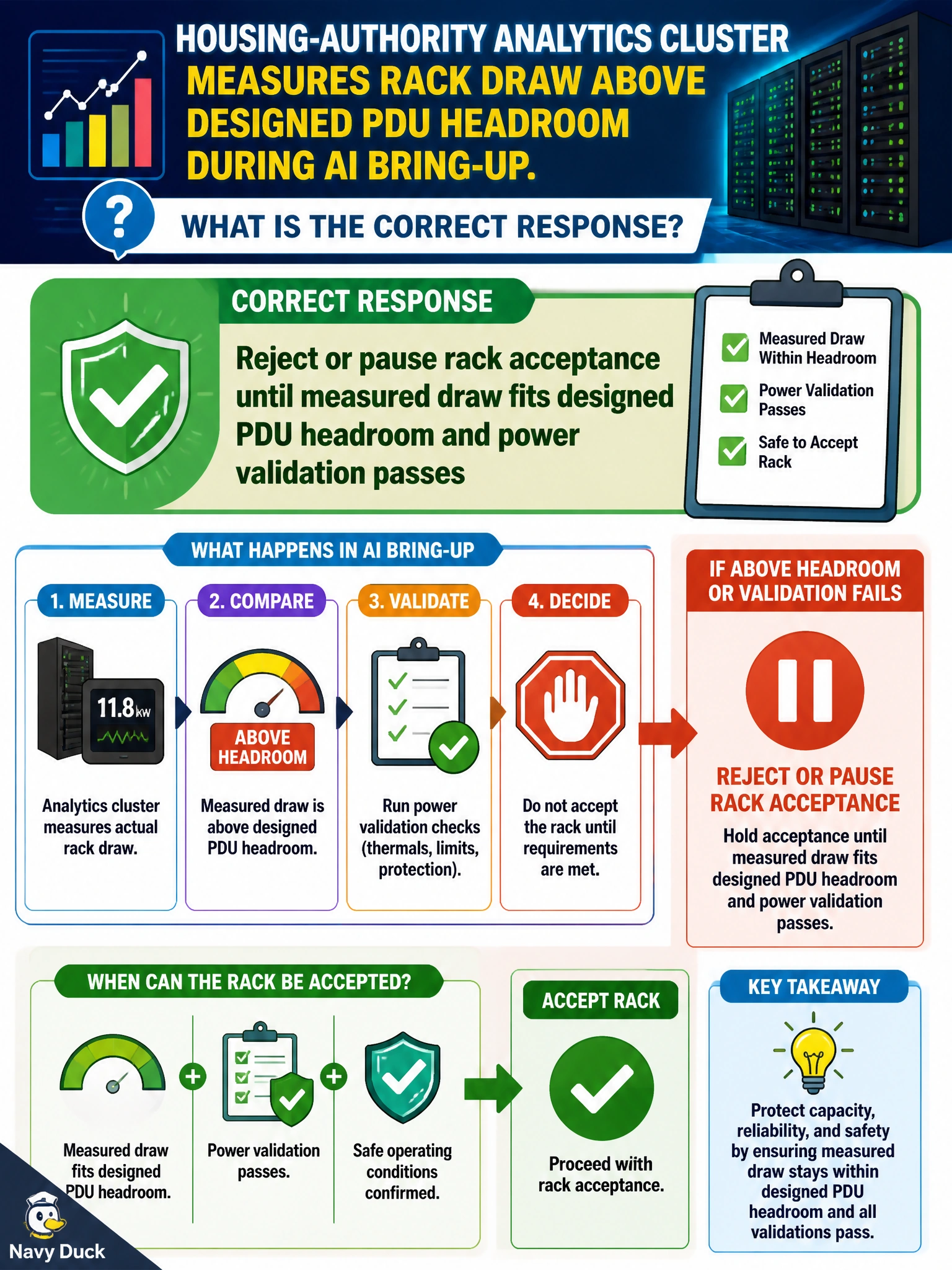
If measured draw eats the PDU’s headroom, that rack is not ready—same as a housing boiler that trips the breaker under peak load. Pause acceptance, fix the power plan, and only then clear bring-up.
Full Explanation
When a housing-authority analytics cluster measures rack draw above designed PDU headroom during AI bring-up, the correct response is to reject or pause rack acceptance until measured draw fits designed PDU headroom and power validation passes. Designed headroom exists so protection devices, upstream feeds, and diversity margins remain intact under real GPU load. Accepting an overloaded rack turns a temporary grant-driven install into a standing risk of trips, brownouts on shared branches, and unsafe workarounds later. Pausing acceptance until measurements fit the design is the civic facilities gate that keeps analytics GPUs inside the building’s power envelope.
Overriding PDU trip settings so denser GPUs can stay powered disables the protection that the headroom calculation assumed and can cascade faults upstream. Adding more GPUs immediately because grant funding expires this week worsens the overload and confuses procurement urgency with electrical readiness. Documenting the overload as a software bug and opening the Slurm queue misattributes a facility power failure to application software and invites schedulers to place load on hardware that facilities has not cleared.
Exam caveat: measured draw above designed PDU headroom is a hard acceptance blocker—do not “fix” it with trip overrides, denser installs, or scheduler workarounds. Operational check: capture sustained and peak rack draw against the PDU design sheet, compare to remaining headroom, pause or reject the housing-authority rack if over limit, remediate load or feed capacity, and re-measure until power validation passes before acceptance.