
A water-utility digital-twin rack is about to accept new AI nodes. What cooling check belongs in bring-up before sustained load?
Select an answer to reveal the explanation.
Short Explanation
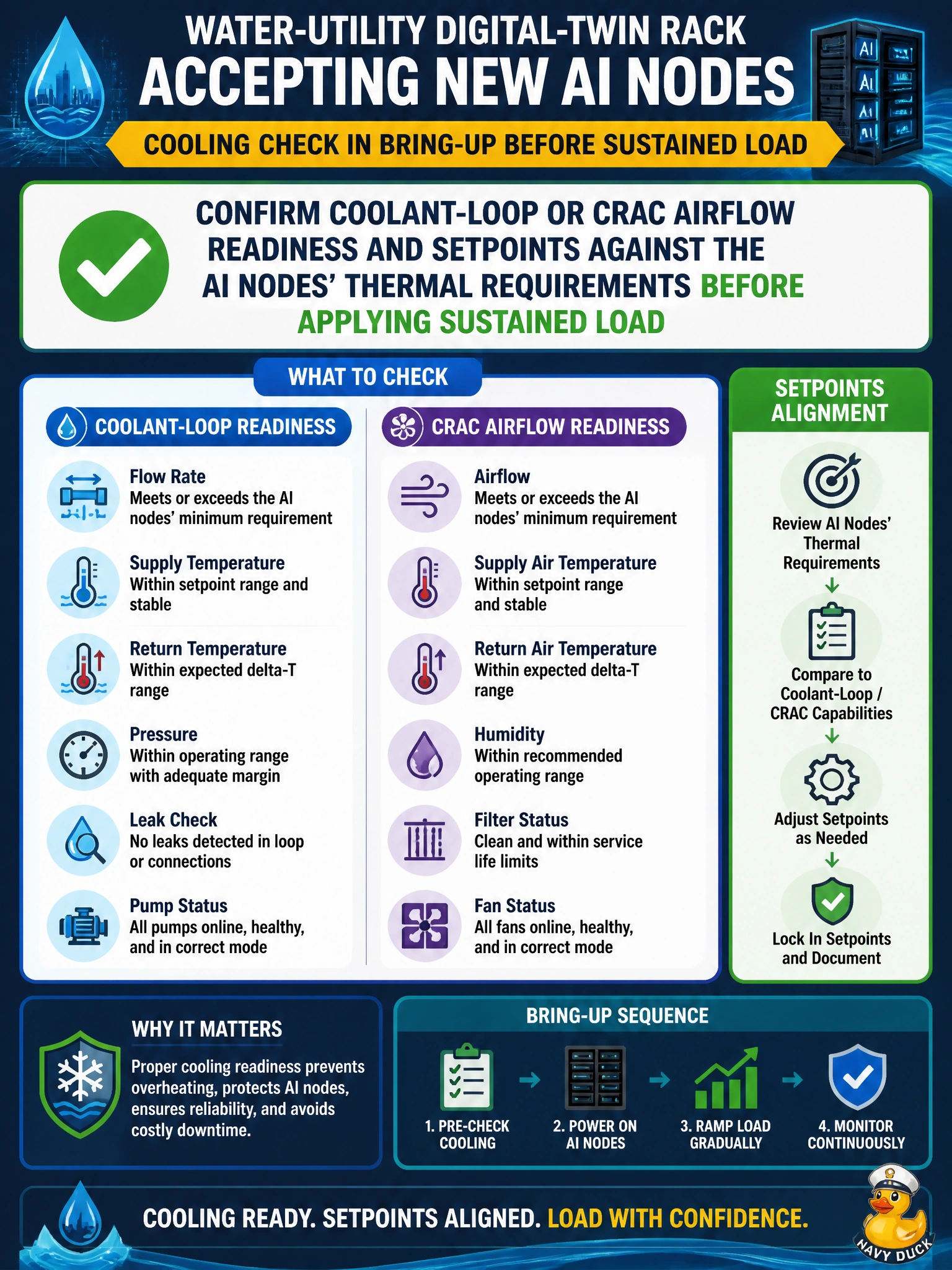
Cooling is the quiet utility behind every GPU—like making sure the pump station is primed before you open the valves. Confirm the loop or CRAC airflow and setpoints match what those AI nodes will dump thermally before you lean on sustained load.
Full Explanation
Before a water-utility digital-twin rack accepts sustained load on new AI nodes, bring-up must confirm coolant-loop or CRAC airflow readiness and setpoints against the nodes’ thermal requirements. AI density moves heat far beyond typical IT guesswork; the cooling plant—air, liquid, or both—has to be primed, set, and matched to nameplate or design thermal envelopes before operators lean on continuous inference or twin simulation. Validating readiness and setpoints first keeps the digital-twin rack inside facility limits and turns cooling from an afterthought into a day-0 gate.
Assuming room ambient is fine because the hallway feels cool to staff substitutes subjective comfort for measured capacity and setpoint compliance; hallways are not rack inlets. Blocking all return vents to raise GPU clocks during first power-on actively sabotages airflow and invites hotspots rather than validating cooling. Skipping cooling validation until after a week of production inference defers the check until civic workloads are already dependent on the rack, so the first thermal surprise lands on live utility operations instead of a controlled bring-up window.
Exam caveat: cooling validation for AI nodes is a before-sustained-load bring-up step tied to design thermal requirements—not hallway feel, vent blocking tricks, or post-production discovery. Operational check: confirm CRAC or coolant-loop status, setpoints, and flow or airflow against the AI nodes’ thermal package; verify inlet or coolant readings under a controlled load step; only then release the water-utility digital-twin rack to sustained load.