
A water-utility digital-twin rack plan must relate storage and GPU networks. Which description fits AI factory bring-up design?
Select an answer to reveal the explanation.
Short Explanation
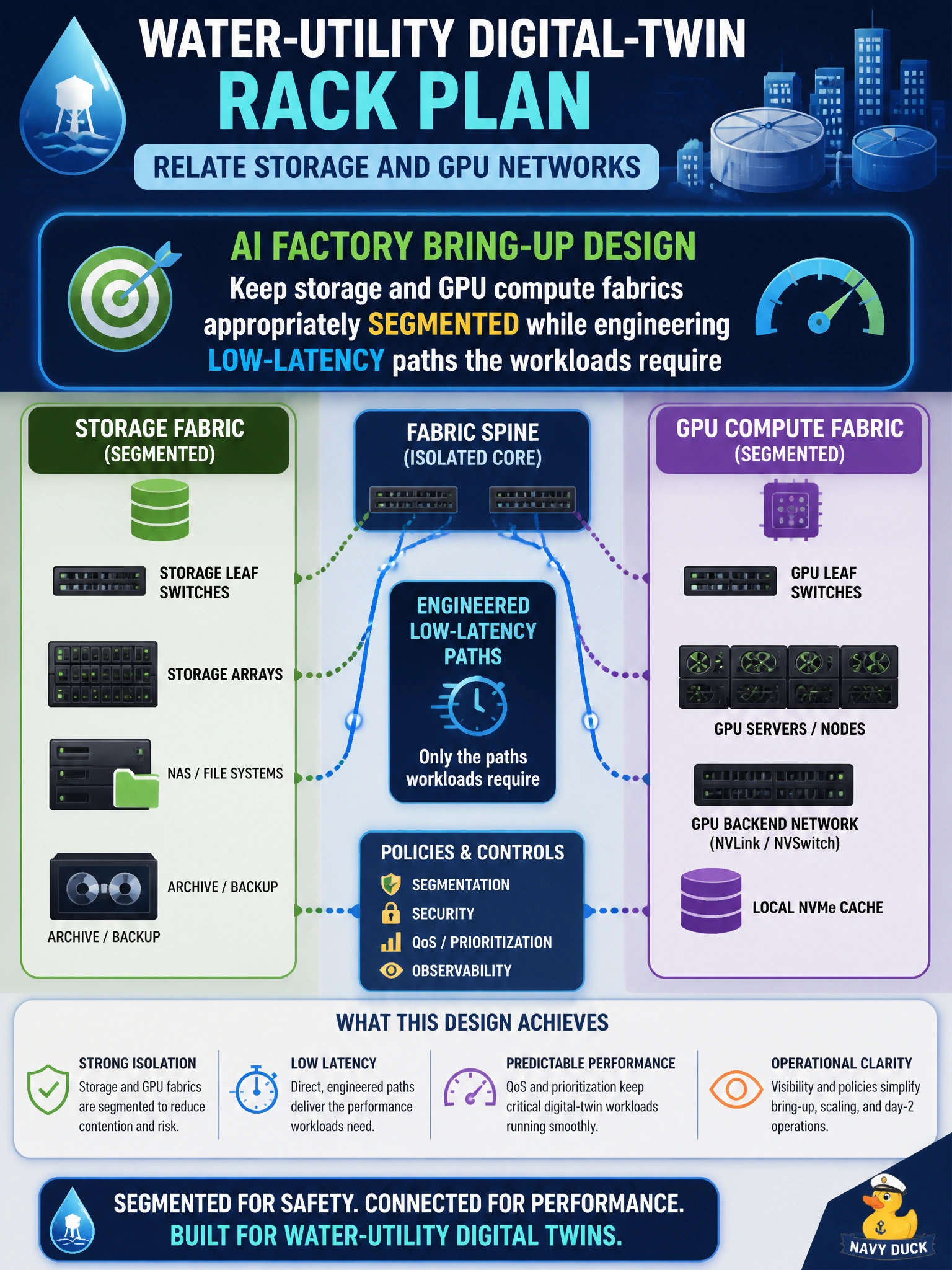
Digital-twin training wants fast pipes to datasets without dumping storage chatter onto the same wild segment as every GPU collective. Segment storage and compute sensibly, but still engineer the low-latency paths the jobs actually need.
Full Explanation
Water-utility digital-twin racks need storage and GPU networks that are appropriately segmented yet engineered for the low-latency, high-throughput paths training and simulation I/O require. Segmentation limits blast radius and noisy-neighbor effects between storage protocols and collective GPU traffic, while deliberate low-latency design (right NICs, fabrics, mounts, and QoS) keeps epochs from stalling on data. Sharing storage and GPU traffic on one unmanaged hub with no segmentation invites congestion, security sprawl, and troubleshooting ambiguity when digital-twin jobs misbehave. Removing GPU fabric links so all training I/O uses only Wi-Fi cannot meet bandwidth or latency needs of modern GPU servers. Requiring storage to be reachable only through the public internet for every epoch adds latency, exposure, and municipal compliance risk that on-prem or private paths are meant to avoid. Exam caveat: “segmented” does not mean “disconnected”—storage must remain reachable to GPU nodes over controlled, performant paths. Operational check: document separate storage and GPU VLANs or fabrics for the utility twin rack, measure read/write throughput from a GPU node to the dataset tier, and confirm ACLs still allow only the required flows.