
Clerks oversee the ordinance agent’s replies. Which HITL UI best supports their review?
Select an answer to reveal the explanation.
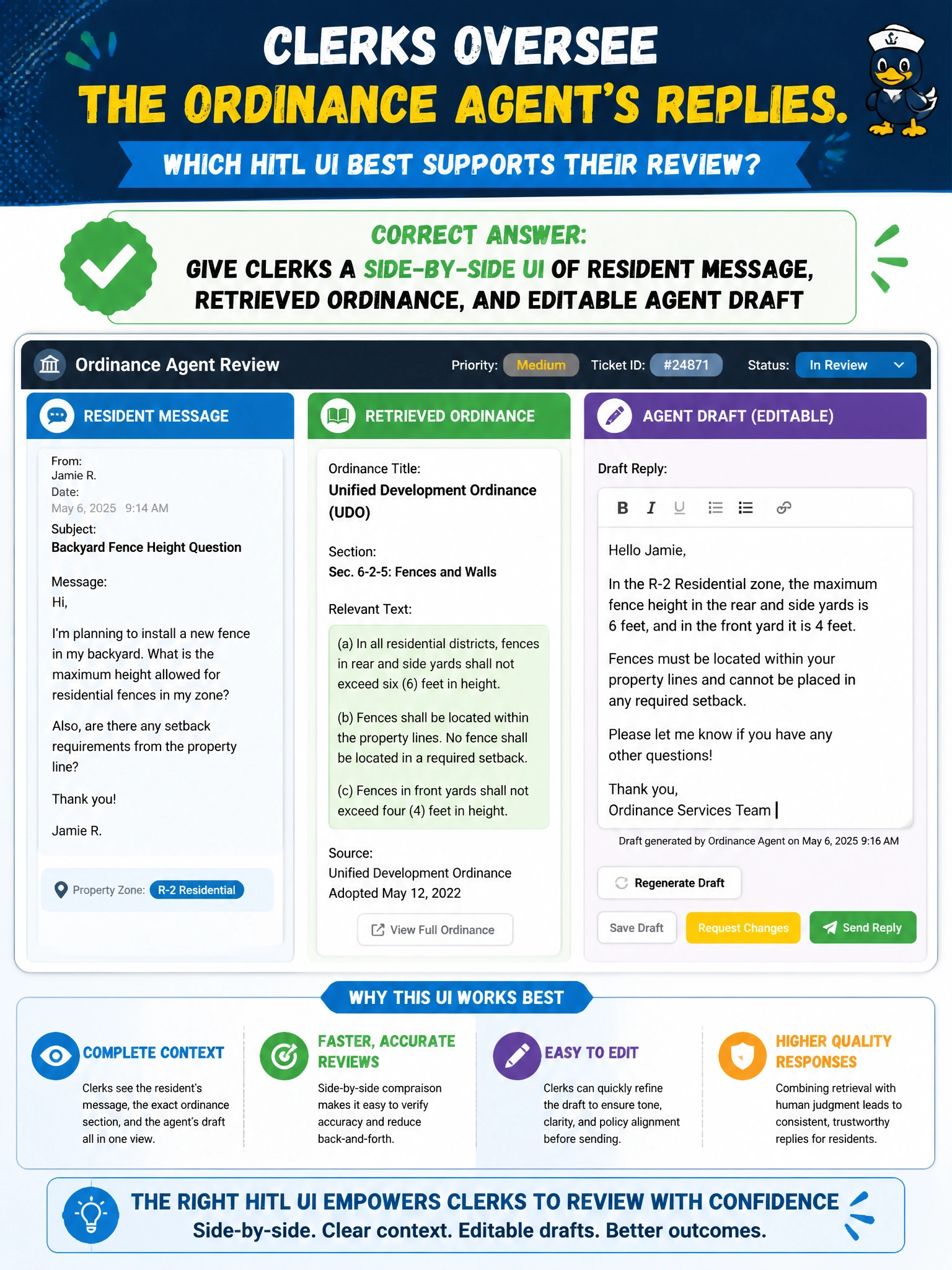
Short Explanation
Oversight needs receipts. A side-by-side of the resident message, retrieved ordinance, and editable draft lets clerks see evidence and fix the reply fast.
Full Explanation
Clerks overseeing an ordinance agent need a HITL UI that shows side-by-side the resident message, retrieved ordinance evidence, and an editable agent draft. That layout lets reviewers verify citations against the question, correct wording quickly, and approve or override with full context. Effective human oversight for municipal legal-ish answers depends on evidence visibility plus editability—not binary ratings alone.
Showing clerks only a thumbs-up button with no source text fails by concept because approval without evidence is rubber-stamping and cannot catch citation errors. Hiding retrieved ordinances so clerks cannot check the agent’s evidence fails because it blocks the core oversight task: validating that the answer matches controlling text. Forcing clerks to retype every answer from scratch with no agent draft fails operationally: it discards useful assistance and creates backlog without improving evidence review; the better pattern is edit-from-draft with sources visible.
Exam caveat: NCP-AAI HITL design questions favor evidence-rich review UIs for ordinance/citation work. Prefer side-by-side message + sources + editable draft over opaque thumbs, hidden evidence, or mandatory full retype.
Operational check: ship a review console with three panes (resident text, retrieved ordinance snippets with IDs, editable draft); require clerks to view sources before approve; capture overrides; measure time-to-review and citation-error catch rate.