
The permit portal agent drafts an application for a resident. What user-in-the-loop UI pattern should apply before submit?
Select an answer to reveal the explanation.
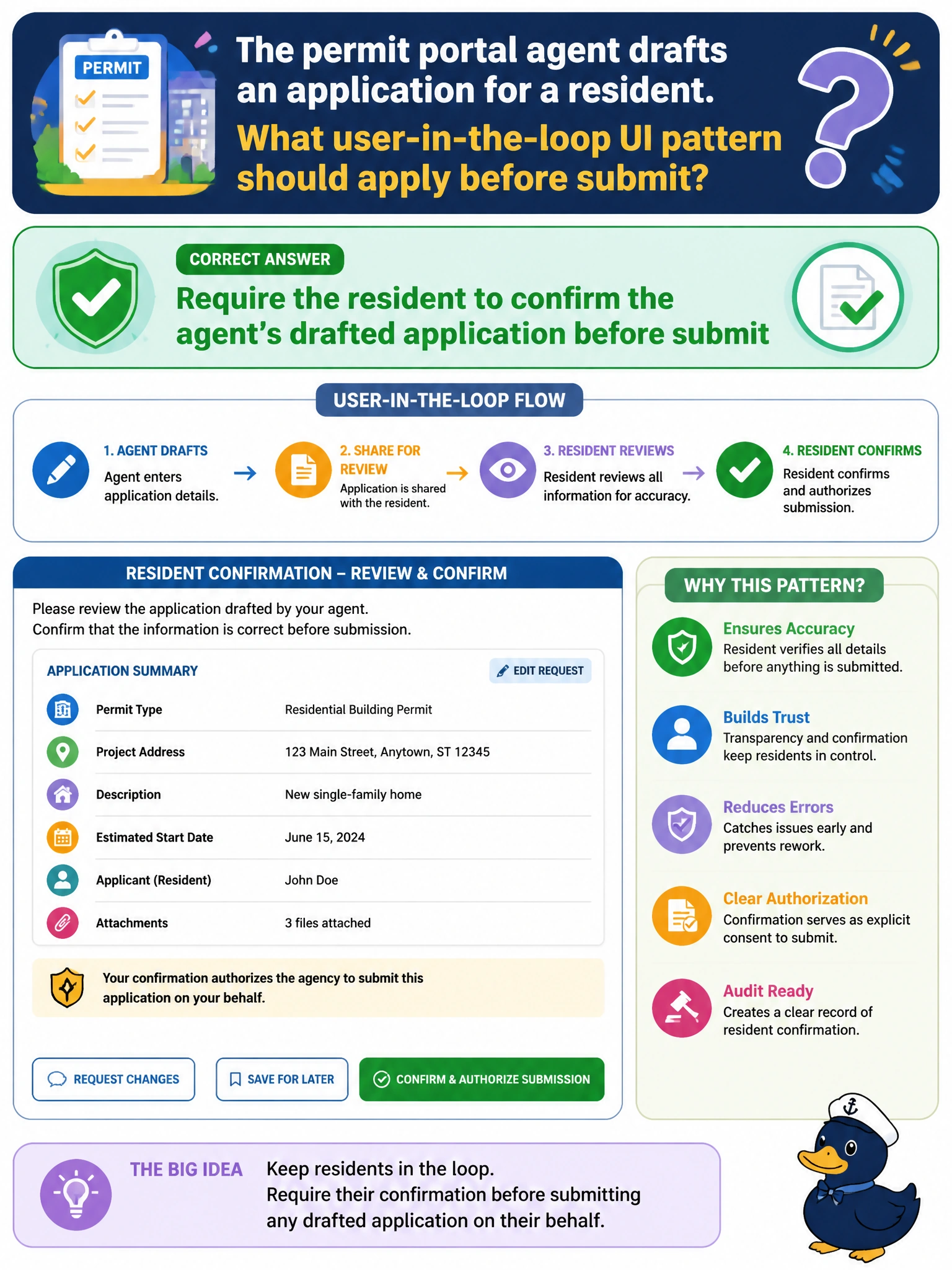
Short Explanation
Drafting a permit app is helpful; filing it without a human check isn’t. Make the resident confirm the draft before submit—user-in-the-loop for consequential city actions.
Full Explanation
When a permit portal agent drafts an application for a resident, user-in-the-loop UI must require the resident to confirm the drafted application before submit. Confirmation keeps consequential municipal filings under human control: the resident reviews fields, attestations, and fees, then explicitly consents to file. Draft assistance without auto-submit reduces errors and prevents the agent from taking irreversible civic actions on the resident’s behalf.
Auto-submitting the draft without showing it to the resident fails by concept because it removes informed consent and can file incorrect or incomplete permit data. Hiding the draft and only showing a “submitted” confirmation fails because post-facto notice is not review—the harmful submit already happened. Letting the agent file silently overnight with no confirm step fails for the same reason at larger scale: unattended consequential actions without a human gate.
Exam caveat: NCP-AAI human-in-the-loop items treat filing, payments, and legal submissions as confirm-before-commit actions. Prefer resident confirmation of the visible draft over auto-submit, hidden draft, or silent overnight filing.
Operational check: in the portal UI, render the full draft with edit capability; disable the submit API until an explicit resident confirm event; log draft version and confirmer identity; test that killing the confirm step blocks filing in staging.