
Procurement asks how the civic agent stack maps to emerging AI regulatory documentation duties. What response shows compliance awareness?
Select an answer to reveal the explanation.
Short Explanation
Procurement isn’t asking for a shrug. Mapping the agent stack to emerging AI documentation duties shows the city can govern—not just buy—agentic AI.
Full Explanation
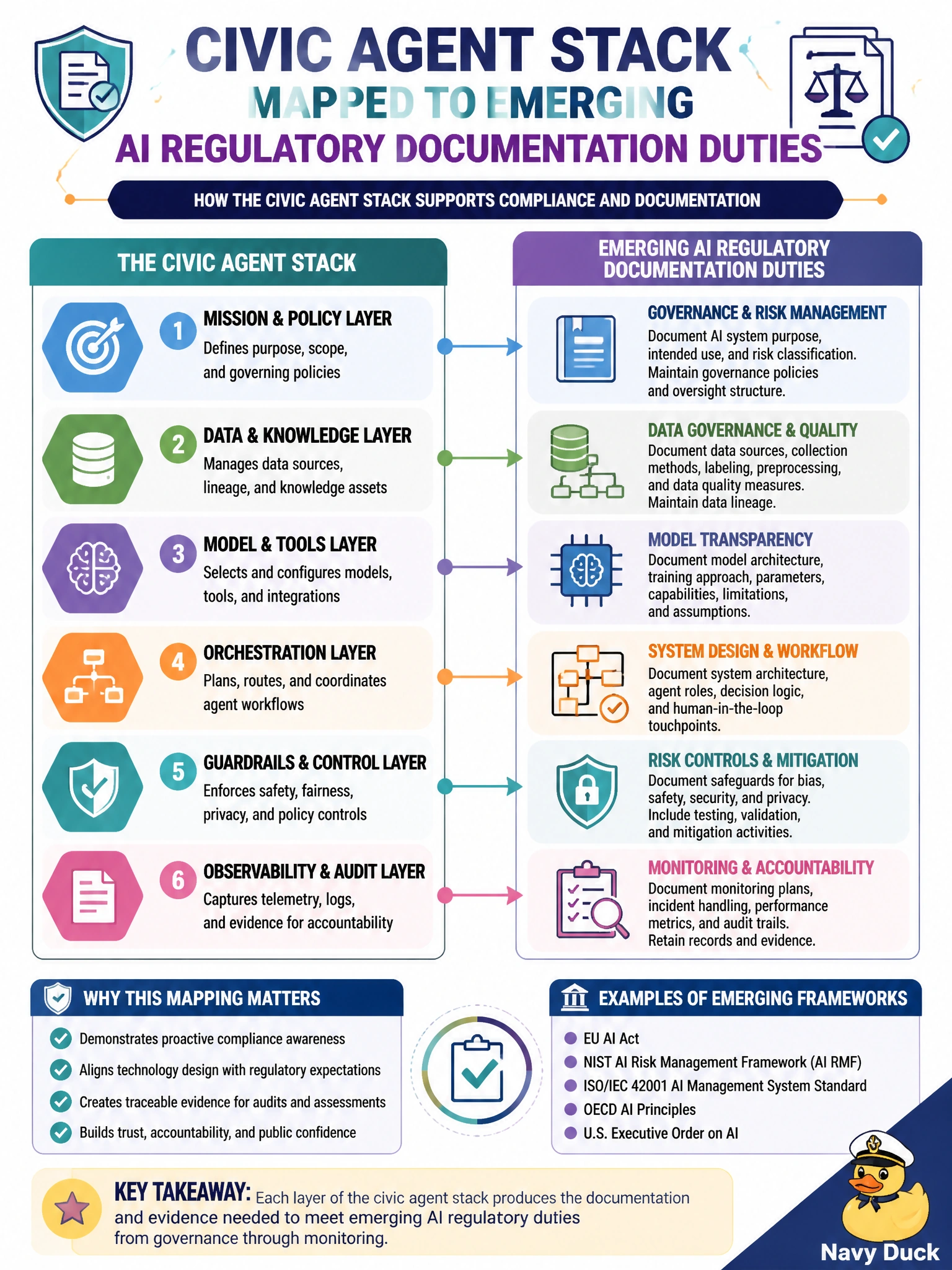
Procurement asking how the civic agent stack maps to emerging AI regulatory documentation duties needs a compliance-aware response: explain how the stack maps to those duties with concrete artifacts—model/system cards, risk assessments, data-processing records, evaluation reports, audit logs, and human-oversight descriptions. Mapping shows the city can govern agentic AI purchases and operations, not merely acquire GPUs and demos. Documentation duties are satisfied by traceable controls, not slogans.
Claiming no documentation is ever needed for municipal AI systems fails by concept because emerging AI regimes and procurement diligence increasingly require documented risk, data, and oversight evidence—especially for public-sector resident-facing agents. Refusing to discuss regulation because the stack uses GPUs fails because hardware presence is irrelevant to documentation obligations; compute does not cancel governance. Promising compliance verbally with no artifacts, audits, or mapped controls fails because verbal assurance is not evidence; auditors and regulators look for durable artifacts.
Exam caveat: NCP-AAI governance/procurement questions favor explicit mapping of systems to documentation duties over denial, hardware distraction, or empty verbal promises. Look for answers that name artifacts and control mapping.
Operational check: maintain a living inventory that maps each civic agent capability to required docs (risk file, eval results, data sources, oversight model); review it in procurement packets; schedule periodic audits that verify artifacts exist and match the running stack.