
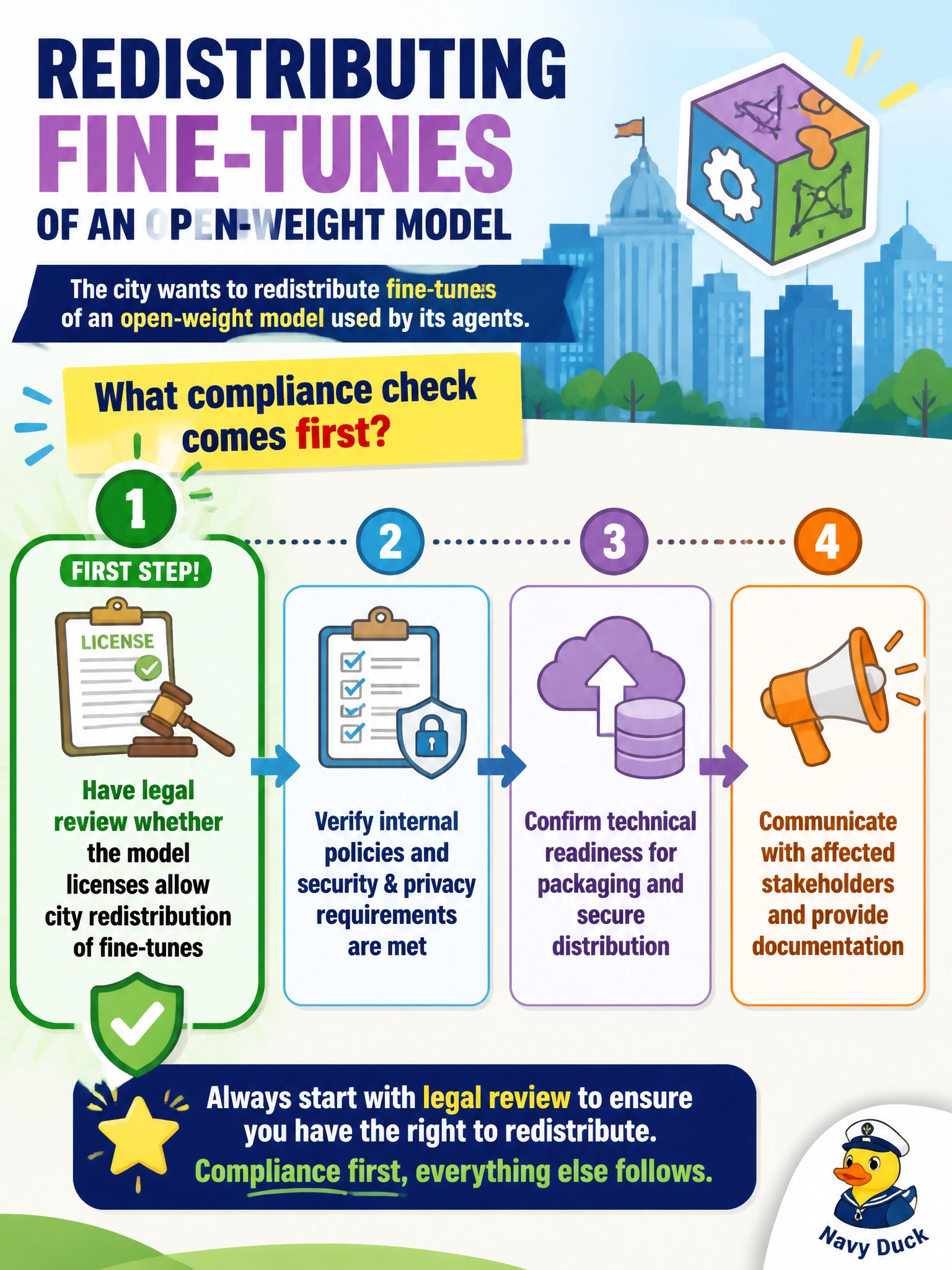
The city wants to redistribute fine-tunes of an open-weight model used by its agents. What compliance check comes first?
Select an answer to reveal the explanation.
Short Explanation
“Open-weight” isn’t a blank check for city redistribution. Legal review of whether the licenses allow sharing fine-tunes comes before anyone hits publish.
Full Explanation
Before a city redistributes fine-tunes of an open-weight model used by its agents, the first compliance check is legal review of whether the model licenses allow municipal redistribution of those fine-tunes. “Open-weight” describes weight availability under specific license terms—it is not a universal grant to republish derivatives. Legal review maps base-model license obligations (attribution, use restrictions, share-alike, commercial/government clauses) to the city’s redistribution plan and records the decision.
Assuming open-weight always means unlimited city redistribution of fine-tunes fails by concept because licenses vary widely; some restrict derivatives, fields of use, or redistribution channels. Publishing fine-tunes publicly without reading any license terms fails because redistribution without license analysis is anticipatory noncompliance. Ignoring licensing because municipal use is automatically exempt fails because government use is not a blanket exemption from software license terms unless the license says so.
Exam caveat: NCP-AAI compliance items often challenge the myth that open-weight equals unrestricted redistribution. Prefer legal license review before sharing fine-tunes over assumptions, publish-first, or municipal-exemption myths.
Operational check: inventory base-model and dependency licenses; send redistribution intent (public repo, partners, vendors) to counsel; obtain written go/no-go; if allowed, attach required notices and retain the license packet with the model card for the civic agent stack.