
An emergency municipal agent detects life-safety keywords in a resident chat. What escalation protocol should run?
Select an answer to reveal the explanation.
Short Explanation
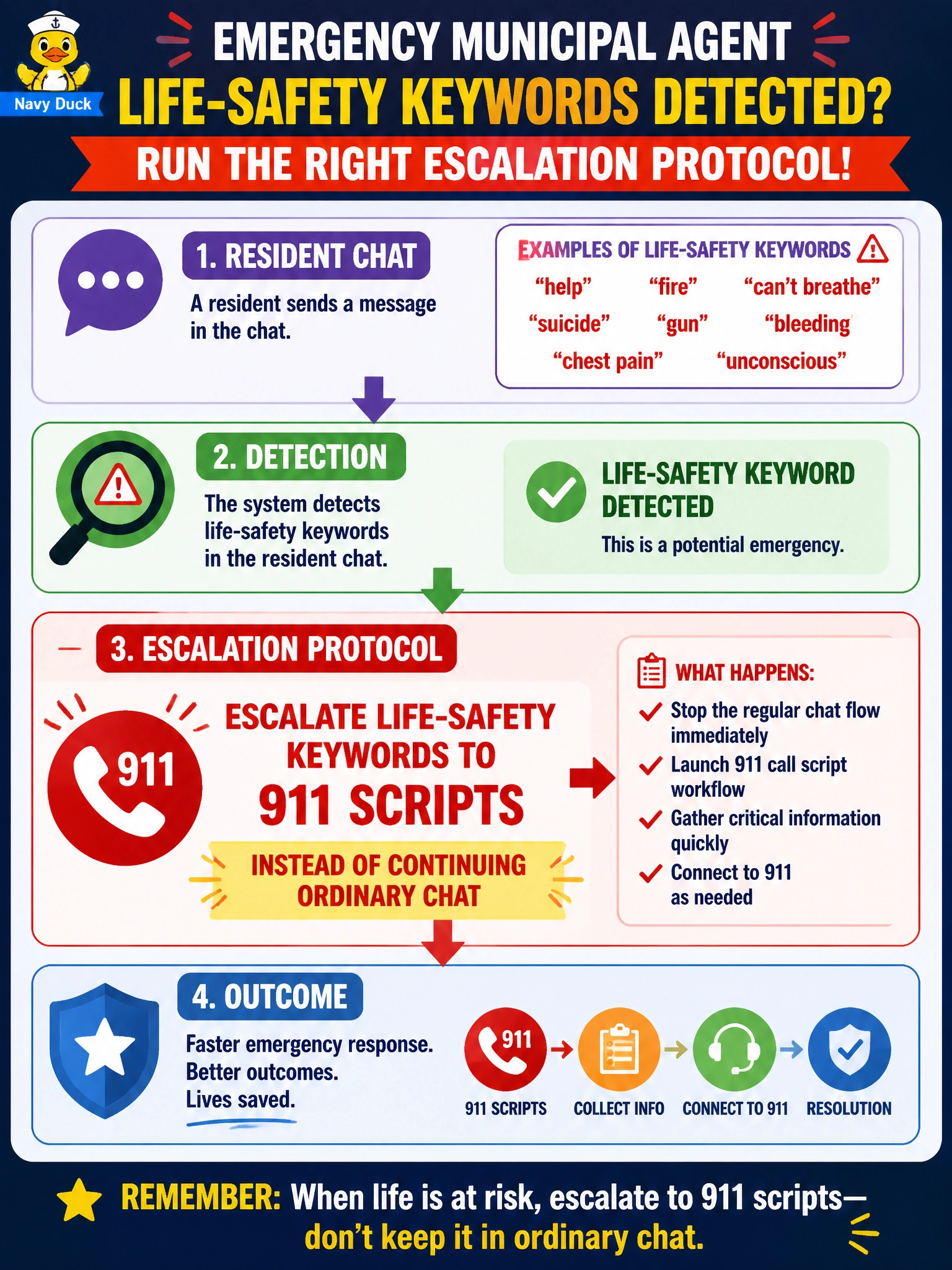
Life-safety keywords mean stop the small talk. Hand off to 911 scripts instead of treating the chat like a normal FAQ.
Full Explanation
An emergency municipal agent that detects life-safety keywords in resident chat must escalate to 911 scripts instead of continuing ordinary conversation. Escalation protocol means interrupting FAQ flow, presenting clear emergency guidance, and handing off to official emergency-service procedures appropriate to the city’s jurisdiction. Life-safety keyword detection is a high-priority control path: speed and correct routing matter more than completing a polite multi-turn civic FAQ.
Continuing to chat casually and never mentioning emergency services fails by concept because it wastes critical time and withholds the correct emergency channel. Asking the resident to “stay calm” while collecting non-urgent survey data fails because surveys are the wrong workflow priority during life-safety signals. Muting the session so no further guidance or escalation occurs fails because silence removes both help and handoff—abandonment instead of escalation.
Exam caveat: NCP-AAI emergency-escalation questions contrast life-safety handoff with continued normal chat, distraction workflows, or session abandonment. Prefer explicit escalation to 911/emergency scripts when keywords indicate imminent harm.
Operational check: maintain a life-safety keyword/intent list with mandatory escalate actions; in staging, inject those keywords and confirm ordinary tools pause, emergency script renders, and logging marks the escalation; train supervisors on takeover when automated escalation needs human confirmation.