
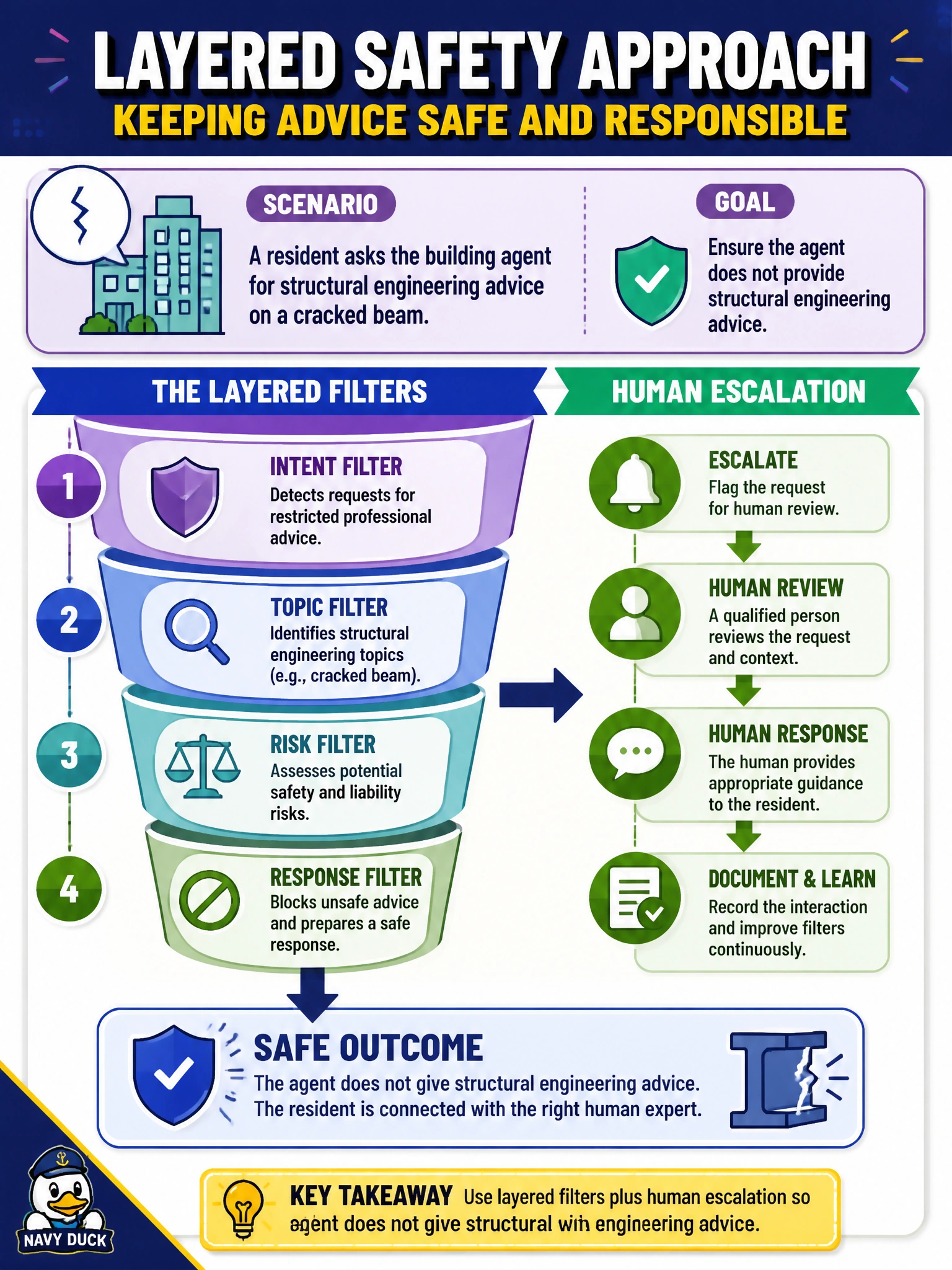
A resident asks the building agent for structural engineering advice on a cracked beam. What layered safety approach fits?
Select an answer to reveal the explanation.
Short Explanation
Cracked beams aren’t chatbot trivia. Layered filters plus human escalation keep the municipal agent from playing structural engineer.
Full Explanation
When a resident asks a building agent for structural engineering advice on a cracked beam, the safe municipal pattern is layered filters plus human escalation so the agent does not give structural engineering advice. Layer one detects life-safety/structural intents; layer two refuses DIY structural prescriptions; layer three routes to licensed human review or official inspection channels. Cracked beams are outside general FAQ competence—incorrect advice can create physical harm and legal liability for the city.
Having the agent invent load calculations to sound authoritative fails by concept because fabricated engineering numbers create false confidence and dangerous decisions. Answering with DIY shoring steps and skipping escalation fails because it substitutes unlicensed guidance for professional assessment and inspection. Treating structural questions like ordinary FAQ trivia fails because severity and expertise requirements differ; FAQ handling under-escalates a life-safety structural concern.
Exam caveat: NCP-AAI layered-safety items expect refusal plus escalation for regulated professional domains (structural, medical, legal), not improvised technical bravado. Prefer filters-and-escalate over inventing calculations, DIY steps, or FAQ-trivialization.
Operational check: add intent classifiers for structural/engineering advice; configure hard refusal templates that direct residents to inspection request paths; require human escalation for cracked-beam and similar keywords; test that the agent never emits load calculations or shoring instructions in staging.