
The public portal agent might generate abusive text. What toxicity control belongs in the path?
Select an answer to reveal the explanation.
Short Explanation
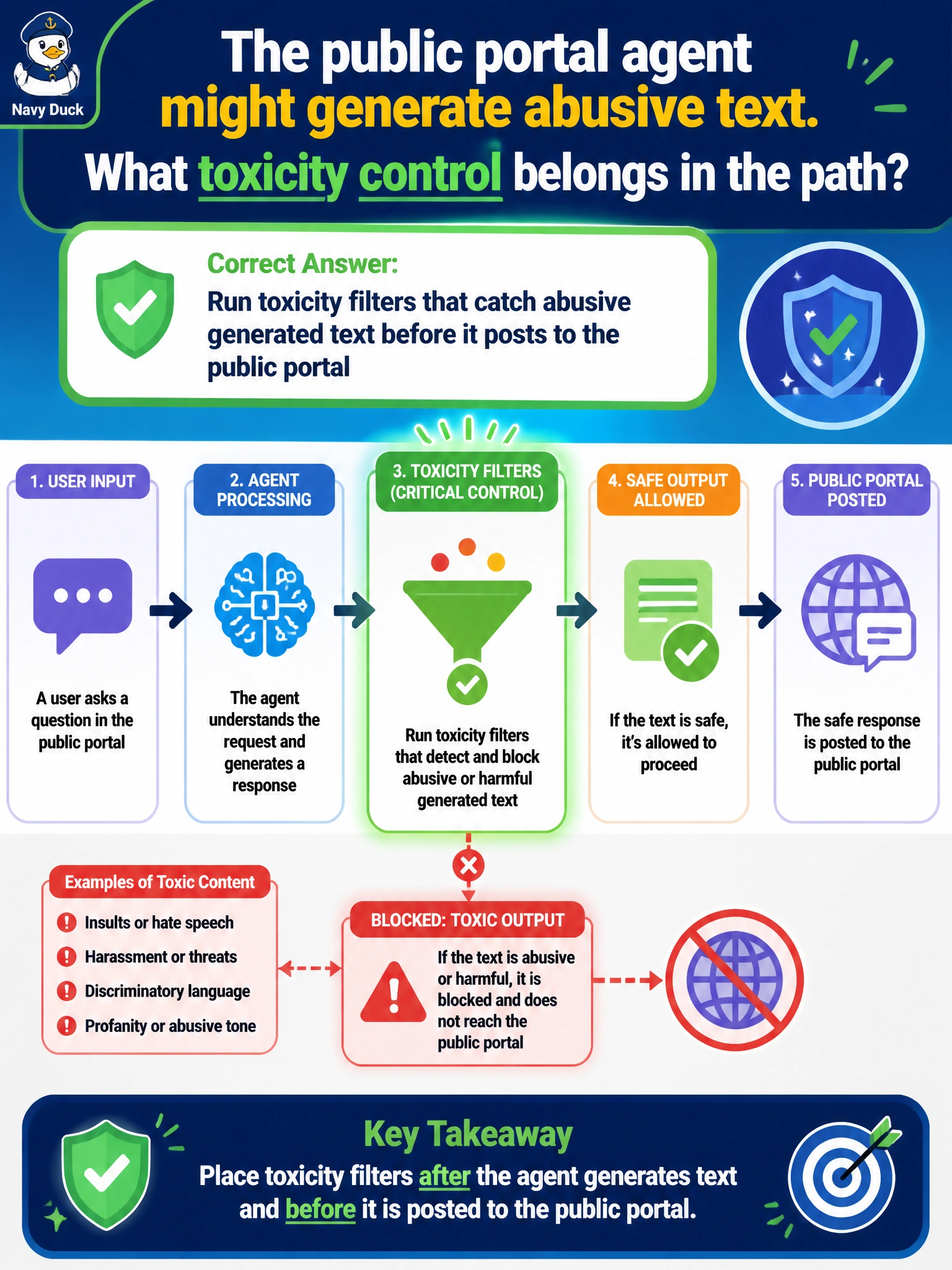
Abusive city replies should never hit the public portal first. Toxicity filters that catch bad text before publish keep civic agents from becoming the problem.
Full Explanation
A public portal agent that might generate abusive text needs toxicity filters in the generation path that catch abusive content before it posts. Pre-publish moderation is a preventive control: classify or rule-match outputs, block or rewrite unsafe text, and escalate severe cases. For municipal portals, outbound toxicity controls protect residents from harassment originating in the city’s own agent channel and protect the city’s duty of care on public systems.
Posting every generated reply immediately with no content filters fails by concept because it treats the raw model as production-safe and guarantees some abusive outputs will reach the public. Relying only on residents to flag abuse after it is already public fails because detection-after-harm is not prevention; damage and screenshots spread before moderators react. Disabling moderation to maximize “authentic” agent personality fails because authenticity is not a license for civic systems to deliver abuse; personality goals do not override safety controls.
Exam caveat: NCP-AAI safety items prefer proactive filters on outbound public content over no filters, post-hoc resident policing, or anti-moderation rationales. Placement “before it posts” is the operational distinction.
Operational check: insert toxicity/safety classifiers (and blocklists) before the portal publish step; red-team with abusive prompts; confirm blocked outputs never render publicly; log blocks for tuning; keep a human review queue for borderline civic speech that still must not include abuse.