
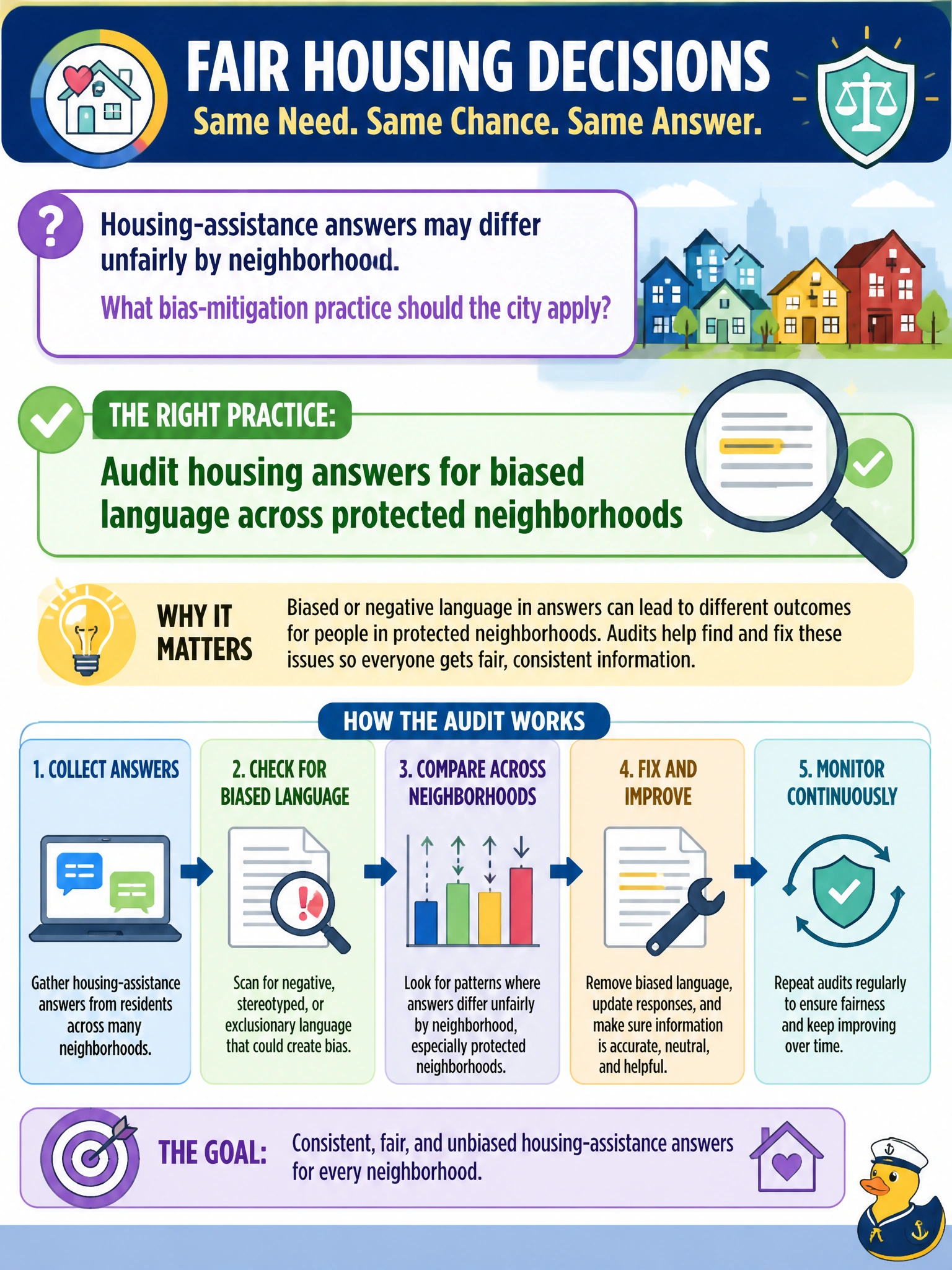
Housing-assistance answers may differ unfairly by neighborhood. What bias-mitigation practice should the city apply?
Select an answer to reveal the explanation.
Short Explanation
High average accuracy can still hide unfair wording by neighborhood. Auditing housing answers across protected areas is how cities catch biased language before it hardens into unequal service.
Full Explanation
Housing-assistance answers that may differ unfairly by neighborhood require active bias mitigation: audit housing answers for biased language across protected neighborhoods rather than trusting a high overall accuracy score. Slice audits compare tone, eligibility framing, resource offers, and refusal patterns across areas so the city can detect unequal service quality that averages hide. Bias review is a continuous quality and equity control for civic agents that influence housing access.
Assuming housing answers are fair if overall accuracy looks high fails by concept because aggregate accuracy can remain strong while specific neighborhoods receive colder, less helpful, or stereotyped wording. Hiding neighborhood fields so biased phrasing cannot be detected fails because removing the slice feature blinds evaluation; it does not remove disparate treatment in generated text. Training staff to ignore resident complaints about unequal wording fails because complaints are early warning signals; suppressing them removes a human feedback channel for bias discovery.
Exam caveat: NCP-AAI fairness questions often contrast overall metrics with slice-aware audits. When the stem flags neighborhood inequity risk, prefer auditing language across protected areas over average-only confidence, observability sabotage, or complaint suppression.
Operational check: build an eval set stratified by neighborhood/protected area; score housing-assistance outputs for biased or unequal language; gate releases on slice parity thresholds; route failing examples to content and equity review before promoting the housing agent.