
City records policy limits chat transcript retention. How should the 311 agent stack comply?
Select an answer to reveal the explanation.
Short Explanation
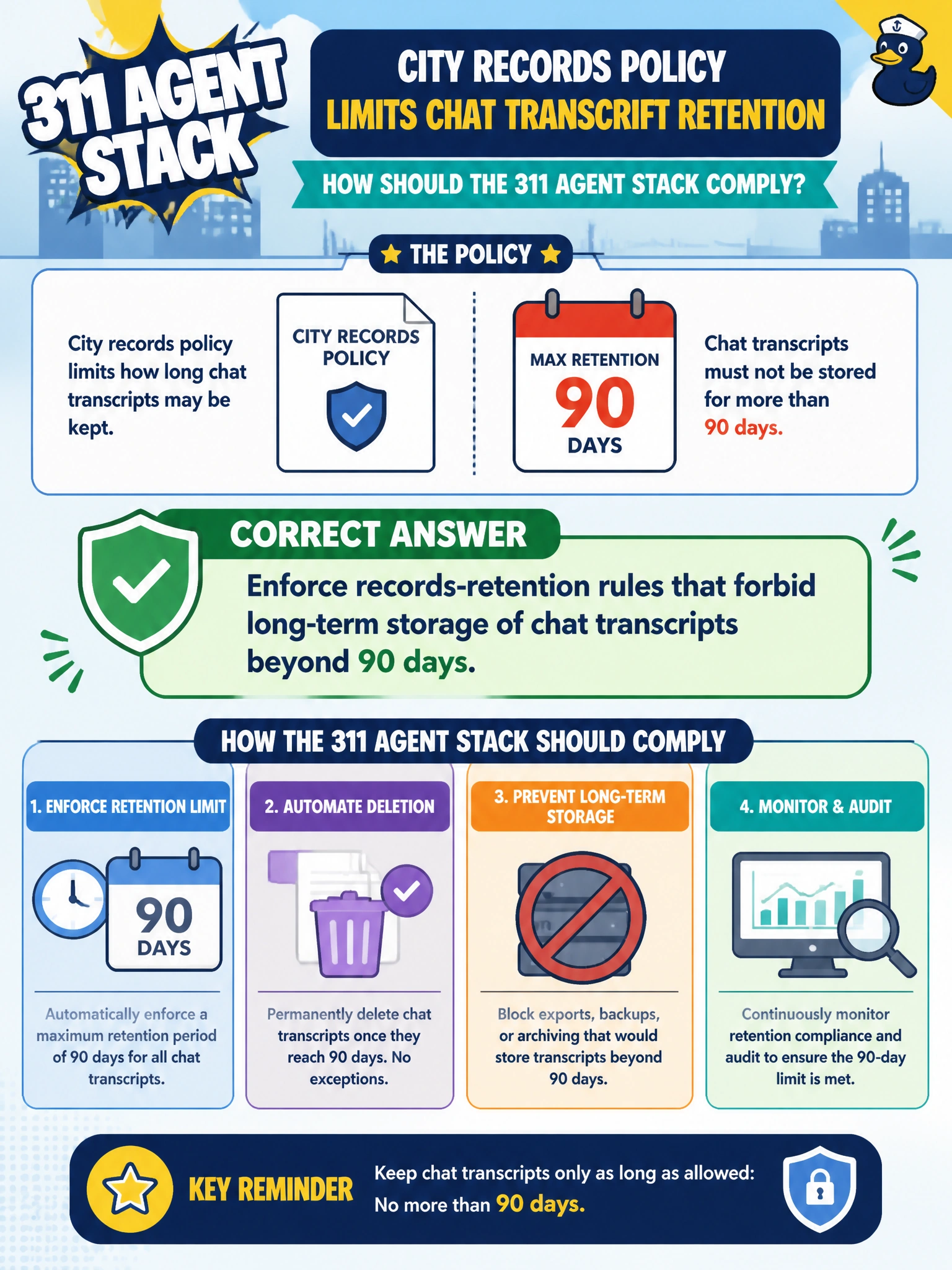
Chat logs aren’t exempt from city records rules. Enforcing a 90-day cap (or whatever policy says) keeps the agent stack from hoarding transcripts forever.
Full Explanation
City records policy that limits chat transcript retention must be enforced in the 311 agent stack, not treated as optional. If policy forbids long-term storage beyond 90 days (or the city’s stated window), the stack should enforce that retention rule with automated deletion or archival controls aligned to the records schedule. Agent chat logs are municipal records subject to the same retention discipline as other resident communications; “AI transcript” is not a special forever class.
Keeping every chat forever “just in case” with no retention limit fails by concept because indefinite retention violates the stated records policy and increases privacy and discovery exposure without authorization. Exporting all transcripts to personal staff laptops for indefinite backup fails because personal devices create uncontrolled copies outside records systems and defeat central retention enforcement. Ignoring municipal retention policy because agent logs “feel different” fails because technology choice does not exempt the city from its own records rules.
Exam caveat: NCP-AAI governance items often pair AI logging with existing municipal records-retention obligations. Prefer enforcing the policy’s time bound over forever-keep, shadow copies, or special pleading for agent logs.
Operational check: configure transcript storage with a 90-day (or policy-exact) retention TTL and legal-hold exceptions only through the records process; sample older conversations to confirm deletion/archival; prohibit local export paths in runbooks; document the retention mapping for auditors.