
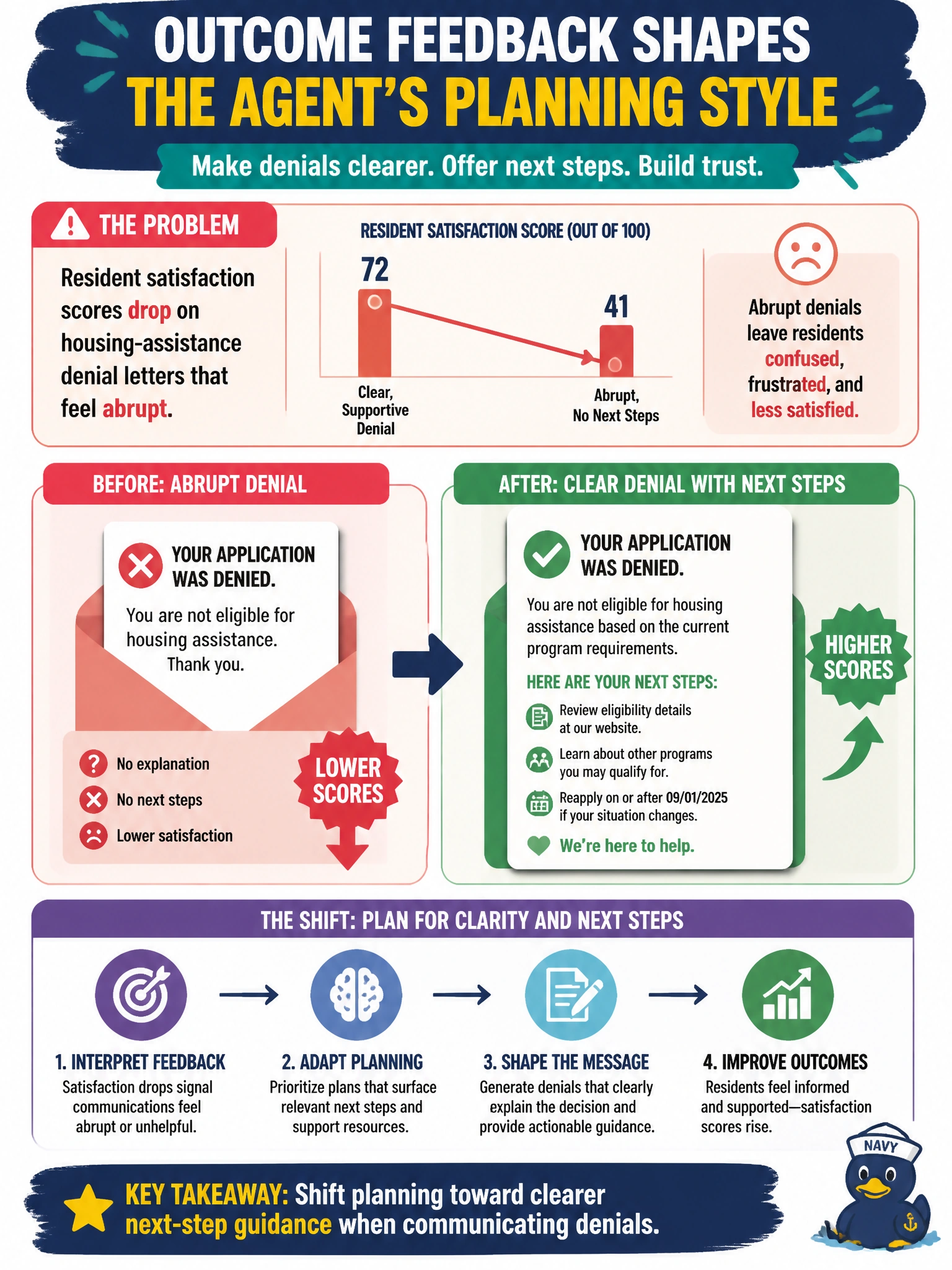
Resident satisfaction scores drop on housing-assistance denial letters that feel abrupt. How should outcome feedback reshape the agent’s planning style?
Select an answer to reveal the explanation.
Short Explanation
A “no” without a map feels like getting lost and hearing “figure it out.” Low satisfaction on denial letters should push the planner toward clearer next steps—appeal windows, missing docs, who to call—not silence or fluff.
Full Explanation
Outcome feedback on resident satisfaction should reshape planning style for housing-assistance denial communications. When scores drop because denial letters feel abrupt, the agent’s planner should shift toward clearer next-step guidance—appeal windows, missing-document remedies, office contacts—while still stating the denial accurately. Clarity about what the resident can do next is a planning and content-structure change driven by outcome metrics.
Hiding denial outcomes and notifying only staff via internal email withholds required notice and harms due-process expectations. Lengthening every letter with unrelated program marketing adds noise without addressing abruptness. Removing next-step guidance so residents cannot challenge the decision worsens the exact failure mode satisfaction scores flagged.
Exam caveat: clearer next steps must remain truthful and policy-aligned; feedback does not authorize soft-pedaling legal outcomes. Operational check: A/B denial templates with and without explicit next steps, track satisfaction and appeal-correctness metrics, and promote the clearer template only if accuracy of the denial basis remains intact. Align denial letter templates with published assistance program rules so next steps match real appeal paths.