
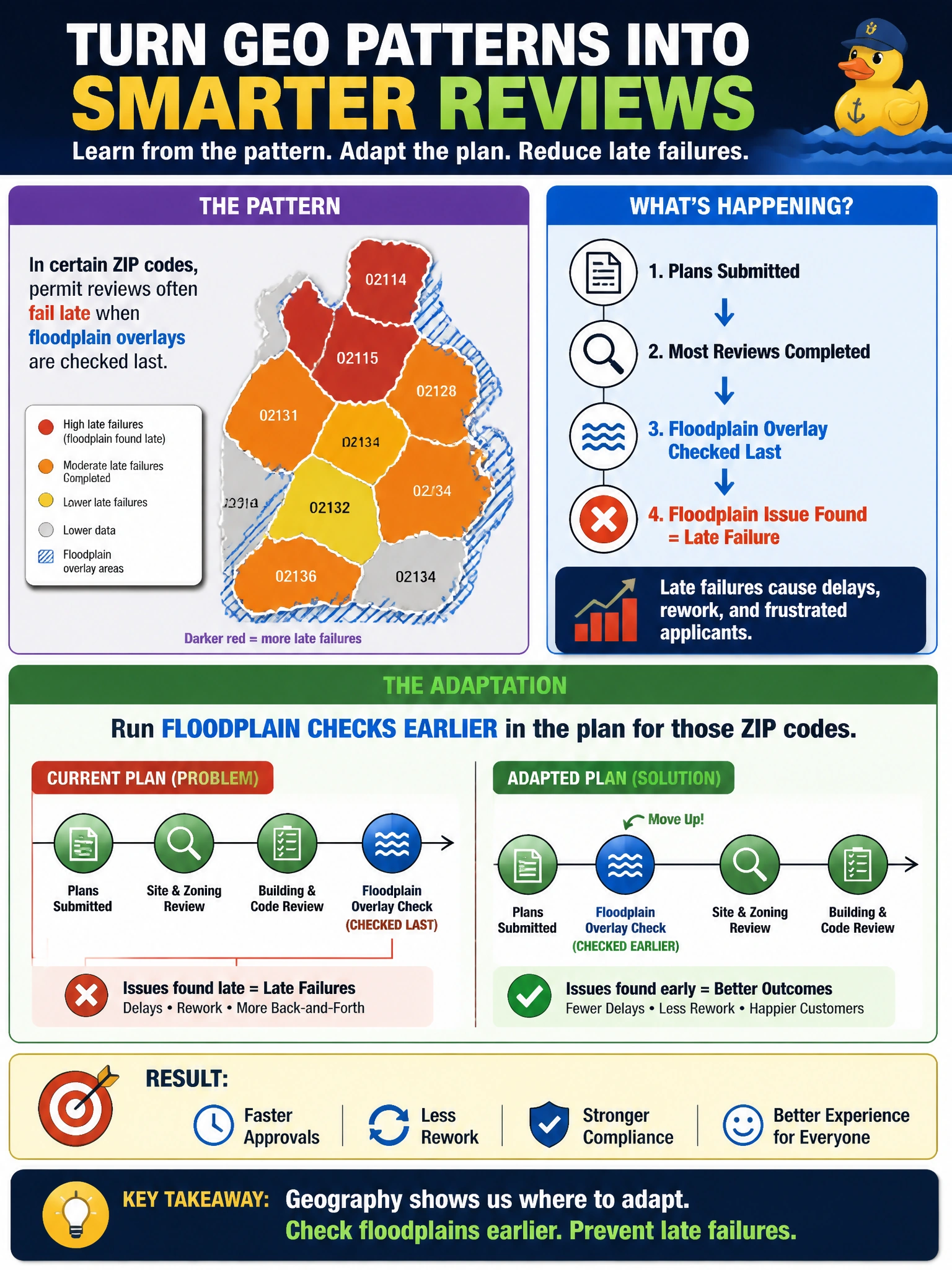
Permit reviews in certain ZIP codes often fail late when floodplain overlays are checked last. What adaptation should the agent learn from that geographic pattern?
Select an answer to reveal the explanation.
Short Explanation
If every trip through that neighborhood hits the same flooded underpass, you check the flood map before you leave. When certain ZIPs keep failing late, pull floodplain checks earlier in the plan for those areas.
Full Explanation
When permit reviews in certain ZIP codes fail late because floodplain overlays are checked last, experience-based adaptation should reorder the plan: run floodplain checks earlier for those ZIP codes so expensive downstream work is not wasted on parcels that will fail the overlay gate. Strategy learning from late failures means moving the high-impact municipal constraint earlier in the sequence where geography predicts floodplain risk.
Skipping floodplain checks for any ZIP code to speed approvals removes a safety and compliance control and can approve illegal or unsafe work. Moving all floodplain logic into the resident-facing chat greeting confuses UX copy with enforceable plan steps and still fails to gate backend review. Replacing ZIP-based planning with a single citywide static checklist forever ignores localized failure patterns the feedback revealed.
Exam caveat: earlier checks are an ordering adaptation for known risk ZIPs, not a license to invent overlay results. Operational check: measure late-fail rate by ZIP before and after reordering; confirm floodplain tools run before costly plan steps for the affected ZIPs and that non-floodplain ZIPs are not forced through unnecessary overlay latency without evidence.