
A human clerk takes over a stalled business-license case mid-flow. What must stateful orchestration support when the agent resumes?
Select an answer to reveal the explanation.
Short Explanation
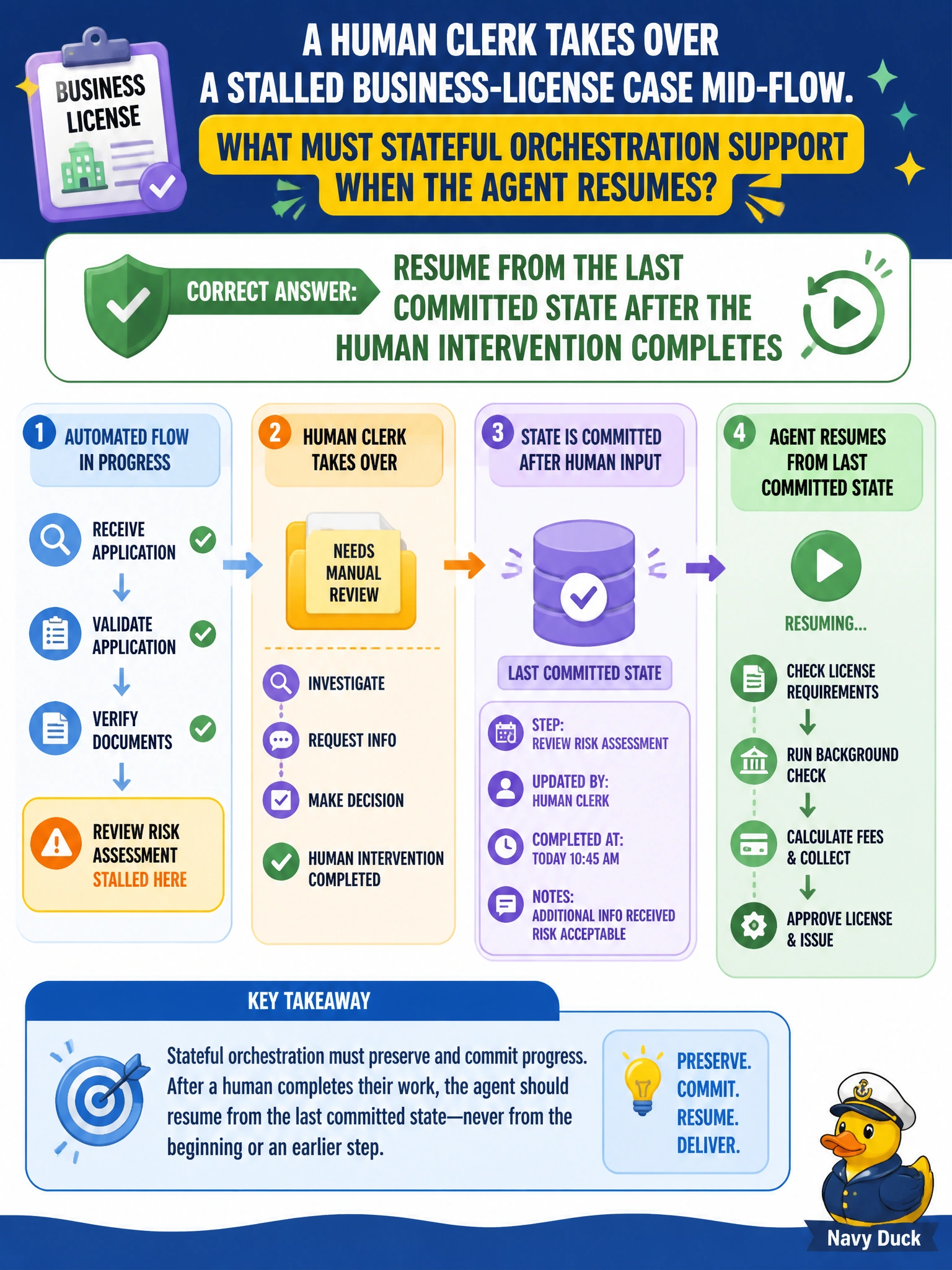
When a coworker jumps on a ticket, you don’t shred the folder—you hand it back at the sticky note. After a clerk intervenes, orchestration should resume from the last committed state, not rebuild the whole license case from scratch.
Full Explanation
Human-in-the-loop municipal cases require stateful orchestration that survives clerk takeover. When a human clerk intervenes on a stalled business-license flow, the agent must be able to resume from the last committed state after the intervention completes—preserving verified steps, open tasks, and case timeline rather than rebuilding the matter from scratch.
Wiping all prior state so the agent and clerk never share a timeline destroys continuity and auditability. Restarting every tool call regardless of committed steps reintroduces duplicate side effects and resident friction. Converting clerk notes into GPU kernels before resume is unrelated technobabble; resume semantics depend on durable workflow state, not GPU compilation.
Exam caveat: resume-from-committed-state assumes checkpoints or equivalent durable markers exist—without them, human handoff still loses progress. Operational check: pause mid-flow, apply a clerk decision (approve/deny a gate), resume the agent, and verify it continues from the post-intervention committed boundary without redoing completed license steps. Log the human intervention boundary in the case timeline for auditors reviewing business-license decisions.