
A multi-day variance hearing assistant must recall exhibits across sessions. What memory approach fits?
Select an answer to reveal the explanation.
Short Explanation
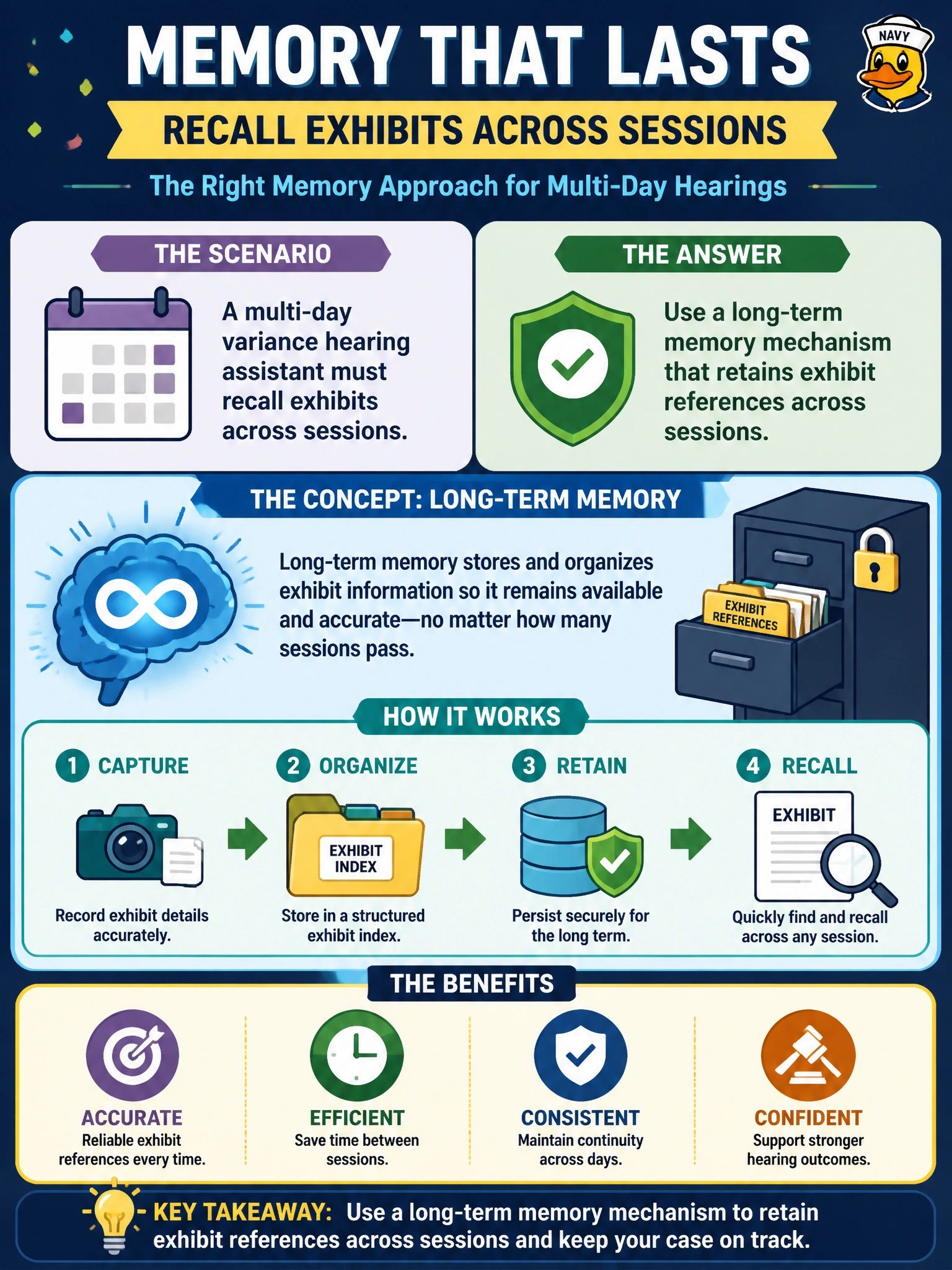
You shouldn’t have to paste the whole binder into every turn to continue a multi-day hearing. Use long-term memory to retain exhibit references across sessions, so closing a tab or ending the day doesn’t erase them.
Full Explanation
A multi-day variance hearing assistant needs to recall exhibits across sessions, so a long-term memory mechanism that retains exhibit references is the fitting approach. Hearings span days, and clerks and applicants may return with additional documents; durable, access-controlled references let the assistant continue reasoning without re-ingesting entire binders each turn. Pasting the entire PDF into every prompt without a memory layer uses tokens, raises cost and latency, and does not provide durable recall after the context window resets. Forgetting all exhibits when the clerk closes the browser tab confuses browser lifecycle with case lifecycle and breaks continuity between sessions. Keeping references only in temporary session storage and clearing them at each day’s end also prevents the required multi-day recall, even though the hearing continues. Exam caveat: long-term memory must comply with records-retention, sealing, and personally identifiable information controls; it does not mean retaining everything forever. Practical check: store exhibit references in durable memory keyed by case ID, verify they can be recalled after a new login days later, and enforce access controls so only authorized roles can retrieve them.