
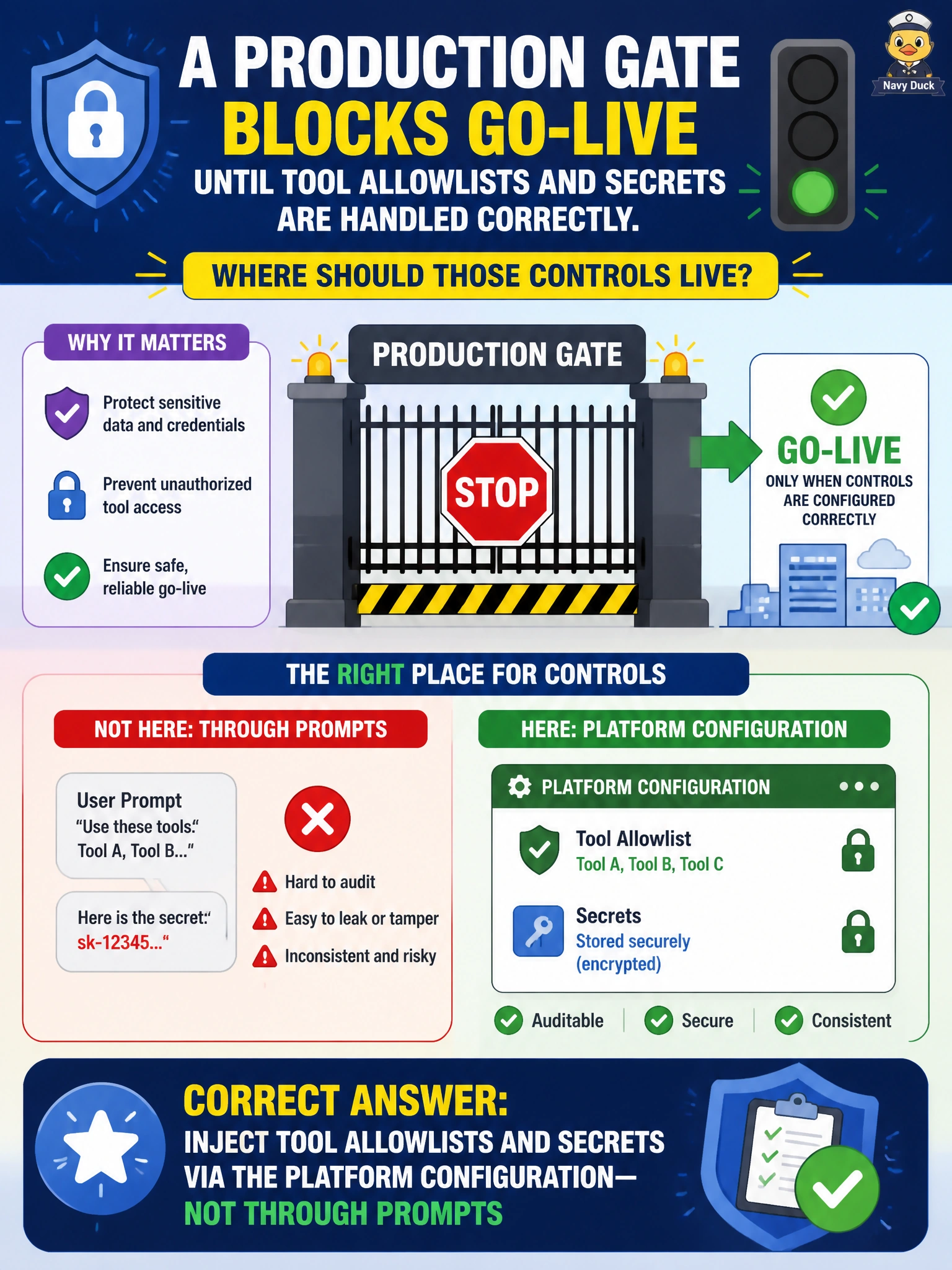
A production gate blocks go-live until tool allowlists and secrets are handled correctly. Where should those controls live?
Select an answer to reveal the explanation.
Short Explanation
Keys don’t belong in the script the audience hears. Inject allowlists and secrets through the platform config, not the prompt. Chat pastes and model memory are how credentials walk out the door.
Full Explanation
Secure production configuration for civic agents injects tool allowlists and secrets through platform mechanisms rather than prompts or informal channels. A production gate that blocks go-live until tool allowlists and secrets are handled correctly should require those controls to live in platform configuration—secret stores, environment injection, and policy-managed allowlists—so credentials never appear in resident-facing text or chat logs.
Hard-coding API keys inside resident-facing prompts exposes secrets in transcripts, screenshots, and prompt repos. Pasting secrets into a shared group chat before each shift creates unmanaged copies and no rotation discipline. Relying on the model to remember passwords from earlier chats is not a secret-management system and risks leakage across sessions.
Exam caveat: tool allowlists and secrets are platform-config concerns for production gates—not prompt content or chat folklore. Operational check: attempt a build with a prompt-embedded key and confirm the gate fails; confirm runtime obtains secrets from the platform secret store; verify allowlists are enforced outside the model; rotate a test secret and confirm the agent still functions without prompt edits.