
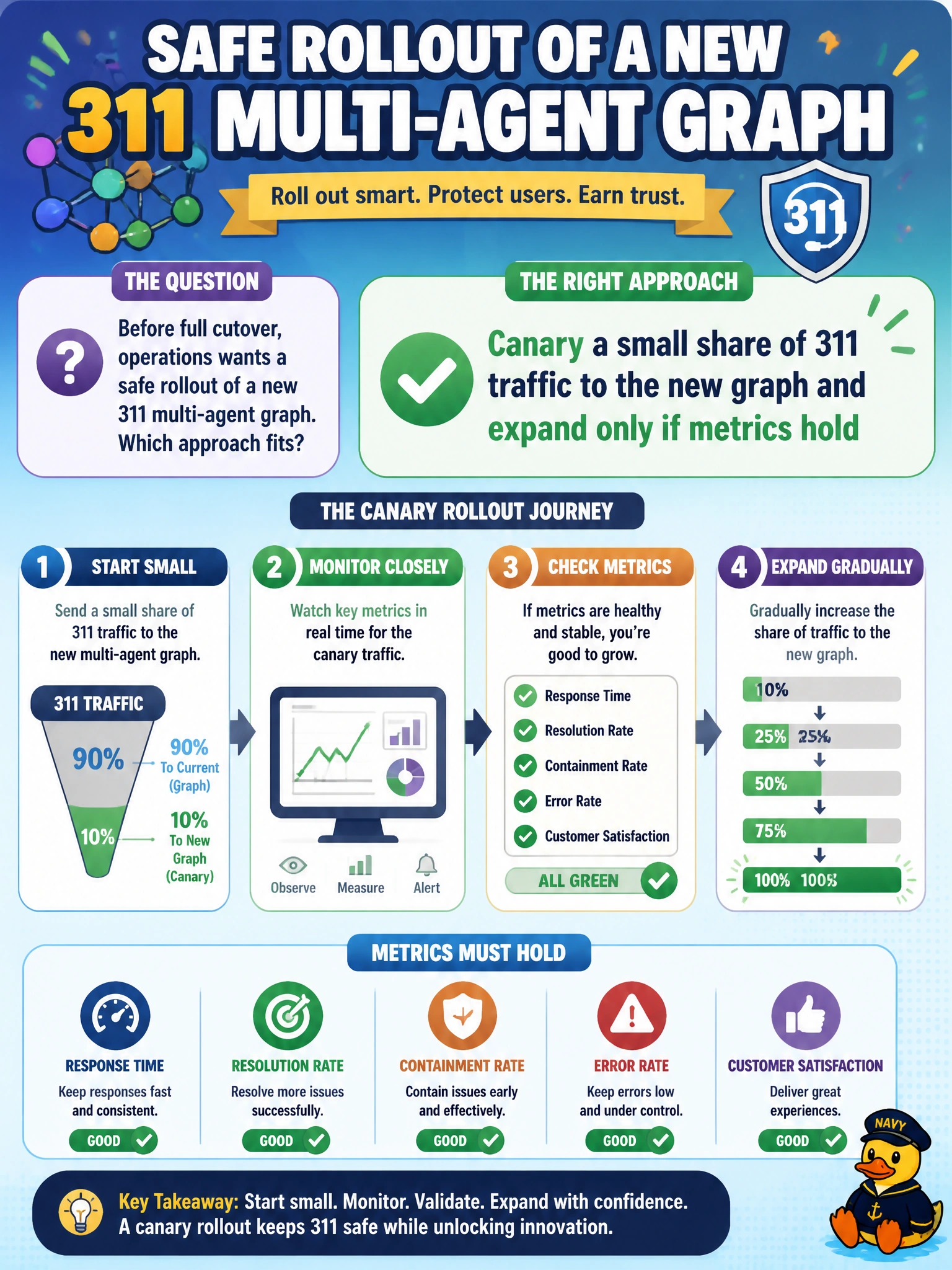
Before full cutover, operations wants a safe rollout of a new 311 multi-agent graph. Which approach fits?
Select an answer to reveal the explanation.
Short Explanation
Dip a toe before diving—send a slice of 311 traffic to the new graph and watch the gauges. Midnight big-bang cutovers and tweet-based QA are how cities learn the hard way. Canaries keep resident impact small while you prove the rollout.
Full Explanation
Safe production rollout for municipal multi-agent orchestration uses canary exposure of a limited traffic share before full cutover, expanding only when metrics remain healthy. For a new 311 multi-agent graph, canarying a small share of 311 traffic and expanding only if metrics hold limits blast radius while exercising real tools, utterance mix, and peak shapes under observation. Gradual exposure is how cities avoid citywide outages from graph changes.
Replacing 100% of traffic at midnight with no gradual exposure is a big-bang cutover that maximizes outage and rollback pain. Testing only on synthetic hellos that never exercise tools misses the integration failures that matter in 311. Skipping staging and asking residents to tweet if anything breaks outsources incident detection to the public and delays response.
Exam caveat: canary (or similarly graduated) rollout is the expected safe path for resident-facing multi-agent graph changes. Operational check: route a defined percentage of 311 traffic to the new graph, compare error rate, latency, and tool-success metrics to a control cohort, auto-rollback on threshold breach, hold a sustained green window, then expand toward full cutover with change-ticket documentation.