
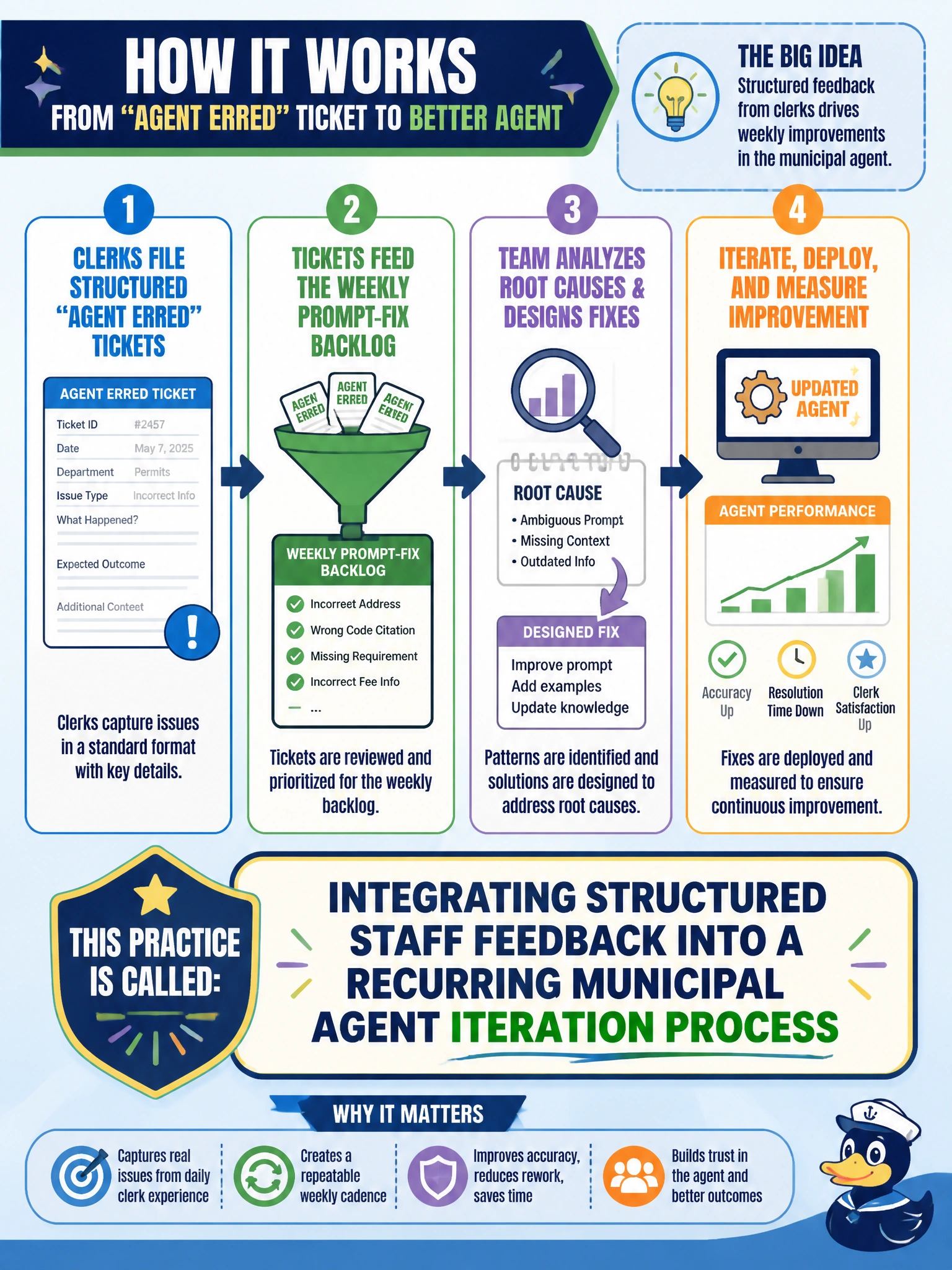
Clerks file structured “agent erred” tickets that feed a weekly prompt-fix backlog. What evaluation-and-tuning practice is this?
Select an answer to reveal the explanation.
Short Explanation
Clerks are the front-row reviewers—structured “agent erred” tickets are gold for the weekly fix list. That’s a staff feedback loop into iteration, not a yearly unread email dump. Empty tickets help nobody.
Full Explanation
Clerks filing structured “agent erred” tickets that feed a weekly prompt-fix backlog is integrating structured staff feedback into a recurring municipal agent iteration process. Front-line staff see systematic mistakes residents may not code well; structured tickets with reproducible fields create a reliable evaluation-and-tuning loop—intake, triage, prompt/tool fix, verify, close. Recurring cadence matters: weekly backlog grooming keeps civic agents improving instead of accumulating silent defects.
Ignoring staff reports because only resident thumbs matter discards high-signal expert observation from counter operations. Filing tickets with no fields so engineers cannot reproduce issues collects noise without actionable detail. Waiting a year to batch every complaint into one unread email destroys feedback latency and prevents iterative improvement.
Exam caveat: staff tickets should include scenario, expected versus actual, and civic impact; unstructured vents without fields belong in a separate channel or must be enriched before engineering work. Operational check: confirm clerk tickets land in the weekly prompt-fix backlog with required fields, measure time-to-fix and recurrence, verify fixed tickets are retested on a civic suite, and reject yearly unread batching as the primary intake path.