
Inspectors report the agent over-prioritizes speed versus accuracy on safety tickets. How should decision strategies be refined?
Select an answer to reveal the explanation.
Short Explanation
A cracked balcony isn’t a “fast FAQ” moment. When inspectors say the agent is rushing safety tickets, you retune toward accuracy and checks. Green latency charts don’t matter if the hazard call was wrong.
Full Explanation
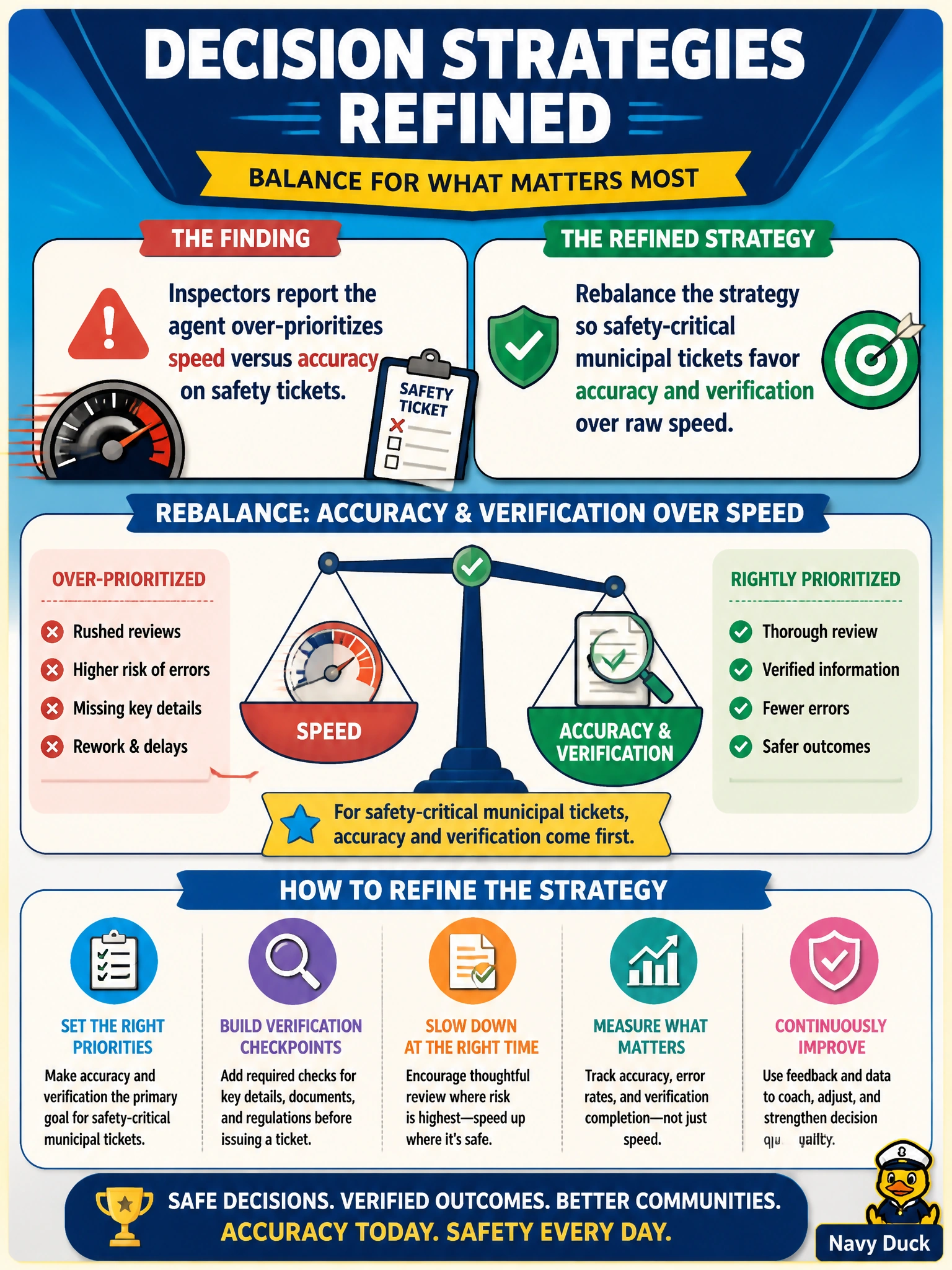
Inspectors reporting that the agent over-prioritizes speed versus accuracy on safety tickets are describing a mis-tuned decision strategy. Developers should rebalance so safety-critical municipal tickets favor accuracy and verification over raw speed—stronger evidence checks, slower but safer routing, and explicit verification steps where hazards are alleged. Risk tier must shape decision objectives: a cracked balcony or structural complaint is not a marketing FAQ, and refining strategy means encoding that difference in policy and scoring.
Maximizing speed by skipping all evidence checks on safety tickets optimizes latency while increasing false clearance and missed hazards. Removing accuracy goals entirely so latency dashboards always look green measures the wrong success criterion for inspector workflows. Treating safety tickets like marketing FAQ chats with the same haste targets imports a low-stakes latency culture into high-stakes civic safety work.
Exam caveat: speed versus accuracy tradeoffs should be tiered by ticket class; not every municipal chat needs the same verification depth. Operational check: sample safety-ticket traces, confirm verification steps run before closure or dispatch recommendations, compare accuracy and rework metrics after rebalancing, and ensure latency SLOs for hazard classes allow the verification budget inspectors require.