
Permit fee amounts must stay accurate for residents. Which tooling pattern should the permitting agent follow?
Select an answer to reveal the explanation.
Short Explanation
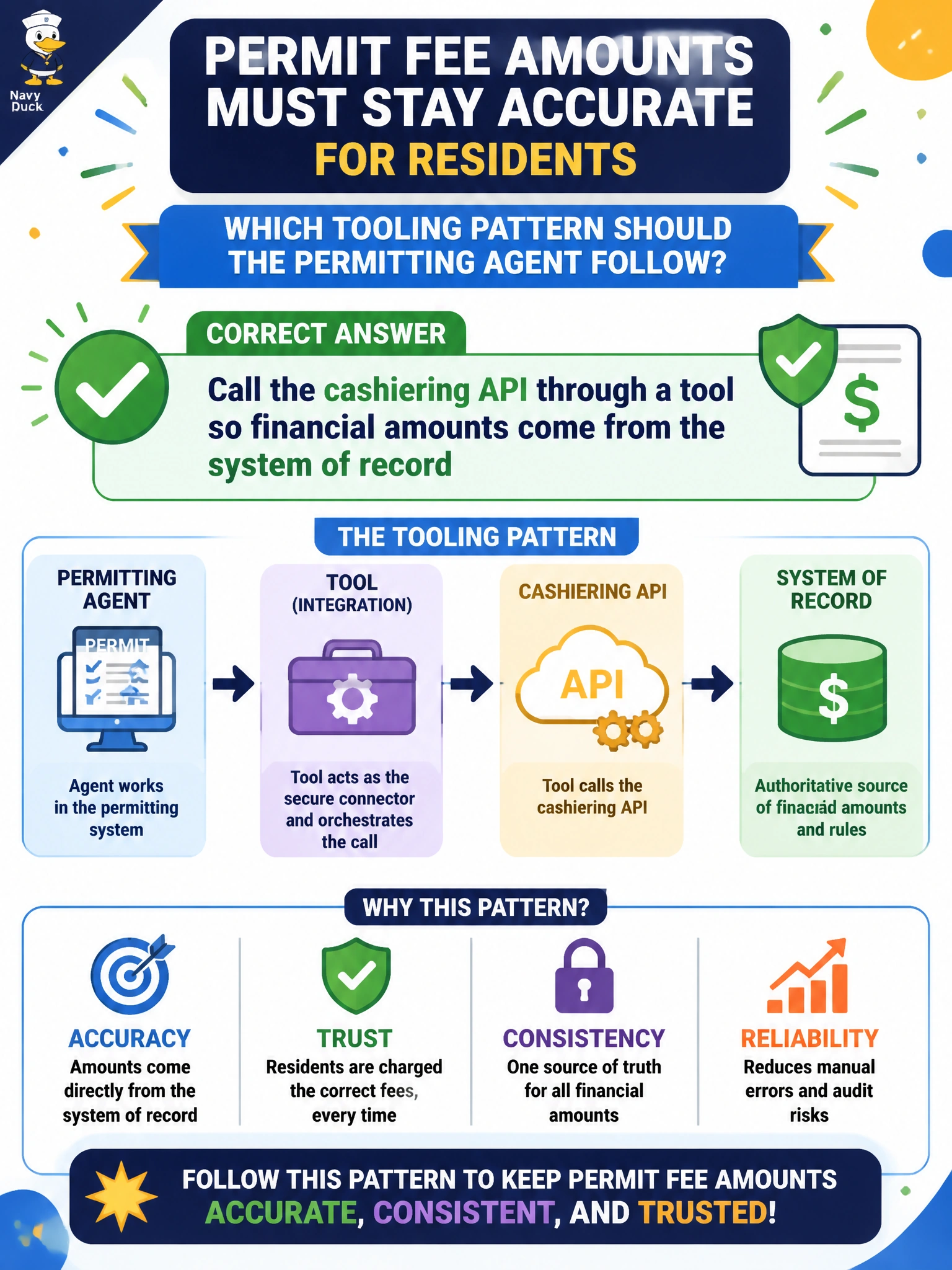
Money questions go to the cashier system, not the model’s memory. Wire a tool to the cashiering API and quote those amounts. Guessing fees from training data is how counter disputes start.
Full Explanation
Permit fee amounts quoted to residents must come from the cashiering system of record, not from model memory or stale prompt tables. The permitting agent should call the cashiering API through a tool so financial figures reflect current municipal schedules, waivers, and parcel-specific rules. Recalling “typical” fees from training data, rounding guesses, or freezing fee tables in the system prompt all produce inaccurate quotes that drive payment mismatches and resident distrust.
Asking the LLM to recall typical fees from training data without system calls fails by concept: training data is not the city’s live fee ordinance or cashiering configuration. Rounding fee guesses up to the nearest hundred for simplicity systematically overcharges or misquotes and is not a lawful fee calculation method. Storing fee tables only inside the system prompt and never refreshing them guarantees drift as councils update schedules.
Exam caveat: tool responses should be treated as authoritative for quotes, with clear timestamps and fee codes shown to residents; offline fallbacks must disclose that amounts are provisional until cashiering responds. Idempotent quote IDs help reconcile later payments.
Operational check: change a fee in the staging cashiering service, request a quote through the agent tool, and confirm the new amount appears; then disable the tool and verify the agent refuses to invent a fee rather than guessing.