
Emergency operations wants an agent tool that pages on-call staff through the city’s paging gateway. What is the critical development requirement for that tool?
Select an answer to reveal the explanation.
Short Explanation
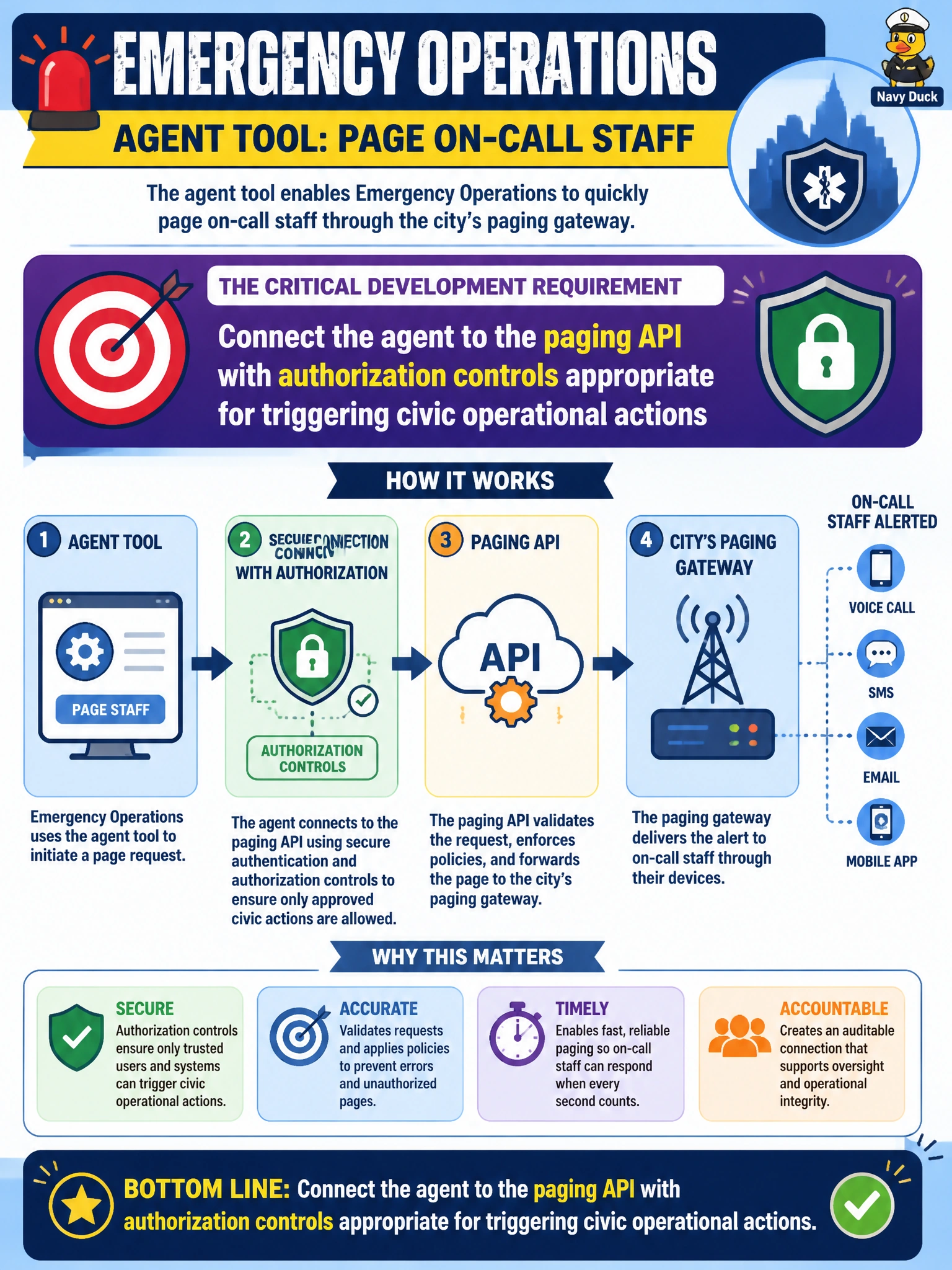
Paging on-call staff is a real-world pager button, not a toy chat command. The tool must hit the city paging gateway with proper authorization. Open paging for every anonymous visitor is an incident waiting to happen.
Full Explanation
Paging on-call staff through the city’s paging gateway is an operational action with real emergency impact, so the agent tool must connect to the paging API under authorization controls appropriate for triggering civic alerts. Authentication, role checks, rate limits, and audit logs are part of that critical development requirement—not optional polish. Unauthenticated public paging, posting secrets to social media, and omitting audit trails create abuse and accountability failures in emergency operations.
Allowing any chat visitor to page executives without authentication fails by concept: it turns a public channel into a denial-of-service and harassment vector against on-call leadership. Implementing paging by posting secrets into public social media channels exposes credentials and is not a paging integration. Omitting audit logs so on-call notifications cannot be reviewed later removes after-action accountability required for emergency operations governance.
Exam caveat: even authorized agents should use least privilege (which on-call groups, which severities) and confirmation steps for high-impact pages. Test pages must be clearly marked and directed to non-production distribution lists.
Operational check: attempt paging from unauthorized and authorized identities in a drill environment, confirm only authorized calls reach the gateway, and review audit records for actor, timestamp, target group, and message content.