
A 311 routing agent must consider today’s street closures before choosing a crew queue. How should dynamic prompt chaining support that?
Select an answer to reveal the explanation.
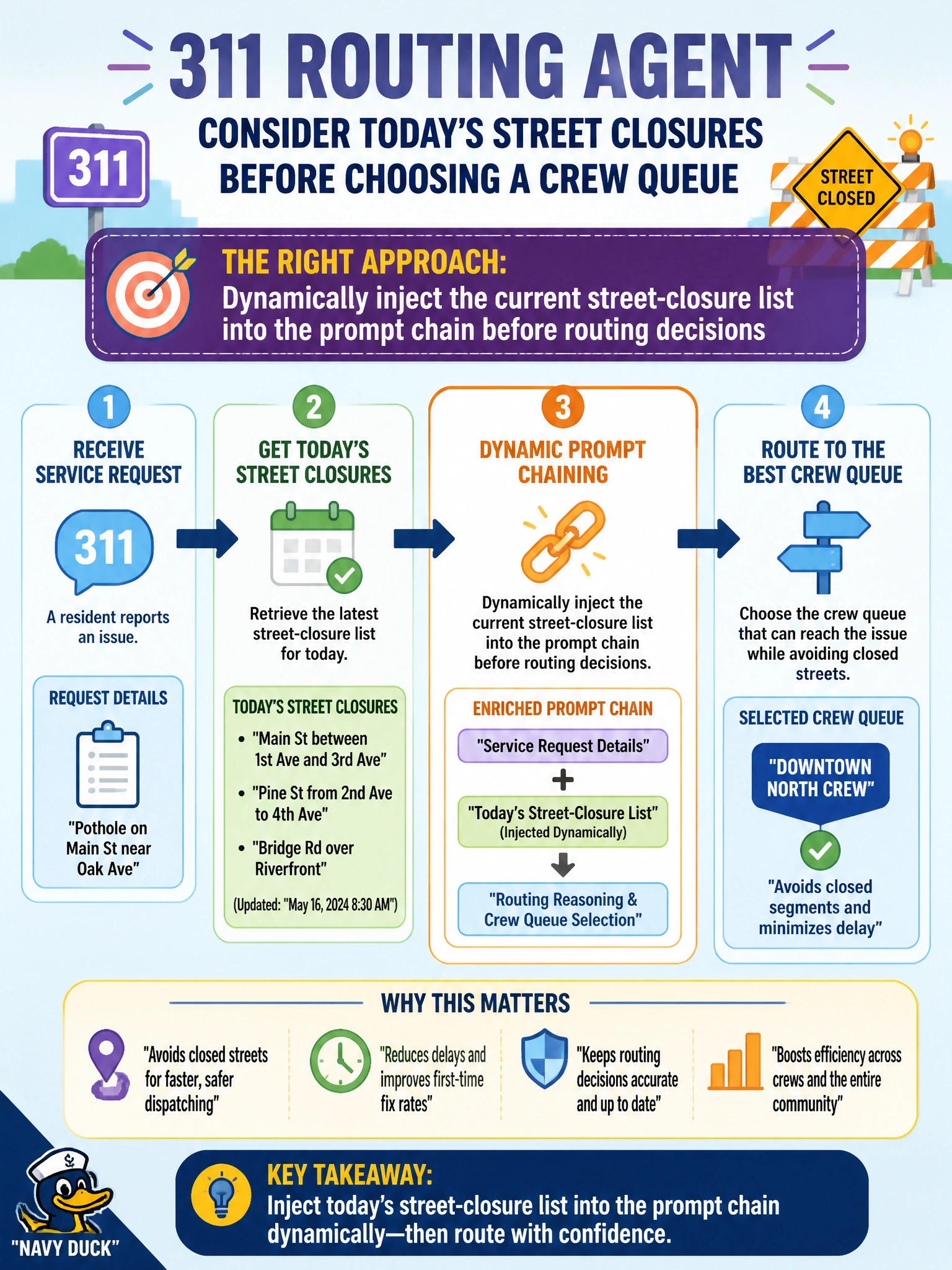
Short Explanation
Routing around today’s dig sites is like checking the road-closed board before you leave the yard. Pull the live closure list into the prompt chain right before the routing step. Yesterday’s frozen list will send crews into barricades.
Full Explanation
311 crew routing that ignores today’s street closures will send work into blocked segments and create rework. Dynamic prompt chaining should inject the current closure list (from a municipal traffic/ops feed) into the prompt context before the routing decision so the agent’s queue choice reflects live operational constraints. Historical ticket keywords alone describe complaint type, not whether a street is open now. Frozen last-month lists and imagined closures both detach routing from the city’s actual network state.
Freezing last month’s closure list in the system prompt and never refreshing it fails by concept: stale operational data systematically misroutes crews after events, construction, or emergencies change the map. Ignoring operational closures and routing solely on historical ticket keywords optimizes for topic match while missing hard physical constraints. Asking the model to imagine typical closures without calling municipal data sources substitutes fiction for authoritative ops feeds.
Exam caveat: dynamic injection still needs freshness SLAs, failure handling when the closure feed is down, and clear precedence rules when closures conflict with priority codes. Prompt size limits may require summarizing closures to the relevant district rather than dumping the entire city list.
Operational check: update a staging closure feed for a street that would otherwise be selected, run the routing chain, and verify the injected list changes the crew queue decision; then simulate feed outage and confirm the agent degrades safely instead of inventing closures.