
Summer tourism spikes 311 volume. Architects need more agent capacity without redesigning every tool integration. Which adaptability and scalability approach best fits?
Select an answer to reveal the explanation.
Short Explanation
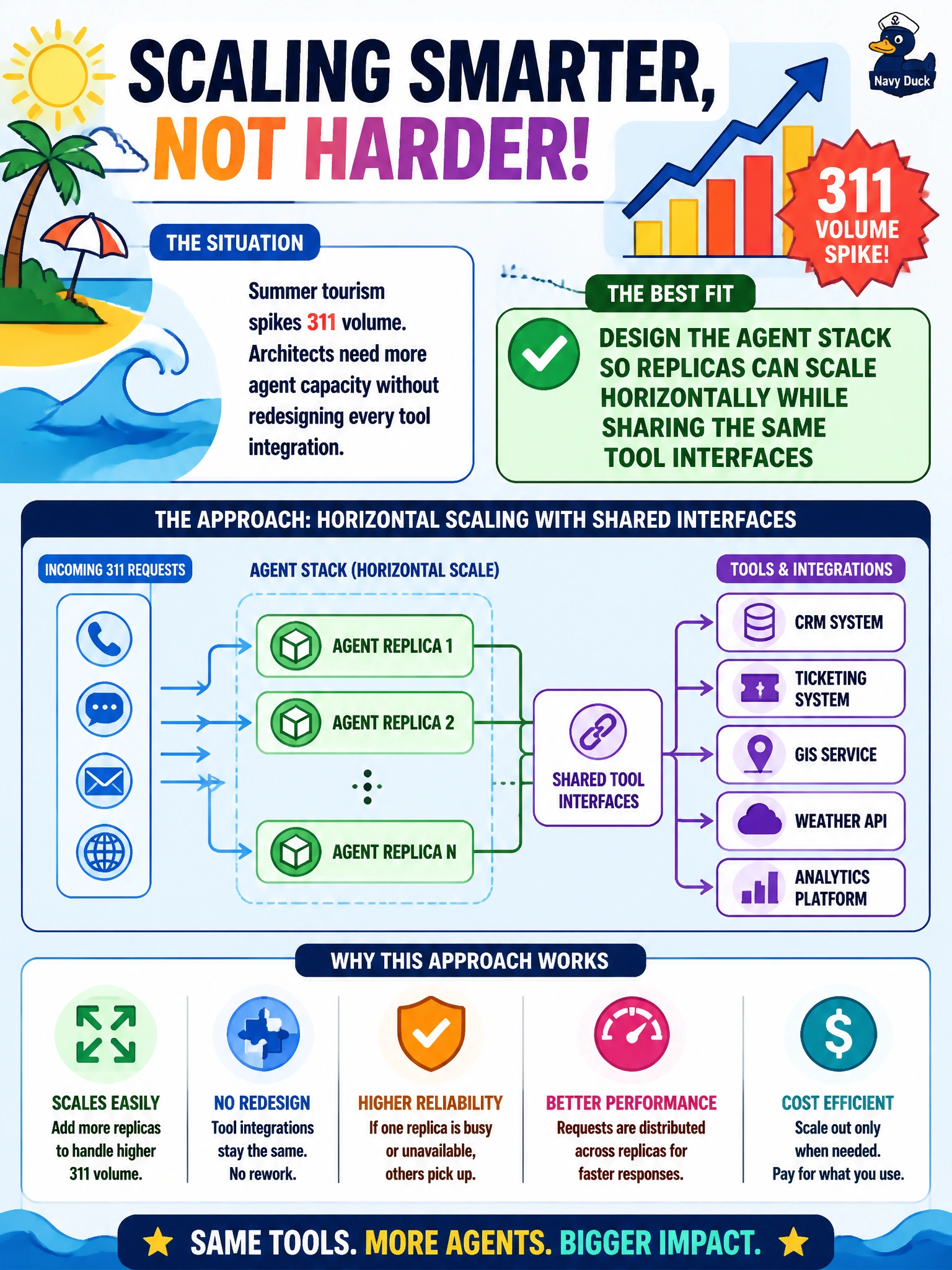
Busy summer 311 is like opening more checkout lanes that still use the same scanners. Scale by adding agent replicas behind the same tool interfaces. You should not rebuild every integration just because tourist season arrived.
Full Explanation
Summer tourism-driven 311 spikes demand more agent capacity without forcing a redesign of every municipal tool integration. The adaptable pattern is horizontal scale-out: run additional agent replicas that share the same tool interfaces and contracts so peak load is absorbed while existing work-order, GIS, and CRM integrations stay stable. Capacity then becomes an operations concern (replicas, queues, rate limits) rather than a seasonal rewrite of the civic tool surface. Static FAQs or single-process pinning cannot meet interactive 311 demand when volume surges.
Hard-coding a single agent process to one CPU core so load cannot increase fails by concept: it intentionally removes scalability and creates a brittle bottleneck during peak tourism. Rewriting all municipal tools from scratch each season before adding capacity confuses growth with redesign and is operationally unrealistic for city IT. Removing tool use entirely during peak season and answering only from static FAQs drops live routing, status, and work-creation capabilities exactly when residents need them most.
Exam caveat: horizontal replicas still need shared rate limits, idempotent tool design, and consistent prompt/tool versions; “more copies” without governance can amplify bad tool calls. Pair scale-out with observability so 311 queues and error rates remain visible.
Operational check: load-test the agent stack with synthetic 311 traffic against staging tool stubs, confirm additional replicas increase throughput without changing tool schemas, and verify peak-season runbooks add capacity by replica count—not by rewriting integrations.