
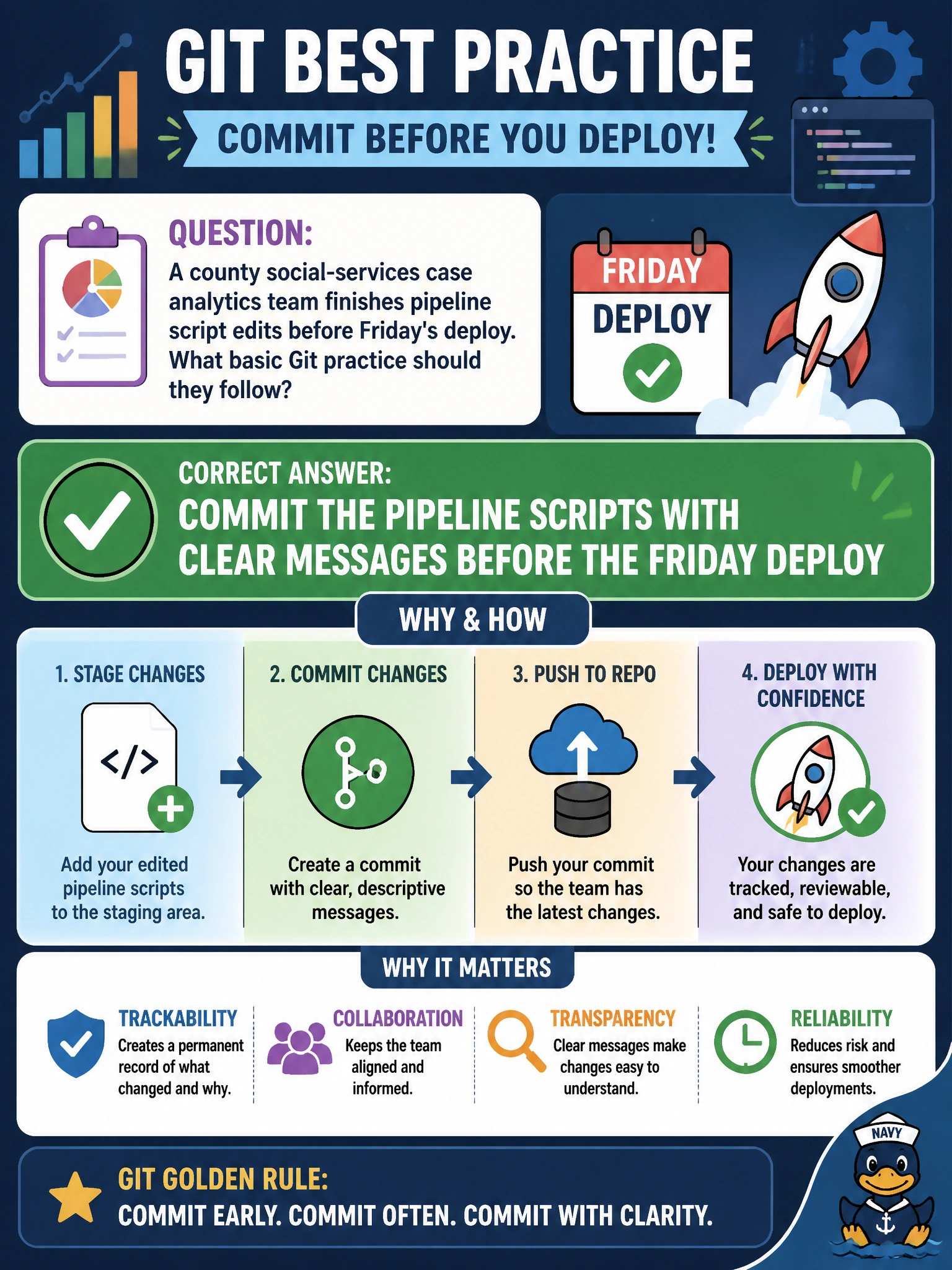
A county social-services case analytics team finishes pipeline script edits before Friday's deploy. What basic Git practice should they follow?
Select an answer to reveal the explanation.
Short Explanation
Before Friday's deploy, put the scripts in Git with a clear note—like labeling the lunch bag so the next shift knows what changed.
Full Explanation
A county social-services case analytics team finishing pipeline script edits before Friday’s deploy needs durable history, reviewability, and rollback. Basic Git practice is to commit the pipeline scripts with clear messages before the Friday deploy so the change set is attributable, diffable, and recoverable if the deploy misbehaves. Commits turn Friday’s release from a pile of files into an auditable civic change record.
Emailing zipped script copies with no repository history loses diffs, authorship trail, and merge discipline. Overwriting files on a shared network drive without commits invites silent clobbering and makes rollback guesswork. Keeping changes only in unsaved editor buffers overnight risks total loss and provides nothing for peer review before deploy.
Exam caveat: a commit is necessary but not the whole delivery path—branches, pull requests, and tags often accompany production deploys. The associate-level point in this item is that version control history must exist before go-live, not that email or shared drives are acceptable substitutes.
Operational check: stage the pipeline script changes, write a message that states why the social-services job changed, commit before deploy, tag or note the commit SHA in the Friday release ticket, and confirm a colleague can check out that SHA to reproduce the deployed scripts.