
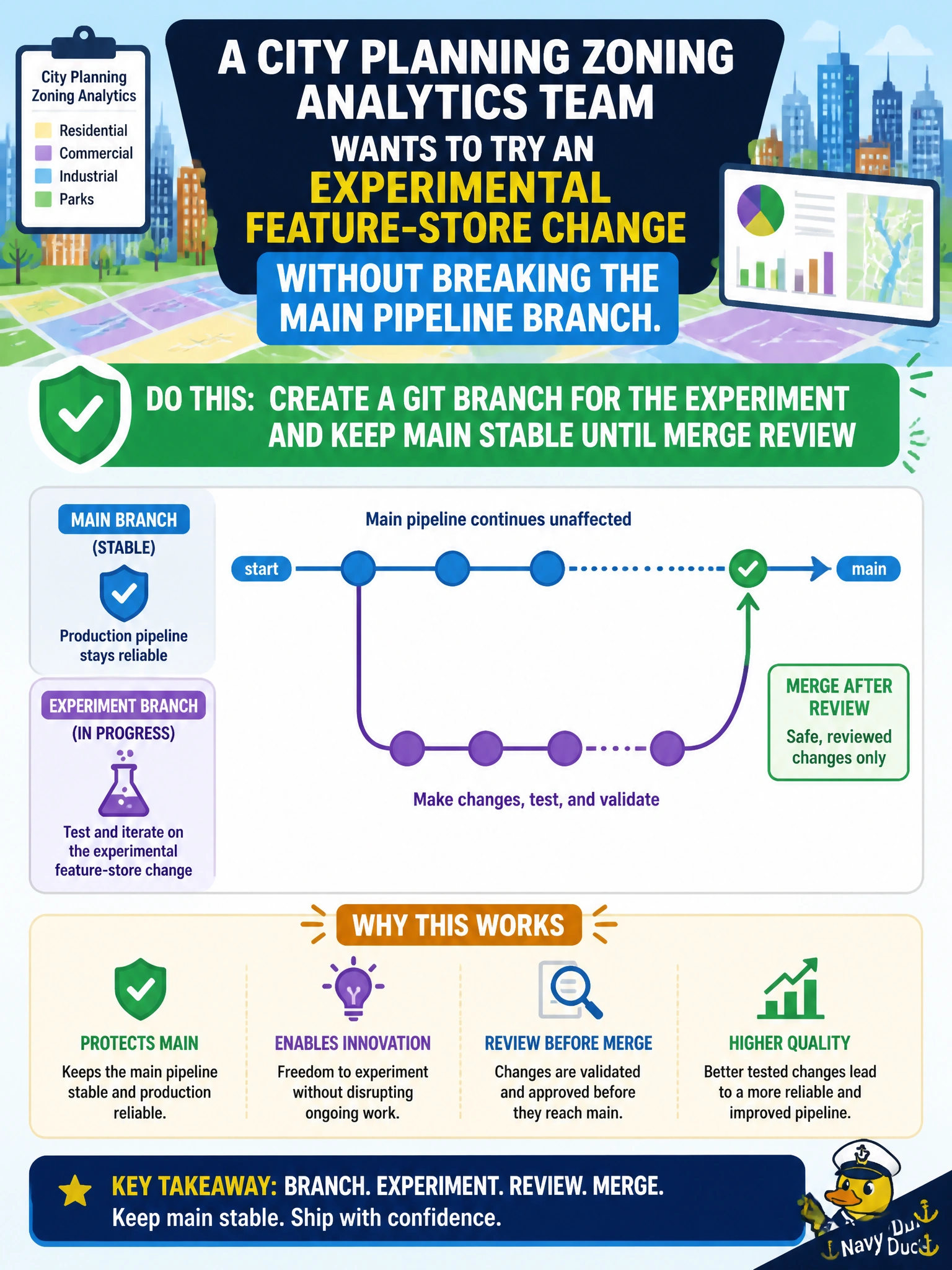
A city planning zoning analytics team wants to try an experimental feature-store change without breaking the main pipeline branch. What should they do?
Select an answer to reveal the explanation.
Short Explanation
Experiments belong on a side street—branch in Git, keep main clear, and merge only after the zoning feature-store change proves out.
Full Explanation
A city planning zoning analytics team trying an experimental feature-store change must protect the deployable mainline. Git branches isolate speculative work so main remains the stable pipeline branch until review and merge. Creating a Git branch for the experiment and keeping main stable until merge review is the correct collaborative practice for civic analytics codebases.
Editing main directly in production and hoping overnight jobs still pass couples experimentation to live failure risk and skips review. Disabling Git and copying folders named final_v7_REAL replaces version control with folklore naming and makes merges and blame impossible. Force-pushing experimental commits over main without review destroys history others rely on and can wipe peer work on the zoning pipelines.
Exam caveat: branches solve isolation; they do not replace testing—merge to main only after the feature-store experiment passes validation against planning data contracts. Long-lived divergent branches also need periodic rebase or merge from main to avoid integration pain.
Operational check: branch from current main, implement the experimental feature-store change there, run pipeline tests, open a review against main, and merge only when zoning stakeholders accept the contract impact—leaving main deployable throughout the experiment.