
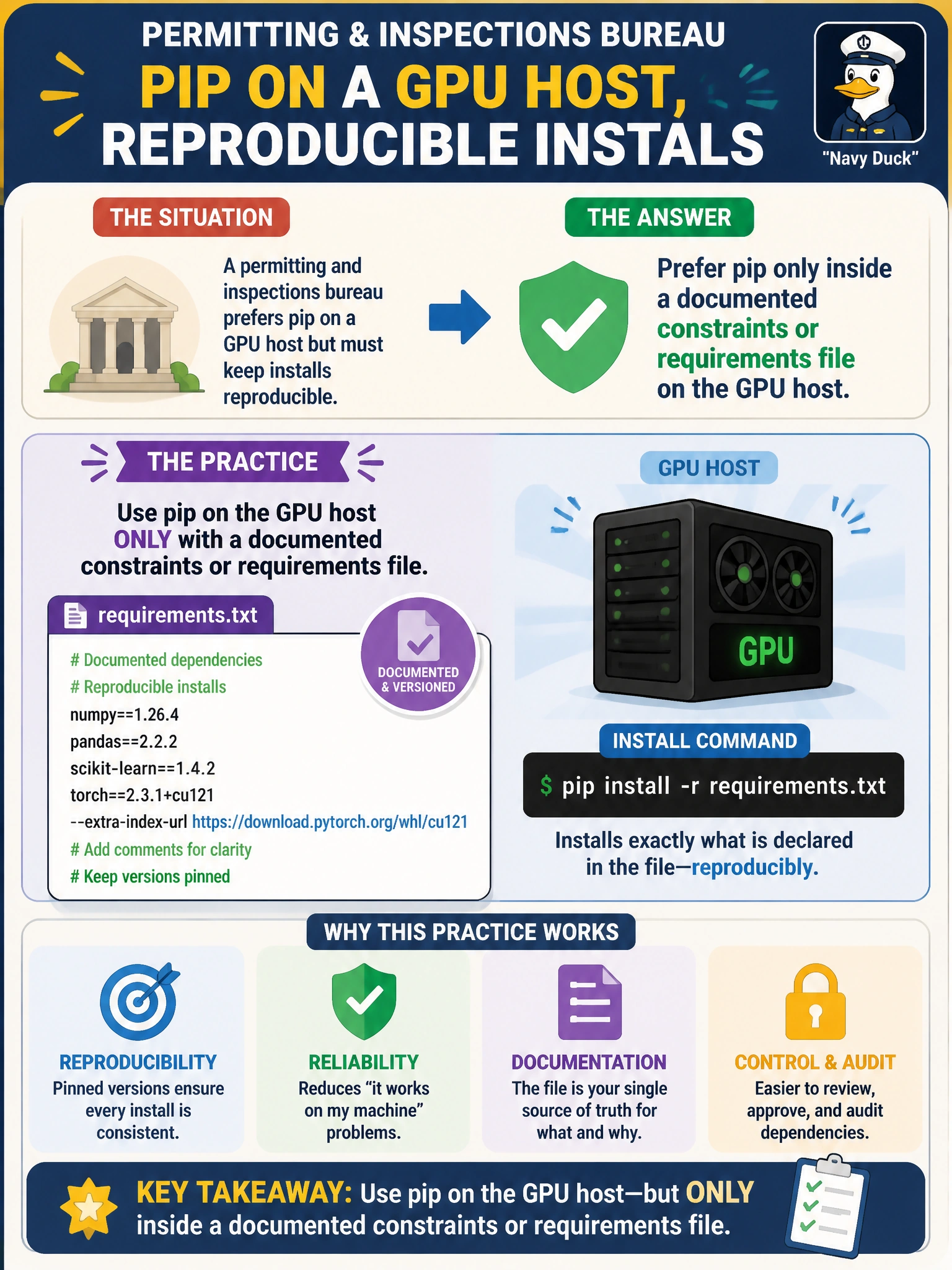
A permitting and inspections bureau prefers pip on a GPU host but must keep installs reproducible. What practice fits?
Select an answer to reveal the explanation.
Short Explanation
Pip is fine on the GPU host if you bring a shopping list—documented constraints—so 'latest whatever' doesn't surprise tomorrow's build.
Full Explanation
A permitting and inspections bureau that prefers pip on a GPU host can still achieve reproducibility if installs are declarative. The correct practice is to prefer pip only inside a documented constraints or requirements file on the GPU host so versions are pinned, reviewable, and reinstallable. That file is the contract between yesterday’s working permitting analytics environment and tomorrow’s rebuild.
Running bare pip install commands with unpinned latest packages every session yields non-deterministic stacks as PyPI moves. Installing from random wheels cached in a personal Downloads folder bypasses integrity, provenance, and shared documentation. Claiming you should avoid any lockfile because pip cannot record versions is false—requirements.txt, constraints.txt, and hashing workflows exist specifically to record versions.
Exam caveat: on GPU hosts, pip pins must still respect CUDA/RAPIDS binary compatibility; a constraints file that ignores the CUDA build tag can install CPU wheels or mismatched manylinux artifacts. Prefer official indexed wheels aligned to the host’s CUDA runtime.
Operational check: maintain a reviewed requirements/constraints file beside the permitting pipelines, install into a clean virtual environment with that file only, verify key GPU libraries import, and refuse undocumented one-off pip installs on shared hosts.