
A fire/EMS response-time analytics team upgraded RAPIDS and is drafting a capacity request for more GPUs. What should they do first?
Select an answer to reveal the explanation.
Short Explanation
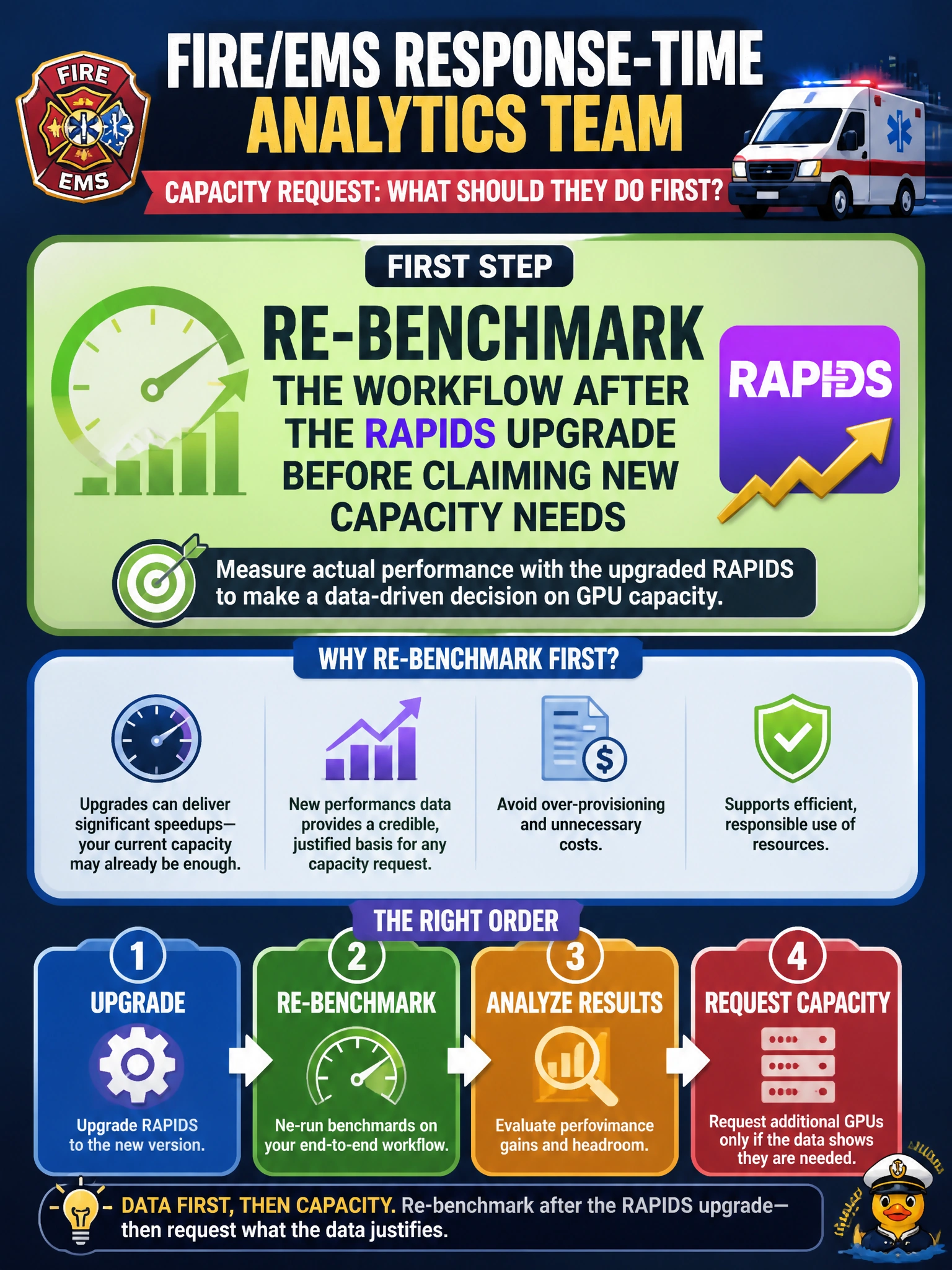
New RAPIDS, new stopwatch—re-benchmark before asking for more GPUs so the ask matches today's timings.
Full Explanation
A fire/EMS response-time analytics team that upgraded RAPIDS and is drafting a capacity request for more GPUs should first re-benchmark the workflow after the upgrade before claiming new capacity needs. Software upgrades can improve kernels, change memory behavior, or shift bottlenecks; capacity asks must reflect current timings, not pre-upgrade assumptions. Evidence-based hardware requests are an associate MLOps habit for civic GPU estates.
Submitting the capacity request with no new measurements after the upgrade fails by concept: the request may over- or under-provision relative to post-upgrade reality. Reusing three-year-old timings without re-running the pipeline fails because stale numbers do not describe today's RAPIDS stack or data volumes. Assuming upgrades never change runtime and skipping evidence fails by treating performance as static when the software changed.
Exam caveat: after library or framework upgrades, re-benchmark before capacity claims—the exam tests evidence discipline, not reflexive GPU shopping.
Operational check: re-run the EMS response-time RAPIDS workflow under production-like load, compare GPU utilization and wall-clock to the prior baseline, and only then size the capacity request to the measured gap versus SLA.