
A solid-waste route optimization analytics team schedules a citywide GPU retrain window and needs operational visibility during the job. What should they monitor?
Select an answer to reveal the explanation.
Short Explanation
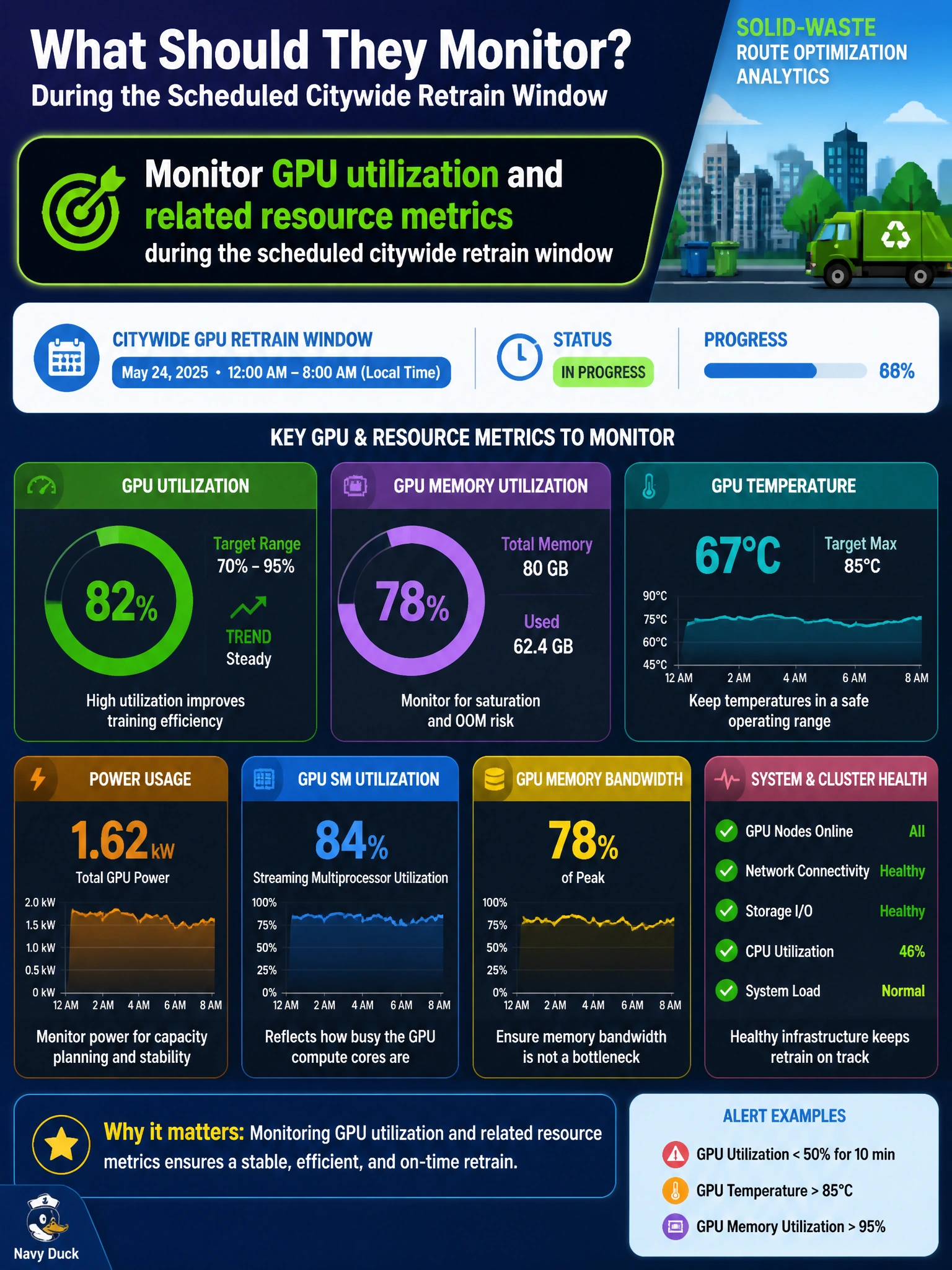
During the big retrain, watch the GPU's heartbeat—utilization tells you the accelerated job is actually working the iron.
Full Explanation
A solid-waste route optimization analytics team running a scheduled citywide GPU retrain needs to monitor GPU utilization and related resource metrics during that window. Operational monitoring of accelerated pipelines includes whether devices are busy, starved, memory-bound, or idle while the retrain supposedly runs. Utilization, memory, and related signals reveal hung stages, under-subscription, or contention that would otherwise waste the citywide retrain slot and delay updated routing models.
Monitoring only the coffee machine in the operations break room fails by concept: facility amenities are not pipeline resource telemetry. Watching only the number of slides in the route briefing deck fails because briefing length does not indicate whether GPUs are executing the retrain. Checking only whether the office Wi-Fi SSID changed overnight fails because local wireless naming is unrelated to GPU job health on the training hosts.
Exam caveat: associate MLOps for GPU jobs emphasizes resource metrics during scheduled windows—not informal office observations.
Operational check: during the citywide retrain, dashboard GPU utilization and memory for the job's devices, alert on unexpected idle or out-of-memory patterns, and correlate dips with stage logs before declaring the waste-routing retrain successful.