
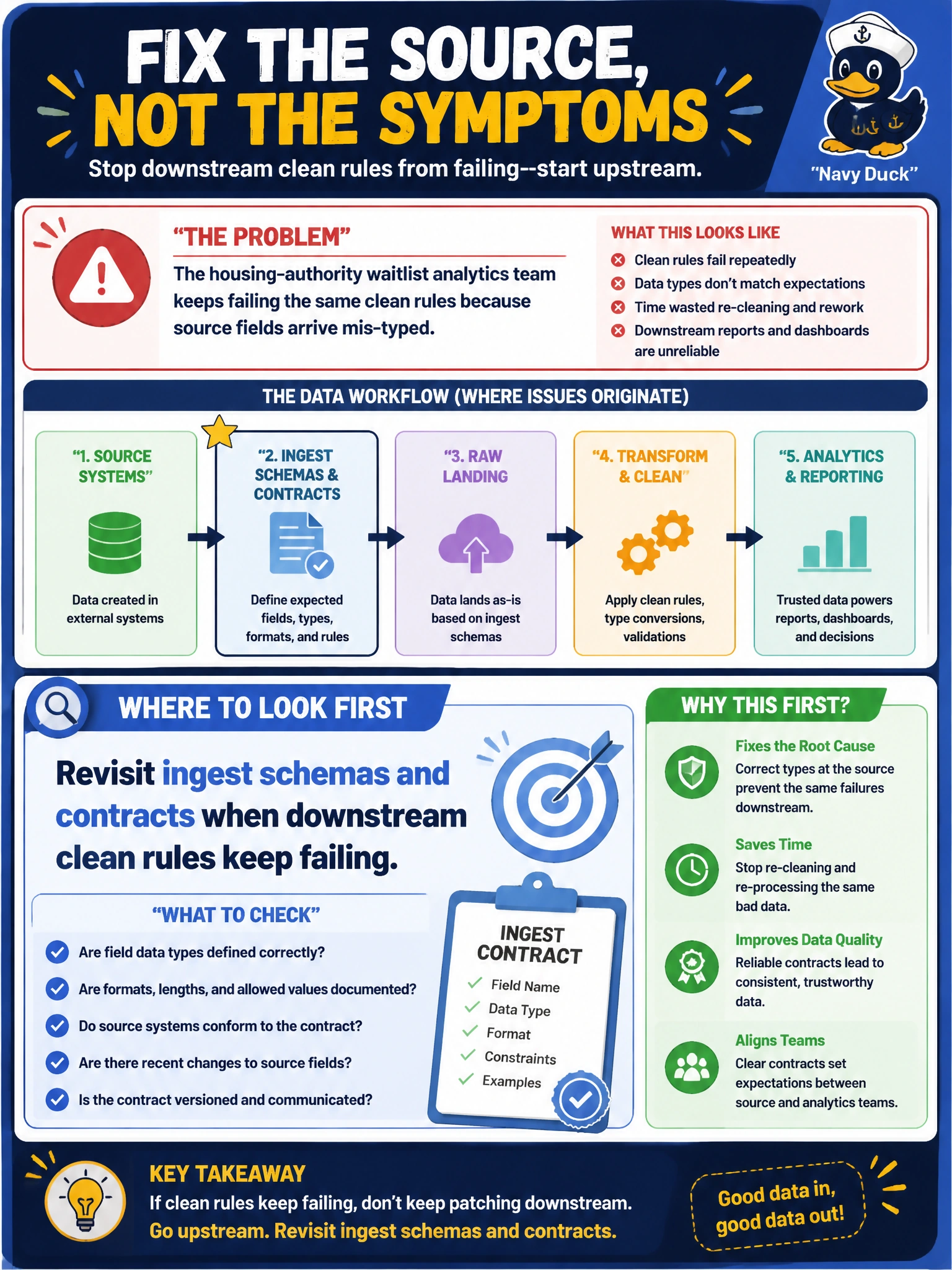
A housing-authority waitlist analytics team keeps failing the same clean rules because source fields arrive mis-typed. Where should they look first in the workflow?
Select an answer to reveal the explanation.
Short Explanation
If cleaning keeps choking on types, the kitchen order was wrong—go back to ingest schemas. Fix the contract upstream instead of silencing rules or stacking deeper models. Charts didn't invent those mis-typed fields.
Full Explanation
When housing-authority waitlist clean rules keep failing because source fields arrive mis-typed, look first at ingest schemas and contracts. Persistent downstream type failures usually mean upstream definitions, extracts, or producer agreements are wrong—not that visualization libraries invented the errors. Domain 5 end-to-end thinking treats stages as connected: clean symptoms often diagnose ingest, so fixing the contract prevents the same failures from recurring every extract.
Only retraining deeper models while ignoring upstream schema issues papers over bad inputs with complexity and will not fix type contracts. Disabling all clean rules so mis-typed fields pass silently removes the quality signal without repairing the source. Blaming visualization libraries for type errors in source extracts misattributes responsibility away from ingest.
Exam caveat: Repeated clean-rule type failures → revisit ingest schemas/contracts. Do not silence gates, stack deeper models, or blame charting tools.
Operational check: Diff expected vs actual waitlist field types at ingest, fix producer contracts or casting at the boundary, re-run clean rules, and only then consider downstream model changes.