
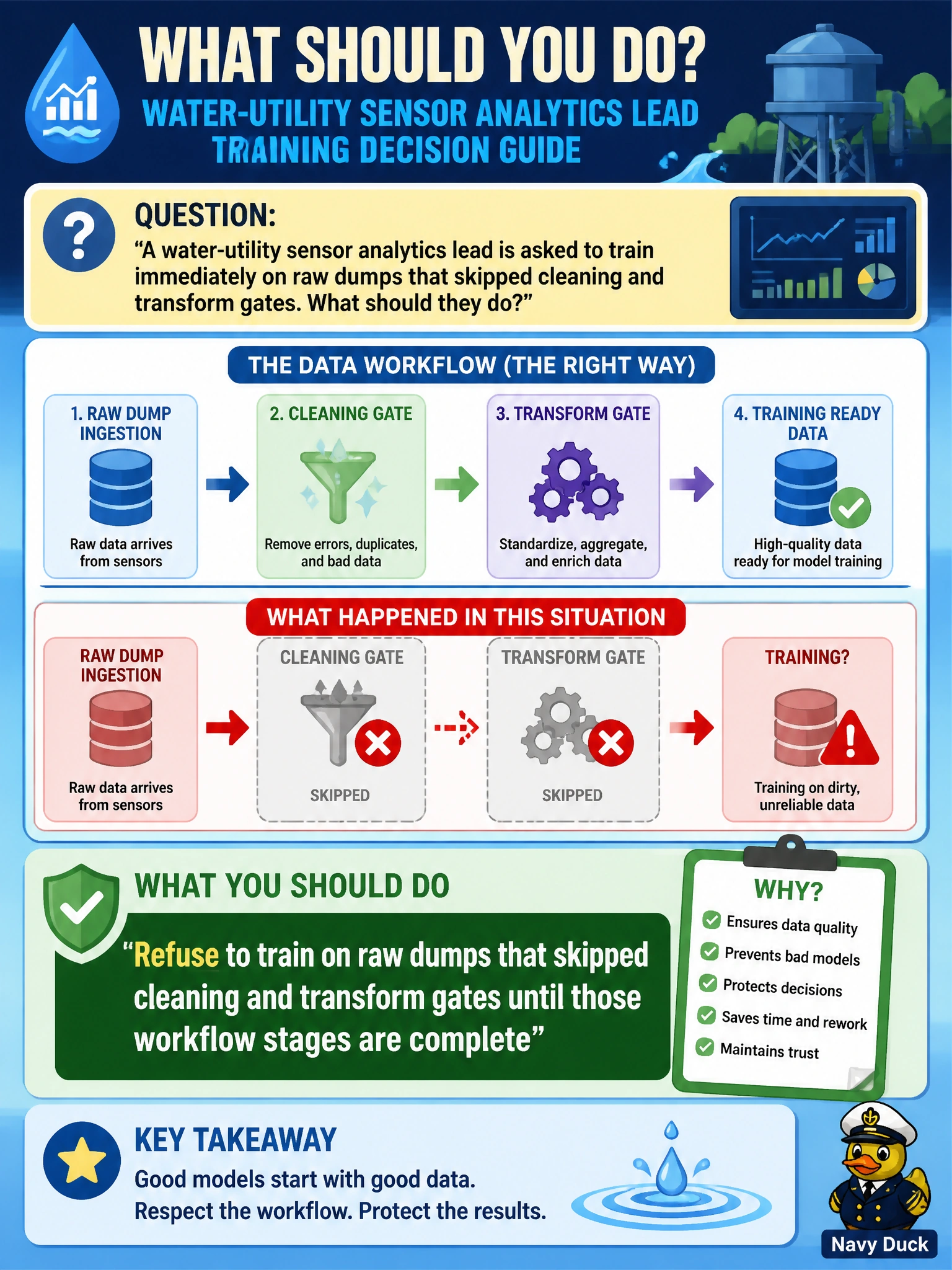
A water-utility sensor analytics lead is asked to train immediately on raw dumps that skipped cleaning and transform gates. What should they do?
Select an answer to reveal the explanation.
Short Explanation
Raw sensor dumps without cleaning are like untreated water—don't serve them as the training drink. Hold the fit until clean and transform gates pass. Fixing it 'only if accuracy looks bad' is how bad models ship.
Full Explanation
A water-utility sensor analytics lead asked to train immediately on raw dumps that skipped cleaning and transform gates should refuse until those workflow stages are complete. Fitting on untreated dumps risks leakage of sensor faults, unit errors, and missingness into production models that operators might trust for pressure or quality decisions. Domain 5 treats clean and transform as mandatory gates, not optional polish after accuracy looks bad.
Training immediately and promising to clean only if accuracy looks bad later ships risk into the model and makes 'later' politically hard once numbers exist. Publishing raw dumps as official open data without review can release incorrect civic data and harm trust. Replacing cleaning with random label flipping to create variety injects deliberate noise instead of quality and sabotages learning.
Exam caveat: Refuse training when clean/transform gates were skipped. Deferred cleaning, unreviewed publication, and label noise are distractors—not workflow substitutes.
Operational check: Block the training job behind clean/transform checklist items (types, ranges, gap fills, feature builds), log gate completion, then fit—never promise post-hoc cleaning as the primary control.