
A housing-authority waitlist analytics team sees park maintenance tickets surge each summer. How should they interpret that pattern?
Select an answer to reveal the explanation.
Short Explanation
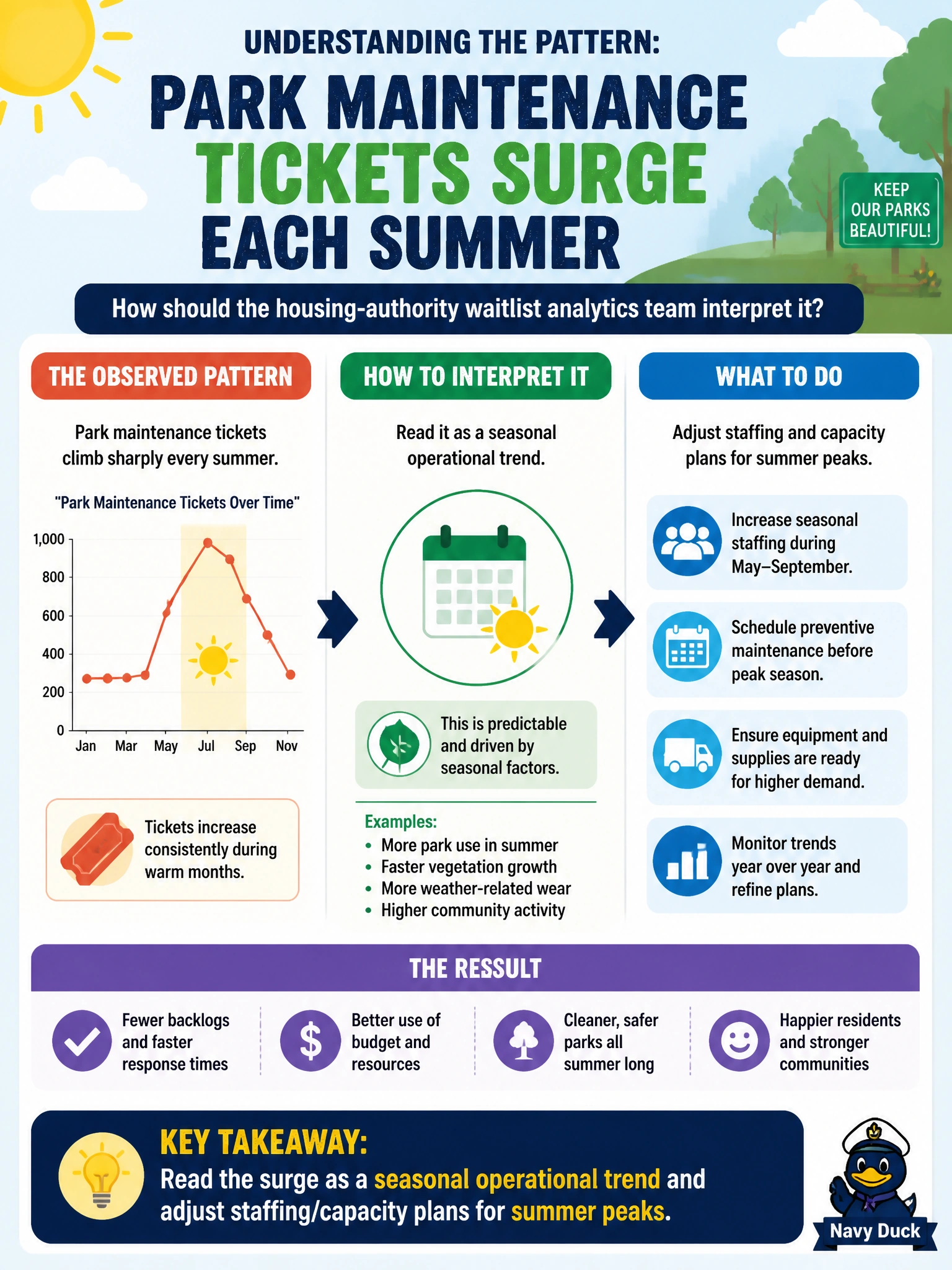
Summer park tickets climbing like ice-cream sales? That's seasonality talking, not a broken chart. Read the spike as a recurring operational trend and plan capacity for the hot months. Flattening the year or blaming year-round understaffing from one season misses the pattern.
Full Explanation
Seasonal surges in park maintenance tickets are a classic civic time-series pattern: warmer months drive heavier turf, irrigation, and playground wear, so ticket volume climbs each summer. The housing-authority waitlist analytics team (and any parks partner sharing that desk) should interpret the spike as a recurring operational seasonality signal and use it to size summer staffing, contractor capacity, and materials—not as random noise. Recognizing the pattern turns descriptive analysis into actionable peak-season planning for municipal service levels.
Treating the summer spike as random noise fails because seasonality is a structured, repeatable component of civic demand series; ignoring it systematically under-plans peak months and overstates 'anomalies.' Assuming the spike proves every park is permanently understaffed year-round over-generalizes a seasonal effect into a constant structural claim—winter and shoulder seasons may look fine once demand falls. Deleting all summer rows to flatten the yearly chart for council is data manipulation that hides real workload and destroys the very signal planners need for budgets and SLAs.
Exam caveat: Domain 4 pattern interpretation rewards naming seasonality and adjusting capacity—not erasing peaks or leaping from one season to permanent understaffing. Correlation with calendar season is operationally useful even when you have not yet built a full causal model.
Operational check: Plot tickets by month across multiple years; if June–August peaks recur, document a seasonal capacity plan (crew hours, vendor surge contracts) and keep summer rows in the published series with an explicit seasonality note for council.