
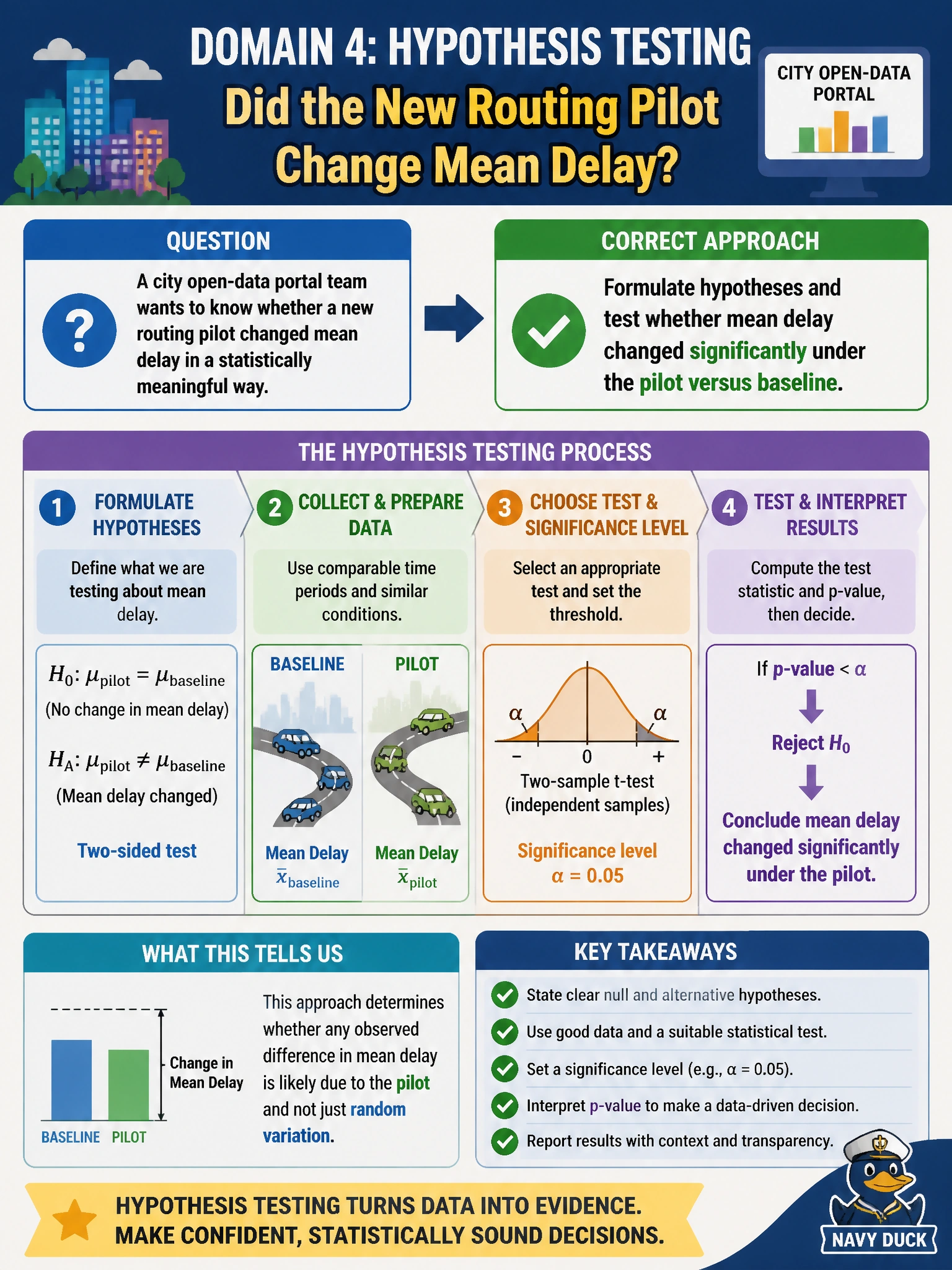
A city open-data portal team wants to know whether a new routing pilot changed mean delay in a statistically meaningful way. Which approach fits Domain 4 hypothesis testing?
Select an answer to reveal the explanation.
Short Explanation
A greener screenshot isn’t a hypothesis test. Write the question—did mean delay change?—then test pilot versus baseline properly. Anecdotes and p-hacking after the fact aren’t how open-data teams evaluate civic pilots.
Full Explanation
Evaluating whether a routing pilot changed mean delay in a statistically meaningful way requires formulating hypotheses and testing pilot versus baseline under Domain 4 hypothesis-testing practice. The open-data portal team should pre-specify the delay metric, define null and alternative hypotheses about mean delay, choose a significance level, and run an appropriate test (and effect-size view) comparing pilot to baseline periods or groups. That discipline separates genuine shift from dashboard cosmetics.
Declaring success because one greener dashboard screenshot appeared after launch confuses visual rhetoric with inference. Skipping any statistical test and accepting the first anecdote from a single driver elevates anecdote over sample evidence. Changing the delay definition after seeing the p-value until the pilot looks successful is p-hacking / outcome switching and invalidates the confirmatory claim.
Exam caveat: hypothesis testing expects pre-specified hypotheses and proper comparison—not screenshots, anecdotes, or post-hoc metric shopping. Operational check: register the delay definition and alpha before unblinding pilot results, compute the test on the locked metric, report estimate and interval with the p-value, and document any deviations in the open-data methods note.